
Not every Baseball Hall of Fame class can be as impressive as 2025. Ichiro Suzuki came just one vote shy of unanimous induction, a feat which still stuns me to write about. The Class of 2026 is unlikely to have the same problem, as Carlos Beltran could be the only player inducted. Andruw Jones, the Braves legend and 10-time Gold Glover, could potentially join him.
The Baseball Hall of Fame class is elected by the BBWAA. As illustrious as that group is, there are also some flaws with the system, meaning players who ought to be shoe-ins for Cooperstown are left off the ballot. All it takes is one voter with an ax to grind to screw with history.
How many players have been unanimously elected to the Baseball Hall of Fame?

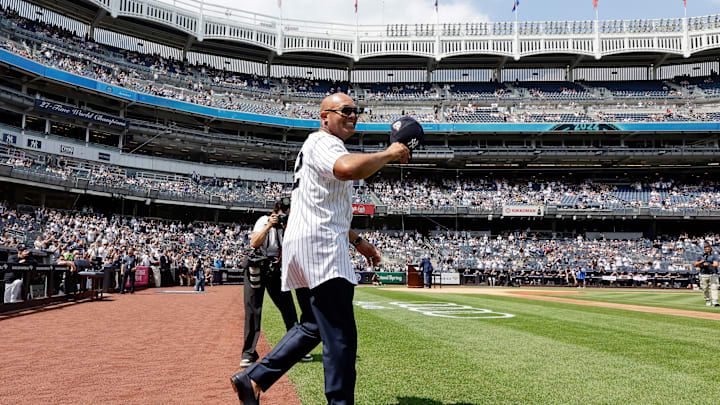
The Hall is closing in on nearly 90 years of honoring the game's greatest players. But in all that time, only one of them has managed to earn induction unanimously: New York Yankees closer Mariano Rivera, who earned 425 out of 425 votes on the 2019 ballot. (Many thought that his former teammate, shortstop Derek Jeter, would follow suit a year later, but he was left off of just a single ballot.)
For a long time, the idea of a unanimous inductee was viewed as almost a kind of heresy, with some voters even refusing to vote for a candidate in his first year on the ballot out of principle. It became something of a self-fulfilling prophecy: If legends like Babe Ruth, Willie Mays and Ted Williams couldn't earn 100 percent of the vote, how could anyone else reasonably expect to?
Thankfully, that stance has softened with time, and Rivera's unimpeachable resume was enough for him to finally break through that particular glass ceiling.
Highest voting percentages in Baseball Hall of Fame history
In the history of the Hall, only 38 players have even cracked 90 percent of the vote in a given year, and only 19 have crossed the 95 percent threshold. Below are the ten highest vote percentages of all-time, featuring names like Jeter, Griffey Jr., Ripken, Cobb and Aaron.
Player | Year | Percentage |
|---|---|---|
Mariano Rivera | 2019 | 100% (425/425) |
Derek Jeter | 2020 | 99.7% (396/397) |
Ichiro Suzuki | 2024 | 99.7% (393/394) |
Ken Griffey Jr. | 2016 | 99.3% (437/440) |
Tom Seaver | 1992 | 98.8% (425/430) |
Nolan Ryan | 1999 | 98.8% (491/497) |
Cal Ripken Jr. | 2007 | 98.5% (537/545) |
Ty Cobb | 1936 | 98.2% (222/226) |
George Brett | 1999 | 98.2% (488/497) |
Henry Aaron | 1982 | 97.8% (406/415)T |
Tony Gwynn | 2007 | 97.6% (532/545) |
Cobb was a part of the Hall's very first class back in 1936. Other than that, though, Aaron and Seaver are the only two inductees to crack the list prior to 1999, a sign of just how drastically voting behavior has shifted in recent years.
Why more MLB players aren't inducted into the Hall of Fame unanimously
I don't have an easy answer here. There are hundreds of Hall of Fame voters, and each and every one of them has a human impulse. All it takes is one BBWAA member to assume it their duty to keep a player from making history to actually do it. Look no further than what happened to Ichiro last year.
Why Hall of Fame voters choose to do this is beyond me. They are routinely called out for doing so, receiving their 15 minutes of fame in exhausting fashion. Baseball fans will never just be happy that one of their favorite players was immortalized in Cooperstown. Instead, they want to know WHY some in the media don't agree.
Another issue, which was alluded to above, is precedent. If the likes of Griffey, Cobb and Aaron aren't flawless, then why would Ichiro or other legends deserve such a sentiment? That being said, precedent is not a good excuse for a sympathy no-vote. Odds are, if you asked any of the players who missed out on unanimous induction by a couple votes, they've gotten over it. Writers you view it as their duty to ensure that even the best of the best receive a blip on their resume are doing the game a disservice.
 Add us as a preferred source on Google