
Getting excited about MLB offseason moves is easy. Every fan base wants to come into spring training and see all of the shiny new toys on the roster and get excited about it. But the harsh reality about baseball, free agency, and even trades is that these moves don't have a 1.000 batting average. Signings and acquisitions emerge as busts every year, like clockwork. And rest assured, it's going to happen again going into the 2026 MLB season as well.
But which free agent signings and trade additions are the most likely to bust this offseason. While I'm sure there's a downside to be made for every offseason move, these 13 additions stick out as the ones with the biggest bust potential.
13. OF Kyle Tucker, Los Angeles Dodgers

How he was acquired: Signed a 4-year, $240 million contract in free agency
Whenever there is a player who's being paid $60 million per season, by the Los Angeles Dodgers or any other team, I'm going to say that there is at least a semblance of bust potential. No doubt about it, Kyle Tucker has been a star-caliber hitter with plus defense and base-running as well. There's a reason he was considered the crown jewel of the free agency class this offseason, but it's also fair to wonder if he's even remotely close to worth $60 million, even on a short-term deal.
In terms of the production, Tucker certainly deserved a bag, even if not one this massive. Over the past three seasons, he's slashed .278/.380/.511/.892 while averaging 32.3 home runs, 32.7 doubles, 102.2 RBI and 28.8 stolen bases per 162 games while playing plus right field defense. He's been as productive as any player in baseball, and a complete player at that.
However, there are two issues that further call his value into question at $60 million per year. For one, injuries have been part of the equation, playing in an average of just 123.7 games over the last three seasons. And on top of that, there were some murmurs throughout the league in his free agency that he might not necessarily love baseball, which was also a sentiment in his tumultuous year with the Cubs in 2025 as well. And now he's heading to a big market like LA, which could amplify that if true.
Again, the likeliest outcome is that Tucker, especially in a place where he won't be asked to be the face of the franchise, continues to be a plus-value player for the Dodgers. But that's a helluva lot of money he's being paid when there are some viable questions to be asked.
12. LHP Ranger Suarez, Boston Red Sox

How he was acquired: Signed a 5-year, $130 million contract in free agency
After not being able to re-sign Alex Bregman this offseason, Craig Breslow and the Boston Red Sox immediately pivoted on the free agency market and inked southpaw Ranger Suarez to this deal, giving them one of the best rotations in baseball, which they then fortified by putting a much-improved defense behind him for one of the best soft-contact pitchers in the game.
With that said, the concerns that were present with Suarez entering free agency are still there. While he's been a master with the command of his stuff, he's undeniably not someone whose Savant page is going to be blood red. He doesn't throw with much velocity, and even that has been on the decline in recent years, and he very much relies on getting weak contact rather than missing bats.
That's where the concern would come in for the Red Sox. Though Andrew Bailey and this Boston front office have done tremendous work at building around contact pitching (along with Sonny Gray), if the lack of velo for Suarez and his inability to miss bats leads to him allowing more hard contact as he moves later into his career, that could be a viable problem in a hitter-friendly park like Fenway.
Because of the investment in the defense and Suarez's strong track record of success despite his lack of velocity, I don't think the risk for the Red Sox is massive in terms of the lefty being a bust for them. However, it would be disingenuous to not at least mention the possibility of how it could go wrong.
11. 1B/DH Pete Alonso, Baltimore Orioles

How he was acquired: Signed a 5-year, $155 million contract in free agency
If we were simply talking about contracts that will age the worst, I'd have the five-year deal at $31 million in AAV that Pete Alonso signed with the Baltimore Orioles much closer to the top of the list. It was one of the big questions with the Polar Bear this offseason, as he's likely heading toward being a DH only sooner rather than later, and we could see his power decline a bit as he gets deeper into his 30s.
That's about the contract aging worse, though. In terms of him being a bust among this offseason's moves, though, I'm a bit less concerned about that, even if there are some worries there.
Recent history for Alonso suggests, though, that he will still deliver the power in the Baltimore lineup that they're looking for. He's hit at least 34 home runs in each of the past five seasons, and has had an OPS of .821 or higher in four of those five years, with a .788 mark in the 2024 campaign being the one outlier. Essentially, there aren't any signs that Alonso's power productivity is going to drop off of a cliff the first year with the Orioles.
At the same time, there still could be some decline at 31 years old, and with a strikeout rate that has climbed to 23.5% over the past three seasons, and again mentioning the questionable defense at first base. The point is, when the fall happens, it's going to look pretty ugly with Alonso, and while it's likelier to happen later in the contract than in the 2026 season, that's still not out of the realm of possibility.
10. IF Munetaka Murakami, Chicago White Sox

How he was acquired: Signed a 2-year, $34 million contract in free agency
Had a contender taken the plunge on Japanese slugger Munetaka Murakami, I would've had him much higher on this list. But the fact that he eventually signed with the Chicago White Sox lessens his importance to the roster because, well, let's not kid ourselves into thinking that the ChiSox are going to be competing for anything meaningful other than notable improvement this season.
And that's why I truly do love the Murakami signing for the White Sox. Particularly on a two-year deal, they have nothing to lose by bringing in the 26-year-old with prodigious power. It's a win-win proposition for them, especially if he comes to MLB and continues to showcase the same power tool that he did in Japan.
At the same time, there are viable concerns about Murakami, which is why some believe his market in free agency was far more tepid than expected. He posted a near 30 percent strikeout rate last year against inferior pitching overall compared to what he'll see in MLB, and more than a 47 percent whiff rate on secondary pitches as well. The power is clear, but there's also a world wherein he's a version of Joey Gallo, and that's along with infield defense that's suspect at best as well.
For the White Sox, I don't hate taking the gamble. But even with Chicago, that doesn't erase the inherent risk that comes with Murakami given the concerns about his swing-and-miss issues while in the NPB.
9. LHP Framber Valdez, Detroit Tigers

How he was acquired: Signed a 3-year, $115 million contract in free agency
With the Tarik Skubal specter hanging over the Detroit Tigers this season, I do think they deserve credit for getting aggressive and spending for potentially one final push at playoff success by going out and handing Framber Valdez a massive contract in free agency. At the same time, there's a world where this ends up blowing up in their faces, and make the sting of inevitably losing Skubal even worse.
For one, Valdez alone is risky. Make no mistake, at his best, the southpaw is one of the most consistent and dangerous starting pitchers in baseball. But we also can't forget this is a guy who allegedly crossed-up his catcher intentionally in Houston last year, and who Astros fans will tell you has been a bit of an unlikable presence over the years.
Beyond that, though, the early spring training footage of Valdez in Detroit appeared to show the lefty arriving a bit out of shape and not exactly looking ready to go out and deliver a quality start any time soon. Maybe that's just speculation in February, and it could be, but for a player who has noted concerns about his character that we already mentioned, it does seem like something well worth flagging in this instance.
Again, Valdez can be part of a lethal 1-2 punch with Skubal at the top of the Tigers' rotation. But it also feels like a situation that, if it goes south, could be one that Detroit regrets mightily, especially with the amount of money they committed to him, even over the short-term.
8. IF Luis Arraez, San Francisco Giants

How he was acquired: Signed a 1-year, $12 million contract in free agency
Had the San Francisco Giants or any other team signed Luis Arraez to a long-term deal with an AAV in the $20 million range, rest assured that I would be much harsher about this signing than I am currently. But that still doesn't mean I'm going to be favorable to the Giants and think that they won't eventually view this as a whiff on the front office's part.
In theory, you can understand the process behind signing Arraez. He's a three-time batting champ who has hit .317 for his career to this point. Putting him in a lineup that includes Willy Adames, Rafael Devers, Matt Chapman, and so on, could be immensely valuable with his ability to put the ball on play and hit for a high average, given the run-scoring opportunities that it could create.
That's all well and good, but the reality is that we have likely already seen the best from Arraez, even if he's only 28/29 years old this season. His hard-hit rate and barrel rate, which were sub-average to begin with, have declined every year since 2022, his defense is well below average no matter where on the field he's playing, and he's a negative base-runner on top of that. And to put a cherry on top of that, his walk rate at his peak in 2022 and 2023 was at 7 percent across those two seasons. Over the past two years, that's dipped to 4.3 percent, which diminishes some of his on-base ability.
In the end, I just don't see Arraez being all that valuable to the Giants offense, and San Francisco will still be looking for help in the order once again — especially if his decline continues at the plate.
7. OF Taylor Ward, Baltimore Orioles

How he was acquired: Trade with Angels for RHP Grayson Rodriguez
Taylor Ward coming to the Baltimore Orioles via trade would probably be higher on this list if Ward was a more pivotal piece for this offense. Because he's a piece of a larger puzzle, I don't want to be too harsh about his addition to the O's, but there is a good reason to believe that he might be a bit overvalued — and more importantly, that the process in getting him to Baltimore was a bit misguided.
First and foremost, I hate giving up Grayson Rodriguez in a one-for-one trade for another bat. I know that the Orioles made other moves to try and address their pitching, and that the young righty has struggled to stay healthy in his career to this point. But again, Baltimore came into this offseason starved for pitching, and they gave up one with undeniably high upside to get another bat in Ward.
As for Ward himself, he does give this lineup some more pop after hitting 36 home runs with 103 RBI last season. But that was also, by far, the best season of his career, and came while hitting just .228 with a .317 on-base percentage. Furthermore, he looked more the part of a platoon bat last season, slashing .221/.311/.454/.765 against right-handed pitching, but .262/.345/.573/.918 against southpaws.
That can be valuable, but it's also highly redundant of someone like Tyler O'Neill, who Baltimore signed in free agency last offseason. Just in terms of roster construction, the fit, and who Ward actually is as a player, I think we're heading toward Orioles fans being a bit disappointed in their outfield addition this offseason.
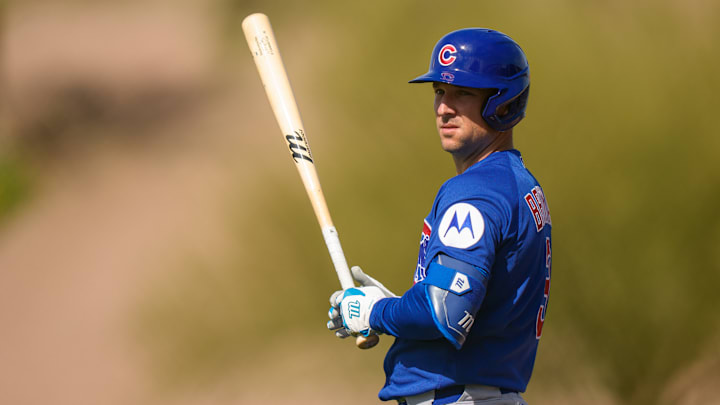
6. 3B Alex Bregman, Chicago Cubs

How he was acquired: Signed a 5-year, $175 million contract in free agency
Let's start with the fact that a case could be made that no player was as valuable to a single team as Alex Bregman was to the Red Sox. For a youth-laden roster in Boston, the veteran presence of Bregman was immensely important for the clubhouse as a mentor and teacher, just as much so as he would've been on the diamond. But on the diamond is where things could potentially get tricky for the Chicago Cubs after they inked him to a five-year pact at $35 million per season.
Make no mistake, overall, Bregman has been one of the most consistent hitters in the league. He's had just one season in his entire career where he's posted an OPS below .770 and just two years since his second season in the majors (2017) in which he's posted an OPS below .800. He's also hit 20 homers in all but one season in which he played at least 150 games, along with averaging 39 doubles per 162 games for his career.
What can't be ignored, however, is that Bregman will turn 32 years old right after Opening Day and missed some 50+ games with the Red Sox last season, arguably coming back too soon. But whether it was injury or decline, this was a player who posted a .927 OPS in the first half over 53 games, but a pedestrian .727 OPS in the second half across 61 games.
If the older version of Bregman is closer to the latter, especially with some of the defensive inconsistency we saw last year, this is going to look like a bad contract for the Cubs. That's not a guarantee, but there are at least some troubling signs with the veteran third baseman.
5. LHP Mackenzie Gore, Texas Rangers

How he was acquired: Trade with Nationals for SS Gavin Fien, RHP Alejandro Rosario, IF Devin Fitz-Gerald, OF Yeremy Cabrera and 1B Abimelec Ortiz
Mackenzie Gore had been one of the hottest names on the trade market for quite some time, and the Texas Rangers seemingly swooped in out of nowhere to land him from Washington this offseason. That alone created an interesting situation, as the Rangers gave up a king's ransom worth of prospects to get him, including their 2025 first-round picks, Gavin Fien. However, Texas really didn't appear like a team that needed to add a pitcher such as this.
Beyond just the process that still leaves me a bit perplexed, though, the Rangers are also betting on Gore being able to put together a full season for essentially the first time in his career. Yes, the underlying numbers have been good, but the lefty has throw to a 4.19 ERA over his four seasons in the majors to this point, and last year continued to raise some concerns.
Over 19 starts in the first half of the season, Gore was flat-out dominant — which is a big reason why the Rangers or any suitor coveted his services — with a 3.02 ERA and 1.196 WHIP over 110.1 innings. But the wheels fell off in the second half of the year. Across 11 starts, he accrued just 49.1 innings with a 6.75 ERA and a 1.703 WHIP. It's great to have a pitcher with that type of ceiling, but you certainly would prefer to see it sustained more throughout the year.
Gore to the Rangers isn't higher on this list simply because they have such a stout rotation that they aren't essentially hanging all the hopes and dreams of their pitching staff on him. However, if they want to contend, they do need Gore to be better than what he has been over full seasons throughout his career to this point, which brings some inherent risk.
4. 3B Caleb Durbin, Boston Red Sox

How he was acquired: Trade with Brewers involving two more IFs to Boston for LHP Kyle Harrison, SS David Hamilton and LHP Shane Drohan
Suffice it to say that replacing Alex Bregman with Caleb Durbin wasn't exactly what Boston Red Sox fans had in mind for the offseason. Admittedly, I'm still bullish on this roster and how it stacks up against the rest of the American League. At the same time, the bet on the long-term future of Durbin to step in and play a massive role in this offense certainly isn't a sure one.
Durbin finished third in NL Rookie of the Year voting last year with the Brewers, slashing .256/.334/.387/.721 with plus defense, 25 doubles and 11 home runs in 136 games. The diminutive infielder showed a terrific approach at the plate and, again, versatility and value with the glove. However, he's now being asked to essentially pair with Marcelo Mayer and Willson Contreras to replace Bregman after Boston failed to re-sign him this offseason in free agency.
There are signs that Durbin could do that, to be sure, especially at Fenway Park. His pull rate and pull-air percentage are enticing to play off the Green Monster. Furthermore, he's going to be a plus for the infield defense that Boston needed to address.
At the same time, though, Durbin doesn't appear to bring a ton of power, and his ceiling might be limited. While I don't think he'll necessarily bust in terms of being a bad player for the Red Sox, there is a real possibility that he's wildly disappointing, especially to the fan base, in terms of what he brings to the table when he's going to be pegged as Bregman's replacement.
3. 3B Bo Bichette, New York Mets

How he was acquired: Signed a 3-year, $126 million contract in free agency
You could certainly talk me into the idea of placing Bo Bichette higher on this list of potential busts from the offseason as he joins the New York Mets. For one, it starts with the process of how he was acquired. The writing on the wall appears to be that Steve Cohen and David Stearns were quite confident that they were going to outbid the market on Kyle Tucker and get that deal done. Instead, he landed with the Dodgers, and less than 24 hours, they pivoted to Bichette, who had hardly been mentioned as an option for the Mets prior to that this offseason.
The hasty nature that seems to be present with this deal comes to the forefront when you look at the Mets' plan defensively for Bichette. Other rumored suitors like the Phillies and Red Sox were considering moving Bichette to second base if they were to sign him, which was due to the fact that Bichette had -13 Outs Above Average and -10 Fielding Run Value last season with Toronto.
Essentially, the belief was that Bichette was going to move to a less demanding and, frankly, important position than shortstop. The Mets, on the other hand, are planning to play him at third base. That feels unwise, to say the least, and something that could absolutely blow up in the franchise's face quite quickly if his defensive decline continues at the hot corner.
The reason Bichette isn't even higher than No. 3 is because I still believe he's going to hit. However, he ends up this high because of the defensive questions that seem likely to fail, and the fact that, even as a good bat, paying him more than $40 million per season still feels a bit rich.
2. RHP Dylan Cease, Toronto Blue Jays

How he was acquired: Signed a 7-year, $210 million contract in free agency
The Toronto Blue Jays came out of the gates hot in free agency, doling out a massive contract to Dylan Cease, arguably the top starting pitcher on the market this offseason. And it's not hard to see why. In the past four seasons, Cease has a runner-up Cy Young finish and another Top 5 finish in voting, he's one of the better strikeout pitchers in baseball, and he just turned 30 years old.
That, however, doesn't mean that Cease comes without any risk, and the price that the Blue Jays are paying amplifies that risk, even if he isn't a make-or-break piece for Toronto finding success this season. Yes, he could raise their ceiling to World Series caliber, but him underperforming wouldn't sink them either.
And underperforming is a possibility. Cease is a darling of advanced metrics, perhaps most notably posting a 3.37 FIP over the past five seasons, even though his ERA has been at 3.72 over that span. That indicates that, to some degree, he's been a bit unlucky with his results on the mound. At the same time, the results have been worryingly inconsistent.
Cease is being paid to be an ace, but his last five years show some high variance. He had a 2.20 ERA in 2022 and a 3.47 ERA in 2024, but he's posted an ERA over 4.50 in 2023 and 2025 and had a 3.91 back in 2021 as well. If Cease doesn't live up to the underlying metrics in Toronto's program and isn't a clear ace of the staff, that's not going to look favorably on him given what the Blue Jays are paying him.
1. RHP Shane Baz, Baltimore Orioles

How he was acquired: Trade with Rays for C Caden Bodine, OF Slater de Brun, RHP Michael Forret, OF Austin Overn and CBT Round A Pick
On the one hand, I fully respect the Orioles for being aggressive in trying to address the dire straits of their starting rotation, and Shane Baz was an available arm they paid up for and acquired. And while I do understand the thinking behind betting on the upside in Baz, he's expected to be one of the anchors of this rotation in Baltimore, and we have no evidence that he's that type of pitcher.
Baz has pitched in parts of four seasons but has logged just 286 innings in his career, pitching to a 4.25 ERA and a 1.227 WHIP over that time with a 4.28 FIP. Furthermore, he's also posted just two seasons in which he's thrown for more than 70 innings, and when he threw the most innings of his career in 2025 (166.1 IP), he posted a pretty pedestrian 4.87 ERA and 1.335 WHIP with a 4.37 FIP on the year for Tampa.
I get it. The stuff for Baz is clearly there. But as important as stuff is, I also need to see results, and there has been nothing consistent from the right-hander in his career to this point. If he were simply a high-upside flier that the Orioles were taking, I wouldn't be looking at this as strongly as a big bust candidate for the 2026 season.
That's not the case, however. Baltimore needs him to be one of the top two arms in the rotation, most likely, and that's a massive leap for him to take. Maybe he takes it, because the tools and stuff are there. But there is nothing in his major-league track record to this point to suggest he can be what the Orioles essentially need him to be in order to reach their ceiling as a team this season.
 Add us as a preferred source on Google