
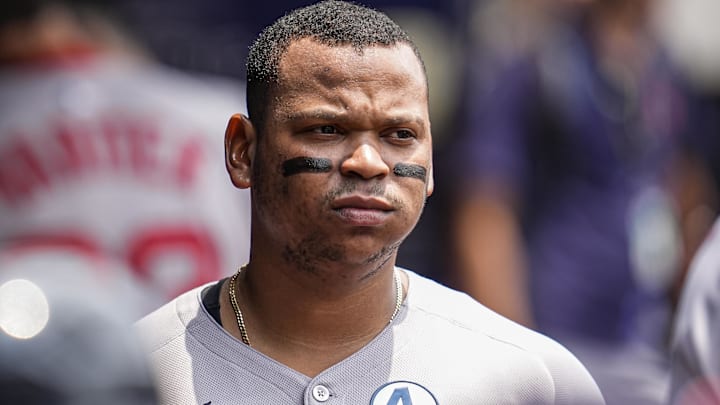
The Boston Red Sox shocked the MLB world by trading Rafael Devers to the San Francisco Giants, and what's happened since has the fan base in shambles. Not only did they fall short in the Wild Card Round thanks largely to their lack of power without Devers, but they lost Devers' replacement, Alex Bregman, to free agency, and have now traded another player involved in the return, Jordan Hicks, to the Chicago White Sox, according to ESPN's Jeff Passan.
Trade news: The Chicago White Sox are acquiring veteran right-hander Jordan Hicks and right-handed pitching prospect David Sandlin in a trade with the Boston Red Sox, sources tell ESPN.
— Jeff Passan (@JeffPassan) February 1, 2026
This was a clear salary dump from the Red Sox, who sent most of the money Hicks is owed to the White Sox in this deal. In order to shed the money that they are, the Red Sox had to part with one of their best pitching prospects, David Sandlin, in exchange for a less-exciting prospect, Gage Ziehl.
Jordan Hicks trade grades: Red Sox continue to make Rafael Devers trade look like a disaster
Trading Devers, a player who was clearly unhappy in Boston and was making more money than he was worth, made sense only if the big-market Red Sox got a nice return and reinvested the money saved from the Devers deal. The Red Sox have accomplished neither so far.
The return included Kyle Harrison, Jordan Hicks, Jose Bello and James Tibbs III. The Red Sox already traded Tibbs, arguably the most exciting player in the deal, to the Los Angeles Dodgers in exchange for a couple of underwhelming months of Dustin May, and they've now traded Hicks as well. All that's left is Kyle Harrison, a starter without much of a shot of landing a rotation spot anytime soon, and Jose Bello, a 20-year-old prospect in rookie ball. That's all they got for an elite hitter, their lineup could desperately need.
The worst part of the Hicks deal is that the entire motivation of the deal was to save money. Yes, the Red Sox, a big-market team, are still in money-saving mode even after shedding the entirety of the $200+ million Devers was owed.
Red Sox trade grade: D

The Red Sox hoped a move back to the bullpen, where he had previously thrived, would help Jordan Hicks figure it out after struggles with the Giants, but his short tenure in Boston was nothing short of abysmal. Hicks allowed 20 runs (17 earned) in 18.2 innings with the Red Sox, posting a 8.20 ERA in 21 appearances. He had nearly as many walks (12) as strikeouts (15), and he ended the season on the IL with a shoulder injury.
Hicks was so underwhelming that the Red Sox could only offload roughly two-thirds of the $25 million he's owed over the next two seasons to the White Sox while also attaching one of their best pitching prospects in the deal and acquiring Gage Ziehl, a pitcher whose ceiling isn't nearly as high as Sandlin's.
Finding a willing taker of most of Hicks' contract keeps Boston's grade from being an F, but no matter how you slice it, this is a disastrous situation the Red Sox have put themselves in. Trading Devers is one thing, but having to attach a meaningful prospect just to get off of part of the return, especially when they haven't spent much to replace Devers, is such an embarrassing outcome.
White Sox trade grade: A

From the White Sox's perspective, how can you not love this deal? Is Hicks worth the $17 million the White Sox are going to pay him over the next two years? Of course not, but who cares? The White Sox won't be competitive for the next two seasons anyway, and they were willing to eat money to acquire a very exciting pitching prospect.
Sandlin, a starting pitcher who can hit triple digits with his fastball and pairs that pitch with a splitter and sweeper, has a ton of upside. He struggled in his first taste of Triple-A action in 2025 as a reliever, but he was having a strong year in Double-A as a starter before getting promoted, and could very well find his way in the majors sometime in 2025.
All the White Sox had to part with in this trade was Gage Ziehl, a pitching prospect whom the White Sox acquired for Austin Slater at the 2025 trade deadline. It likely won't lead to more wins in 2026, but Chicago essentially bought a prospect by using a chunk of the money they saved from the Luis Robert Jr. trade, and that could help them win a ton of games in 2027 and beyond. Jerry Reinsdorf wasn't cheap for once!
Plus, Hicks has had success in the bullpen in the past. Who's to say he won't flourish in a low-pressure role in a White Sox bullpen that needed another arm and be a piece they can flip at the trade deadline? Again, this trade was awesome from just about any angle from Chicago's perspective.
More MLB news and analysis:
 Add us as a preferred source on Google