
Key Points
Bullet point summary by AI
- The Boston Red Sox faced off against the Cincinnati Reds with high hopes for MLB's new automated ball-strike system.
- A veteran umpire behind the plate made a clear off-plate call that the system couldn't correct due to exhausted challenges.
- This mistake highlights the ongoing challenges teams face in managing replay strategies and technology limitations this season.
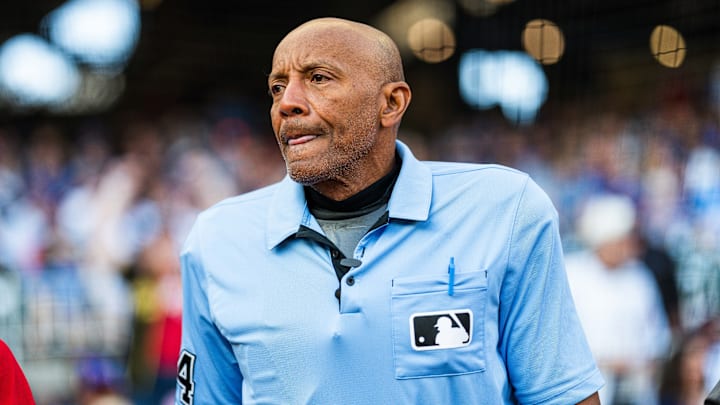
Well, the dream of MLB's new automated ball-strike challenge system making horrible home-plate umpiring a thing of the past lasted all of [checks notes] three days. And to the surprise of absolutely nobody, long-time menace CB Bucknor was the man responsible for bringing us all back down to Earth.
Bucknor was behind the plate for the Boston Red Sox-Cincinnati Reds game on Saturday afternoon, and decided to ring up Boston shortstop Trevor Story on a fastball that was clearly off the plate. It was exactly the sort of mistake that ABS was designed to rectify ... except the Red Sox were already out of challenges by the top of the fourth inning. Story had no choice but to walk back to the dugout, and Boston was left face-to-face with the prospect of five more innings without the ability to correct one of Bucknor's inevitably frequent mistakes.
The pain of having no ABS challenges left. Especially with CB Bucknor behind the plate. pic.twitter.com/zIdoUsrPVd
— Tyler Milliken (@tylermilliken_) March 28, 2026
The Red Sox bear their share of the blame here; you only lose your challenges if they're unsuccessful, after all. Still, it's grimly funny that, no matter how much the league tries, Bucknor nevertheless found a way to make himself immune to technology — and it holds a valuable lesson, both for the league and its teams.
It took CB Bucknor three days to show the limits of MLB's ABS system
For starters: Of course, Red Sox fans made sure to get their best Bucknor jokes off, as well they should.
CB Bucknor vs. ABS pic.twitter.com/8hS5aSVg8z
— Jared Carrabis (@Jared_Carrabis) March 28, 2026
Every team should get an extra challenge when CB Bucknor is behind the plate. pic.twitter.com/qFs7x3zAum
— Boston Strong (@BostonStrong_34) March 28, 2026
But there is a point to be made here beyond all the (admittedly very funny) memes. MLB put the ABS system in place in response to years of fan and player outcry, no doubt hoping that the ability to appeal to replay review would offer a failsafe against truly egregious misses — the types of bad calls that swing games and, eventually, playoff races.
And yet, here we are. The ABS system seems to be working fine thus far, but it can only do so much. There may come a day, sooner rather than later, when the league feels good enough about the technology — and good enough about its ability to avoid a PR hit — that it hands things over to the robots entirely. Right now, though, the fact remains that, as long as there are still human umpires making calls, there exists the possibility of human error.
Which means that, like it or not, we're stuck with Bucknor and error-prone umpires like him — at least to some extent. It's simply not reasonable to expect any team to handle the system well enough to hold onto both of their challenges for an entire game, or to use them frequently enough that they're addressing every missed call. This is a band-aid over a geyser, and it'll be fascinating to see how teams like the Red Sox begin to adjust their challenge strategy as a result.
MLB teams are still in the process of figuring out roboump strategy
Front offices around the league have no doubt already started crunching the numbers on the very best ways to use or not use their two challenges per game; winning on the margins is the whole reason teams employ so many Wharton grads in the first place, after all. But it's impossible to get a real sense of ABS, its nooks and crannies and loopholes, until we see it in action. So it's no surprise that this weekend has been pretty scattershot, with teams all over the place in terms of how empowered their pitchers, catchers and hitters are and how aggressive they want to be about challenging.
You can expect a meta to emerge soon enough, as every team figures out how much of an advantage challenging really is in all manner of different circumstances. We might even reach a point at which teams develop scouting reports for each individual umpire; if you know that you'll have someone like Bucknor behind the plate, you might not be so keen to challenge a borderline strike call in the second inning, knowing that higher-leverage mistakes will be coming soon enough.
Until then, the more things change, the more they stay the same. No matter how much the game advances into something previously unrecognizable, we're still left screaming into the void in the face of an umpire who doesn't much care what we think of his job performance. That's strangely comforting, in its own way. Well, unless you're a Red Sox fan.
 Add us as a preferred source on Google