
Key Points
Bullet point summary by AI
- The 2026 MLB season opened with several teams facing early setbacks, raising concerns about their readiness.
- Kevin Cash's questionable bullpen decision in a game where the Rays held a significant lead has fans worried.
- These early struggles highlight critical vulnerabilities that could impact playoff contention for teams like the Astros, Padres and more.
If you caught NBC’s Opening Day broadcast of the Pirates–Mets game, you might have heard color commentator and longtime Pittsburgh second baseman Neil Walker’s anecdote about losses and showers.
Let me explain. After the Pirates went down 5–2 early, Walker shared a story from his playing days. Clint Hurdle, who managed the Pirates for much of Walker’s tenure, would tell his team to “shower well” after a loss or amid a prolonged slump.
Unfortunately for 11 of the 22 teams that played on Thursday, their postgame priority might have been getting the dirt off rather than celebrating a 1–0 start to the season. Some losses were to be expected, while others raised a red flag, at least for me.
To be clear, this list isn’t as simple as a team starting 0–1. Losses are going to happen. Instead, this has far more to do with decisions or trends I noticed in those games.
Honorable mention: Chicago White Sox

Unless you took the over on the White Sox’s projected win total, then it’s hard to be truly concerned about them just yet. We know that the White Sox are still a long way off from realistically competing, so a 14–2 blowout loss to the Brewers doesn’t exactly raise the red flags.
However, I wanted to include them because the White Sox allowed at least two runs in four consecutive innings on Thursday afternoon. That goes a long way in damaging the slightest bit of optimism that some Sox fans might have had about this season being slightly better.
Then again, so long as the White Sox avoid another 100-loss year, then perhaps all will turn out OK on the South Side. At least Munetaka Murakami hit his first career home run on Thursday afternoon.
Houston Astros

I had a fun conversation with a friend of mine on Thursday, where we guessed how many pitchers threw at least 174 innings last year. For context, we were remembering Steve Trachsel, a journeyman starting pitcher from the 1990s and 2000s who averaged 174 innings over a 14-year span. My friend guessed eight pitchers did last year, and I thought the answer would be 11.
As it turns out, 27 pitchers threw at least 174 innings last year, and Astros ace Hunter Brown was one of them. Unfortunately for Brown, he only lasted 4 2/3 frames in Thursday’s 3–0 loss to the Angels, but what concerned me the most was that he was throwing 102 pitches in that time.
I’m from the old school, so I like seeing pitchers work deep into games. Trachel averaged a 4.32 ERA during that span as a back-end, innings-eating starter. Brown, though, is a 27-year-old All-Star in his prime. Why would Joe Espada keep Brown out there that long?
It’s not the 3–0 loss itself that has my radar up about the 2026 Astros. Instead, it’s this nagging feeling in my gut that Espada will be so desperate to win that he makes too many unnecessary, dangerous decisions.
San Diego Padres

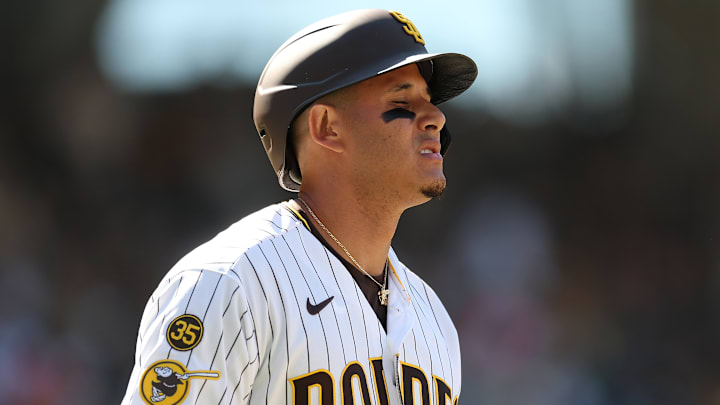
I’ve been down on the Padres all offseason, so an 8–2 Opening Day loss doesn’t exactly surprise me. I caught the first few innings via MLB Network, and I was shocked by how lethargic the Padres looked. The excuse that they were facing Tarik Skubal isn’t an excuse.
The Padres resembled a team without an ounce of fight in them, and that’s especially concerning given how talented the NL West is. With the Dodgers heavy favorites to win their fifth straight division title, there is only so much wiggle room for the Padres, Giants, and Diamondbacks — even with three Wild Card seeds.
Losing on Opening Day is one thing. Trailing 4–0 while taking your first home at-bats and showing little cohesion over the following 8 1/2 innings is something else entirely.
Tampa Bay Rays

Rays manager Kevin Cash began the 2026 season by showcasing his diploma from the Aaron Boone School of Poor Bullpen Management. While up 7–1 going into the bottom of the sixth inning, Cash opted to pull Drew Rasmussen after 73 pitches. The Rays subsequently gave up eight runs, with Ian Seymour allowing five straight hits before being pulled.
Cash should have known better. There was no reason to pull Rasmussen after only 73 pitches, especially since he looked sharp enough to work into the sixth. Cash and Rasmussen both cited the Rays’ six-run top of the inning as to why the latter left the game so early. If anything, that’s even more reason for Rasmussen to come back out.
“If they had stopped at three, I would have been back out there for the sixth,” Rasmussen told reporters. “I mean, if we’re going to score seven consistently, we’re going to win a lot of games this year.”
Not if your manager doesn’t allow his best pitcher to hit 80 pitches in a 7–1 game.
More MLB news and analysis:
 Add us as a preferred source on Google