
Key Points
Bullet point summary by AI
- A handful of MLB teams are turning smart challenges into real runs and wins early.
- Dodgers and Diamondbacks lag behind, wasting challenges and missing chances to flip key calls late.
- The No. 5 hitter is winning 64 percent of challenges, making them the most reliable voice in big moments.
Welcome to the 2026 MLB season, where the head tap has become the most important signal in baseball. The Automated Ball-Strike (ABS) challenge system is no longer a novelty. It is changing how games are won and lost in Major League Baseball. While every team has the same two challenges, not everyone is using them the same way. Some teams are treating it like a strategic weapon, while others are simply guessing.
Here is everything you need to know about the Robot Ump era and which teams are currently the smartest kids in the class.
How the ABS challenge system actually works

If you’re still a little confused about why some pitches get reviewed and others don't, here is the quick cheat sheet:
- Who can challenge? Only the pitcher, catcher or batter. The manager has to stay in the dugout for this one.
- The clock: You have exactly two seconds to signal. If you wait for the dugout to give you a thumbs up, you're too late.
- The reward: Each team gets two challenges per game. If you’re right, you keep it. If you’re wrong, it’s gone.
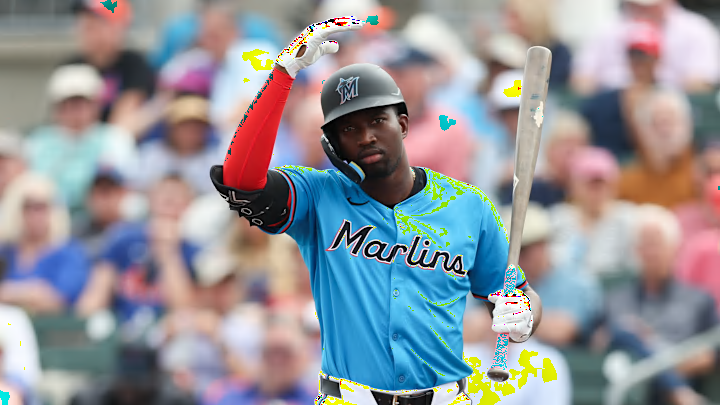
As we saw in the Yankees/Marlins game earlier this week, the batter also does not get the chance for a take-back after challenging a pitch. Here's looking at you, Ben Rice.
The teams using ABS challenges better than everyone else
Using data from the first two and half weeks of the season, we can see a massive gap in how teams handle these reviews. It isn't just about getting calls right; it's about getting them right when it matters.
Rank | Team | Run Value | Success Rate | MLB Record |
|---|---|---|---|---|
1 | Cincinnati Reds | 17.2 | 66.7% | 9-7 |
2 | New York Mets | 15.4 | 58.3% | 7-9 |
3 | Miami Marlins | 10.9 | 45.5% | 8-8 |
4 | Baltimore Orioles | 9.3 | 56.2% | 8-7 |
5 | Toronto Blue Jays | 8.8 | 44.4% | 6-9 |
The Cincinnati Reds are currently the kings of the challenge, adding more than 17 runs to their season total just by winning reviews. The New York Mets are right behind them, proving that the big-market teams are investing heavily in "Challenge IQ."
On the flip side, teams like the Los Angeles Dodgers and Arizona Diamondbacks have struggled. They are often wasting challenges on pitches that are clearly strikes, leaving them empty-handed when a real mistake happens in the 9th inning.
Why the No. 5 hitter is dominating ABS challenges
Here is a stat to tell your friends at the bar: The #No. 5 hitter is the most dangerous person in the park when it comes to challenges. League-wide, players in the 5th spot are winning their challenges 64 percent of the time. Compare that to leadoff hitters, who are only successful about 49 percent of the time.
Why the difference? It's all about the pressure. The No. 5 hitter usually comes up with runners on base and two outs. In those do-or-die moments, their eyes are more dialed in. When the cleanup protection taps his head, believe him, because he’s usually right.
Is pitch framing still relevant in the ABS era?
One of the biggest fears of the robot ump era was that catcher framing (making a ball look like a strike) would disappear. It turns out, the best catchers are just getting better. Take a recent game where a pitch clearly clipped the zone but was called a ball. The catcher didn't get the "framing" credit from the ump, but he immediately challenged and won the strike back.
In 2026, catching isn't just about moving the glove; it's about having the guts to tell the umpire they're wrong.
The verdict
The ABS system hasn't slowed down the game. Most reviews are over in under 15 seconds. Instead, it has added a new layer of drama. In a game of inches, the head tap might just be the most valuable sign on the field right now.
 Add us as a preferred source on Google