
Key Points
Bullet point summary by AI
- The NBA has introduced a sweeping anti-tanking proposal aimed at reshaping draft lottery odds and team incentives across the league.
- The new plan directly targets the core issue by decoupling poor regular-season performance from the best draft pick opportunities.
- This approach could dramatically alter team strategies and fan experiences, potentially ending years of debate around competitive manipulation.
Once upon a time, a bunch of powerful people got in a room together and realized their citizens were struggling to make ends meet. Their solution? Cut taxes for the rich, a stupid idea that has gone down in history as “trickle-down economics” in which creating then solving a completely separate “problem” (rich people pay more taxes) was supposed to solve the actual problem. It didn’t work.
The NBA faces a different problem: tanking, in which the best strategy to build a winning basketball team is to repeatedly lose. But many tanking solutions — hitting salary-cap figures, docking season-ticket revenue, placing tanking teams in a separate tournament — are just like trickle-down economics; they create a new problem that is agnostic of the real issue and then solve that, which is somehow supposed to fix the simple reality that losing basketball games is directly correlated with the best draft picks.
The NBA's tanking plan solves the actual problem rather than dancing around it

But I’m optimistic about the NBA’s official solution: to flatten lottery odds considerably and penalize being one of the bottom three teams in the league by giving the 28th, 29th and 30th teams worse odds than some teams below them. This may actually get at the real issue, as for the first time, being-the-worst will be decoupled from getting the best players in the draft. Sure, it may create some new problems, but I think those are small peanuts compared to the potential benefits.
I am a fire-breathing radical when it comes to tanking fixes. If the NBA said tomorrow that the lottery has been abolished and that they will adopt a completely random order every single year — yes, the Oklahoma City Thunder could win the Finals and then get the number one pick — I’d be all for it. If they had some law firm sketch out a completely fair schedule for draft picks for the next 30 years and just said “we’re doing this,” I’d be all for it. Those are not realistic and they create countless offshoot problems, but they would obliterate tanking in one fell swoop.
This milder solution is a nice compromise that actually manages to unlink losing from a benefit without completely destroying the ability for bad teams to draft great players. Under this system, it is never in your interests to lose at any point throughout the season. Meanwhile, I like the provision that teams cannot be awarded three consecutive top-five picks; sure, there are teams like the San Antonio Spurs that were built by that, but I don’t think it’s controversial to ask that, if you draft twice in a row from the top five, maybe get it together?
The potential drawbacks of the plan are being overblown

It’s easier to throw rocks at a house than to build one, and while I’ve seen many in NBA media immediately decry these fixes as overreactions that could cause more problems than they solve, I don’t see that at all. The main criticism I’ve seen all over is that this will unfairly penalize teams that just … suck, like the Sacramento Kings, who could perennially be the worst team in the league and never have good odds at a top pick.
To that, I say this: it is not the NBA’s responsibility to hold the hand of incompetent franchises and guarantee them improvement. I would question anyone who says the Utah Jazz have had to be this bad for this many years in a row, and I would doubt anyone who thinks that coordinated tanking strategy over multiple years — remember The Process? — doesn’t have far more to do with these teams being awful than natural selection. If the Kings are just this bad naturally? Let them figure out how to fix it within the rules.
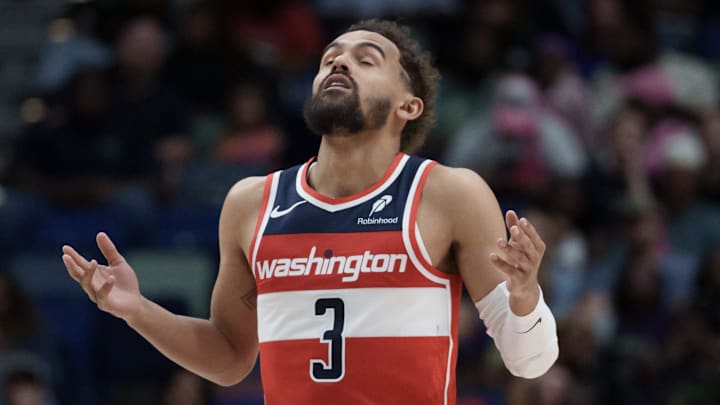
I also think that any anti-tanking measure must incentivize teams to play their good players throughout the regular season; that is what we are trying to fix. I should not have to turn on a Boston Celtics vs. Washington Wizards matchup in early April never having heard of any of the Wizards players.
The benefits far outweigh some legitimate concerns
One thing I will grant to critics of the rule: I do not understand why we needed to expand the lottery to include two playoff teams. It creates this strange situation where tanking the 7 vs. 8 seed play-in game might be a legitimate strategy; you can grab a lottery pick and then go do your playoff run as normal. That’s something I don’t ever want to see anybody do.
Nevertheless, under this new system, losing is no longer good for your team at any point throughout the season. I speculate that the traditional terrible teams will suddenly be far more successful than we all imagined, as everyone collectively remembers that the Jazz have Lauri Markkanen and Jaren Jackson Jr., having not seen either play in 87 years. It’s a radical shift, but let’s do some radical shifts, see what happens, and then all circle back in a few years. Anything is better than having this same tanking conversation every year until the end of time.
More NBA news and analysis:
 Add us as a preferred source on Google