
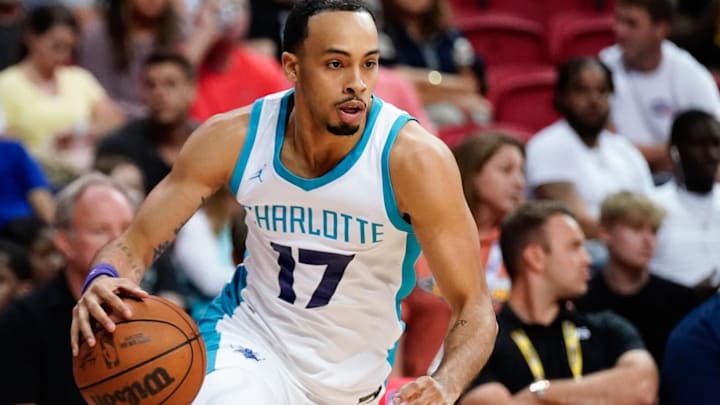
Amari Bailey is trying to become just the latest player to head back to college basketball after failing as a one-and-done in the NBA. But the big difference with Bailey, who was drafted in the second round of the 2023 NBA Draft out of UCLA, is that he's actually played real NBA games. That sets him apart from guys like Alabama's Charles Bediako and Baylor's James Nnaji, who were on NBA rosters or played in the G League but never stepped on the court for a regular season game at the highest level.
You thought college football was in disarray with tampering in the transfer portal, multi-million dollar NIL deals and a Wild West approach to roster construction? Well, let me walk you through the dumpster fire that is college basketball at the current moment. At least football remains confined to “amateur” players, no matter how much that definition is getting stretched by compensation numbers or seven years of eligibility. There remain strict rules that prevent players from coming back to college once they’ve declared for the NFL Draft.
In college basketball, though, I guess the NCAA has just decided it's too much effort to apply any regulations at all. Apparently you can be drafted in the NBA, but if you never sign an NBA contract, appear in NBA games and your only professional experience is either international or G-League, you could return to college and be granted immediate eligibility.
How is Bailey’s path back to college different from the other players who were able to curb the rules and turn back the clock on their basketball careers?
Why Amari Bailey’s path back to college isn’t the same as the rest

The best comparison to what Bailey is trying to do is what Bediako was able to prove by getting his college eligibility reinstated. Bailey and Bediako were both selected in the same draft, 10 picks apart, and both signed two-way contracts — allowing them to play G-League and get called up to the NBA if necessary.
The difference, though, is Bediako never signed a full NBA contract nor appeared in NBA games, while Bailey appeared in 10 games for the Charlotte Hornets as a rookie before being sent back to the G-League (where he was later cut). Bailey is now arguing that he shouldn’t be held to a different standard because of those "meaningless" minutes he played as a rookie.
After retaining an agent and a lawyer in order to try and sue his way back to school, he told the media that he made mistakes as a young 18-year-old at UCLA and essentially regrets leaving when he did. He’s seeking one more year of eligibility, arguing that it would be what amounts to his senior year of college. But the NCAA could care less what Bailey’s argument is: Because he’s played in actual NBA games, they are standing firm here where they caved on Bediako and Nnaji.
The NCAA has not and will not grant eligibility to any players who have signed an NBA contract. Congress can strengthen NCAA rules so professional athletes cannot sue their way back to competing against college students. https://t.co/hrSqL7xr8b
— Tim Buckley (@Tim_BuckleyMA) January 30, 2026
“The NCAA has not and will not grant eligibility to any players who have signed an NBA contract. Congress can strengthen NCAA rules so professional athletes cannot sue their way back to competing against college students,” said Tim Buckley, Senior VP for External Affairs with the NCAA.
The NCAA typically affords athletes a five-year window of eligibility — four years of competition, plus one redshirt year if needed. (The COVID pandemic offered all athletes currently enrolled in college a blanket extra year, and there are always medical and hardship exemptions as well.) Bailey is still within that five-year window, and is arguing that this should allow him to return to college ball.
"Right now I'd be a senior in college," he told ESPN. "I'm not trying to be 27 years old playing college athletics. No shade to the guys that do; that's their journey. But I went to go play professionally and learned a lot, went through a lot. So like, why not me?"
James Nnaji started a new trend that’s reprising failed basketball careers

Remember Zaire Wade, the son of future first-ballot Hall of Famer Dwyane Wade? He too is pleading his case to play in college. But his path is a bit different: He didn’t actually enroll in college, going from high school basketball to the 2021 G League draft. He last played for a professional team in Africa in 2023.
This whole trend was started by Nnaji, who decided his professional career was dead and tried to get a restart by returning to college. He's now enrolled at Baylor. Could he get drafted again? Who knows. Either way, reprising failed careers in college basketball isn’t the move. You know who you can thank for that? NIL.
College basketball is not a do-over safety net. If you leave it, with a full understanding of the consequences, live with the results of your decision. https://t.co/ROnUgKBA7Z
— Pat Forde (@ByPatForde) January 30, 2026
Bailey was making less than a million dollars on a G League contract. In college, Bailey had an NIL valuation of $538,000, just a few dollars short of that number. Can’t blame him for wanting to go back and make some more money.
Instead of pleading to go back to college, he should be the shining example for young players to come about why the one-and-done path isn’t for everybody. When you can be like Chad Baker-Mazara and be in college long enough to get kicked off your parents' insurance plan and still collect a check, why rush a professional career? Especially if it’s going to put you right back where it all started as a “college” athlete.
Why one-and-done is no longer the best path for aspiring NBA stars
Bailey is proof that one-and-done isn’t the best way to reach professional stardom. Sure, that was the case at one point. But now you can make more money as a seventh-year college player than a career G League player. Why rush to the NBA when you can exhaust as much college eligibility as possible and still get paid?
Former Charlotte Hornets player and UCLA standout Amari Bailey is making plans to return to college. He is the first player who has played in regular season NBA games to push for college eligibility. Details: https://t.co/VRjrBQnt7a
— Dan Murphy (@DanMurphyESPN) January 30, 2026
Bailey all but admitted that he got bad advice to go pro after a mediocre freshman season at UCLA. He was a former five-star prospect from California that once shared the court with big names like Bronny James. His mindset was to get to the NBA as quickly as possible, and he obliged. It ended up being the worst mistake he could've made.
But he made that decision, and now he has to live with those consequences. What does he gain from playing in college for another season? If he was good enough, he could just play overseas and hope to land another NBA contract. Instead, he’s taking the embarrassing route of going back to college, just to become a forgotten star.
Bailey doesn’t deserve to return to college. Neither do Bediako or Nnaji, but at least they didn’t play in any NBA games. Bailey did, and that forfeits any eligibility the NCAA might be willing to give. All three players realized the mistake they made going pro when they did. Nnaji and Bediako are giving false hope to failed basketball players. Bailey should be the example to every aspiring one-and-done player the grass isn’t always greener.
More college basketball news and analysis
 Add us as a preferred source on Google