
Key Points
Bullet point summary by AI
- The NCAA Tournament bubble this year features teams with weak records against top-tier opponents, raising concerns about fairness and quality.
- Current selection methods highlight how some teams only appear strong due to conference strength rather than true performance merit.
- Expanding the tournament field risks diluting competition by including teams that haven't consistently earned their spot through results.
Nothing says March Madness like the controversy of which bubble NCAA Tournament teams deserve a shot at winning a national championship — regardless how realistic it is. This year’s bubble bunch, well it’s awful to look at if we’re being honest. The NET ranking system, for as much good as it can bring, has saturated the bubble watch with teams that only have a strong ranking thanks to being in a strong conference.
If Quad 1 games are important, should wins be valued more than just playing a lot of Quad 1 games? Not a single bubble team per ESPN’s bracketology has a winning record against Quad 1 opponents and only one has more than five Quad 1 wins and a few more with exactly five Quad 1 wins. This is the problem with expanding the NCAA Tournament. You’re watering down the tournament itself adding more teams that don’t deserve to be in it.
To get into the tournament, your regular season resume and conference tournament resume should matter. We don’t need to expand the NCAA Tournament field to simply qualify more bubble teams – it’s a never-ending cycle. Instead, shrinking the field might improve the quality of the field rather than make exceptions for less-deserving teams.
This year’s bubble teams prove exactly why expanding the NCAA Tournament field is a bad idea
TEAM | OVERALL RECORD | NET RANKING | QUAD 1 RECORD |
|---|---|---|---|
Last Four Byes | |||
NC State Wolfpack | 19-12 | 35 | 5-7 |
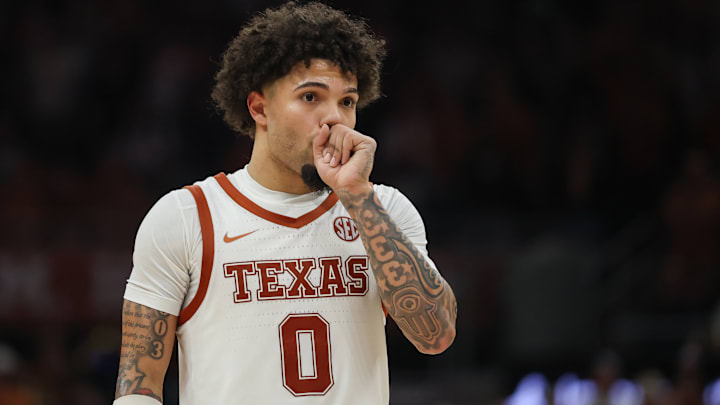
Texas Longhorns | 18-13 | 42 | 6-9 |
Santa Clara Broncos | 26-8 | 40 | 2-6 |
Missouri Tigers | 20-11 | 59 | 5-6 |
Last Four In | |||
UCF Knights | 20-10 | 51 | 4-7 |
SMU Mustangs | 20-12 | 37 | 4-8 |
VCU Rams | 24-7 | 44 | 1-5 |
Indiana Hoosiers | 18-13 | 38 | 3-11 |
First Four Out | |||
Auburn Tigers | 16-15 | 39 | 4-12 |
New Mexico Lobos | 22-9 | 45 | 2-6 |
Stanford Cardinal | 20-12 | 62 | 5-6 |
Virginia Tech Hokies | 19-13 | 57 | 2-10 |
Next Four Out | |||
Cincinnati Bearcats | 18-14 | 46 | 3-11 |
San Diego State Aztecs | 20-10 | 47 | 2-7 |
Oklahoma Sooners | 17-14 | 52 | 3-9 |
California Bears | 21-10 | 66 | 4-6 |
*The ESPN bracketology/NET rankings are as of 5 p.m. ET, Wednesday, March 11.
It just doesn’t make sense for the NCAA Tournament to expand beyond 68 teams. It’s honestly the perfect amount when you consider there are play-in games as well as at large spots. There are 31 conferences in Division I. That’s 31 of the 68 teams in the field filled out. It can’t be that hard to decide the other 37 at-large teams in the field. Not when you can do the process of elimination rather than making excuses.
There has to be a better way to determine which teams deserve to get into the NCAA Tournament. If NET ranking is the primary source then simply add the teams in the top 68 rankings and once you have overlap with that, simply add the next ranked team until the field is filled. That would make the NET more important while also valuing what teams do in the regular season.
Why expanding the NCAA Tournament field only adds more problems rather than solving them

Yes, adding more teams to the field shrinks the amount of teams you have to make excuses for, but it also waters down the field itself and puts teams in that really didn’t have to earn their way in. It’s the same argument that happens in the College Football Playoff. The bubble teams lost more than they should and that’s why they’re needing help to get in.
When it comes to NCAA Tournament teams, they get left out essentially by not playing in the right conference. Miami (OH) could be a one-loss team and get left out just because they don’t have the Quad 1 opponents. That doesn’t mean teams like VCU, whose only Quad 1 win is against USF, San Diego State, whose only Quad 1 wins are Nevada and Utah State, deserve to be in over the RedHawks.
I’m not saying Miami (OH) is a bubble team even with a loss. But there have been people that have criticized the RedHawks weak non-conference schedule and said that essentially anything less than a Mid-American Conference title should leave them on the outside. That would defeat the purpose of a perfect regular season record.
Does expanding the tournament mean Miami (OH) now has a way in? Probably not. All it means is the current bubble teams and power conference teams have more of an advantage to get in. Expanding the field isn’t about equality for all teams, it’s about getting as many SEC, Big Ten, ACC and Big 12 teams in as mathematically possible, assuming that’s improving the quality of the tournament itself.
Spoiler alert: It won’t. This year’s bubble teams is proof of that.
More March Madness news and analysis
 Add us as a preferred source on Google