
Key Points
Bullet point summary by AI
- The Michigan Wolverines face scrutiny as their handling of pressure could define their tournament run.
- Duke must shore up its turnover issues to advance against elite competition in the Sweet Sixteen.
- Arizona's reliance on favorable foul calls poses a risk against teams that play physical defense.
What started as a collection of 68 teams is now down to 16. Fifty-two teams have been eliminated, including defending champion Florida. The Gators got upset in the second round by the Iowa Hawkeyes. Gonzaga continues the narrative that they can’t win in March, losing in the second round as a three seed.
Going into the third round of March Madness, better known as the Sweet Sixteen, we don’t have any major upsets on the horizon. There’s only one double-digit seed left (No. 11 Texas), so those historic runs to the Final Four aren’t happening this year. The favorites have been favoriting, and the best teams remain in the running.
With that said, this is where things get interesting. Teams have been running through bad opponents, but now, everyone is pretty good. That doesn’t mean these teams don’t have flaws. These weaknesses will be essential for the opponents to exploit to make it to the Elite Eight with a spot in the Final Four waiting. Which teams are facing issues that might end their season?
No. 1 Michigan Wolverines
Fatal Flaw: Reaction to Frustration
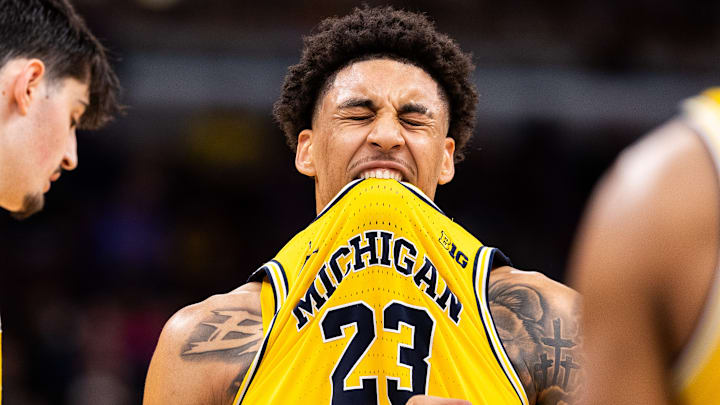
The Michigan Wolverines, on paper, are probably the best team in this tournament. They have talent up and down the lineup, and they have one of the best benches in the NCAA. They should win it all. Just being direct, this team is great. They have one major issue: they get frustrated. It’s what happened in the Big Ten tournament. They made it to the Big Ten tourney final, but they lost to the Purdue Boilermakers. That loss pushed them down to the third No. 1 seed (down from second) and pushed Purdue to a two-seed.
For much of that game, there was an unnecessary desperation from the Wolverines. They shot unhinged three-pointers that had no chance of landing. They focused on areas of the game that didn’t make much sense. It was not a good effort by Michigan, and Dusty May has to do better to get his team back on track. If they stay out of their own way, the sky is the limit with this roster.
No. 1 Duke Blue Devils
Fatal Flaw: Turnovers

Duke is another team that has a dominant roster, but they don’t seem as dominant as Michigan. That might sound crazy since the Blue Devils have lost just one game since conference schedules began and just two games all season, but the look of Duke isn’t there with the best of the best. The reason for that is the mistakes we see during the game.
Duke averaged just under 11 turnovers this season, which isn’t terrible. It’s nowhere near the top of the list, and actually close to 100th in ranking, but that’s not detrimental when there are more than 300 teams in the pool. The issue is what we’re seeing now. Duke turned the ball over 17 times against TCU, and the defensive pressure is only going to increase. They have to lock that down if they are going to hit their ceiling this tournament.
No. 1 Arizona Wildcats
Fatal Flaw: Attachment to Free Throws

Arizona is another team that is absolutely great. They do just about everything right. Arizona spent most of the season as the best team in the league. They play like it, as well. They lost two games in a row during Big 12 play, and those were the only two games they lost. When analyzing those two games, one thing stands out: the difference in free throws from other games. The Wildcats took 39 free throws against Utah State, resulting in 27 points.
In a loss against Kansas, the Wildcats had just eight points off free throws. So, what if the referees swallow their whistles and let the teams play? That often happens in this round, as teams start to play closer to each other. The referee doesn’t want to decide the game, but the Wildcats want that. They put themselves in a position to get calls, but what if they don’t? What if it’s one of those nights where the referee isn’t calling the game by the book? Arkansas has made 16.5 fouls per game, so Arizona is probably safe in the next round.
No. 2 Purdue Boilermakers
Fatal Flaw: Perimeter Defense

Purdue came out of the Round of 32 mostly unscathed, but they suffered a very significant injury. Guard C.J. Cox suffered a knee injury, putting his status for the Sweet Sixteen in jeopardy. Cox isn’t a star, scoring fewer than 10 points per game, but he did score 11 points before he got injured against Miami. He was one of their best defenders, especially on the perimeter.
Miami was awful from behind the arc, but Purdue has mostly seen shooters do well against them. They’ve allowed 34 percent of shots to go in from three. That was with Cox fully healthy. Even if he is a go for the game, many expect Cox to be limited with that knee injury. Luckily, they take on a Texas team that only hits 7.3 3s per game, but it will likely hurt them in future rounds.
No. 2 Houston Cougars
Fatal Flaw: Beating the Big Dog

All this season, Houston has been able to beat up on its opponents. In their wins, including so far in the NCAA Tournament, they’ve dominated all aspects of the game. They beat teams up on the boards, make better passes, and score a ton. In their recent game against Texas A&M, they held a 7-0 advantage in blocks. It was truly a great performance, but that’s how the Cougars have looked against the best of the best.
Against the top opponents in the country, they have not looked as great. They are 1-1 against Kansas, 1-1 against Texas Tech, 0-1 against Iowa State, 0-1 against Tennessee, and 0-2 against Arizona. They did have early-season wins against Arkansas and Auburn, but that feels like forever ago at this point. With No. 3 Illinois on the horizon, this will not be an easy test for Houston, and it only gets harder from here. Can they finally beat the best of the best? It’s really hard to ask them to figure that out in the Sweet Sixteen and beyond.
No. 2 Iowa State Hawkeyes
Fatal Flaw: Shutting the Door

Going back to the Big 12 for another two-seed, the Iowa State Cyclones had an interesting season. They went into conference play undefeated, but they suffered six losses to Big 12 opponents. They lost to all kinds of teams, including upsets against TCU and Cincinnati, and also went down to Arizona (twice) and Texas Tech. There was a theme in all of these matchups. The Cyclones could not finish someone off or make the big comeback.
Against the Horned Frogs, Iowa State gave up the final 12 points of the game and lost by seven. It’s almost like they see the momentum get away from them, and they can’t get it back. It’s like watching a horror movie on the court. Against Cincinnati, they allowed 44 points in the second half, making a comeback impossible. They did beat Houston with a go-ahead three-pointer late, but they have much more to say that their play late is an issue, and that will come up against Tennessee and especially Michigan/Alabama.
No. 2 UConn Huskies
Fatal Flaw: Too Focused onTarris Reed Jr.

UConn is an interesting two-seed. Let’s take a look at their three games with St. John’s, their biggest opponent in the Big East. The Huskies went 1-2 against the Red Storm this season, including losing in the Big East Tournament. In that final, St. John’s scored first and never trailed, beating UConn 72-52. Their first game was more exciting, with back-and-forth play, but St. John’s ran away late. Can UConn face on-court adversity?
When you look at their schedule, they haven’t played many close games, especially recently. They did outlast Kansas early in the season, and they had some squeakers against Seton Hall and Providence, but we’re not sure that is the type of resume we expect from a two-seed. It’s also the situation that comes when a team is built around a center. Furman stayed in their game because they let Tarris Reed get his points and stopped everyone else. UConn still won, but that strategy could hurt them at the end of games.
No. 3 Illinois Fighting Illini
Fatal Flaw: Locking into Half-court Offense

The Illinois Fighting Illini have one clear fatal flaw. It’s one that smart teams are going to take advantage of. Illinois is a team that loves to move the ball up the court and stop. They want to set up their half-court offense, and when that’s disrupted, whether it be through a full-court press or through relentless defense on the perimeter, the offense looks worse as a result.
We have seen Illinois play against those types of defenses, and it’s hard for them to adjust. They are reliant on that offensive structure to succeed. It’s part of the reason why they struggled down the stretch, losing five of their last nine games. Many have had Illinois on upset alert because of how they finished the season, but they survived the “upsets.” Now, as they try to take down a favorite, they need to find ways to score in transition to make it to the Championship Game.
No. 3 Michigan State Spartans
Fatal Flaw: 3-Point Defense

The Michigan State Spartans defense as a whole has been an issue all season. They have mostly been able to overcome this flaw, but this is the NCAA Tournament. In the Sweet Sixteen, these are the best of the best teams. We’re looking at fatal flaws of great teams because they will be a poison pill on their journey to a championship.
Where this goes one step further for Michigan State is on the perimeter. When you see their losses, the opponent wildly outshoots them from three. Michigan, in their 90-80 win, shot 45 percent from beyond the arc. Wisconsin shot 43 percent while MSU shot 30 percent. That puts Michigan State in a position where teams can build leads and make comebacks. If Tom Izzo doesn’t get his boys rushing to the arc with consistency, he’ll be golfing by next week.
No. 4 Alabama Crimson Tide
Fatal Flaw: Defensive Rebounding

The Alabama Crimson Tide has allowed teams to rebound nearly 31 percent of their missed shots. That’s already an awful statistic, but it’s even worse against a Michigan Wolverines team that rebounds 35 percent of its misses. Michigan is probably the most stacked team left in the tournament, but Alabama has been scorching hot as of late. This might turn into the best game of the tournament, which means it can turn on a dime and every possession matters. The fact that the Tide can’t stop its opponents from getting extra opportunities is clearly a fatal flaw.
Alabama might be the best perimeter team in the country, shooting threes at an incredible clip, but they lack the size and determination underneath. Michigan is the total package, so they can hit their own threes on the other side of the court while also getting those second-chance opportunities to make Alabama pay. The Crimson Tide must do everything they can to make more noise underneath the basket, or their season ends in the Sweet Sixteen.
No. 4 Nebraska Cornhuskers
Fatal Flaw: Size

The Nebraska Cornhuskers are the best story in college basketball this season. They were predicted to finish 14th in the Big Ten in preseason standings. That was quickly shown to be a terrible prediction, and they started racking up wins early and often. They even beat some Big Ten powerhouses like Michigan State and Illinois. They even took Michigan to the limit. However, now that the tape is out on the Cornhuskers, it’s well known they don’t do well in the paint, whether that’s scoring points or getting rebounds.
Nebraska doesn’t get to the free-throw line enough, doesn’t get second-chance opportunities, and they don’t score enough from underneath. Almost half of their points come from behind the arc. That’s a winning strategy when it’s a surprise, but it might not come as a surprise for the teams remaining in the tournament. The last time Iowa and Nebraska faced off, they went to overtime, so this is expected to be a fun and competitive game.
No. 4 Arkanas Razorbacks
Fatal Flaw: Frontcourt Support

Trevon Brazile can be a great presence for Arkansas. The Razorbacks big man has the athleticism to be dominant down low. He can rebound. He can make plays underneath. He’s even capable of boxing out and opening lanes for his guards. However, there’s a reason we used “can” and not “does” or “will.” Brazile has been inconsistent this season. In a 111-77 loss to Florida, Brazile scored just three points in 25 minutes.
If he has a similar experience against Arizona, this team is out the door. This is too good an opponent to have a player like Brazile not put his best foot forward. Behind Brazile, there is no depth in the front court. It’s life and death for the Razorbacks with their big man. If he plays at his best, they’ll have a chance to upset the Wildcats. If he doesn’t, they have no chance.
No. 5 St. John's Red Storm
Fatal Flaw: Interior Presence

The St. John’s Red Storm are one of the hottest teams in the country, beating UConn to win the Big East Tournament, and avenging the only loss they’ve had since Jan. 4. Rick Pitino’s team has been on fire lately, and it’s hard to see how anyone can stop them. Unfortunately, they play Duke. Duke has a greatness about them that matches St. John’s biggest weakness.
The Johnnies’ interior presence is not the best, and Duke has one of the better front courts left in the tournament. St. John’s has made it its mission to use relentless defense and tenacity to confuse and frustrate its opponent. However, size and skill can overcome both those traits. Duke has that in spades, and it might be too much for St. John’s to handle.
No. 6 Tennessee Volunteers
Fatal Flaw: Free-Throw Percentage

Many might point to Tennessee’s turnovers as its fatal flaw, and we don’t love how much the Volunteers give the ball away, but their “fatal” flaw is going to be free throws. There is so much tied to free-throw shooting that impacts a game. It makes it impossible to hold a lead late in games. It puts more pressure on shooters to hit with consistency. Missing free throws is often the exit door for most teams. It’s surprising that Tennessee made it this far while shooting less than 70% from the free-throw line.
Tennessee ranks 272nd in the nation in free-throw percentage. That’s very, very bad. It hasn’t been relevant to start the tournament, as Tennessee held big advantages against Virginia and Miami (OH). However, in a close matchup, those missed free throws are going to kill their momentum and get teams back into games.
No. 9 Iowa Hawkeyes
Fatal Flaw: Defensive Rebounds

The Iowa Hawkeyes are the biggest surprise on this list. They took down the defending champion Florida Gators in the second round, and now they have an easier path to the Final Four. However, there’s no team on this list with a clearer fatal flaw. The Iowa Hawkeyes are terrible on the defensive boards. Teams get easy second-chance points against them. When ranking all 361 teams in NCAA Division I basketball, the Hawkeyes rank 355th in defensive rebounds.
Iowa barely gets 20 defensive rebounds per game as a team. There are players all year that had more than 20 rebounds in a game. Now, Iowa actually matched Florida in defensive rebounds, and that’s why they had a chance to hit that game-winning three-pointer from Alvaro Folgueiras with 4.5 seconds left. However, history tells us this isn’t their game. They can’t repeat that process, and it will likely lead to their downfall.
No. 11 Texas Longhorns
Fatal Flaw: Defense

Simply, the Texas Longhorns have allowed 76 points per game, which is 236th in the league. Their defense is just not good enough. They are rough on the perimeter, and they are rough on the inside. Against Gonzaga, it appeared that the issue was going to come up, with the Bulldogs dominating underneath to start the session, but Texas made incredible adjustments and won the game. Can they keep doing that against better teams than the Zags?
It’s hard to have confidence in a team that is bad everywhere on defense. These teams that are remaining on the schedule can score in bunches. Purdue scores 82 points per game. Can Texas even have a shot to stop this Big Ten powerhouse? Obviously, they do, but it will take those same adjustments that were made against Gonzaga.
More college basketball news and analysis:
 Add us as a preferred source on Google