
The new era of college football is here and it involves a lot more lawyers and courtrooms. With players now able to cash in on their playing days, more and more are foregoing jumping to the NFL early if there isn't a solid chance they'll be an early-round draft selection.
That's been especially true for players that didn't play at the NCAA Division I level their entire careers. First we saw Vanderbilt's Diego Pavia file suit in federal court last year to gain his final season of eligibility, arguing his time in JUCO at New Mexico Military Institute shouldn't have counted towards his NCAA eligibility.
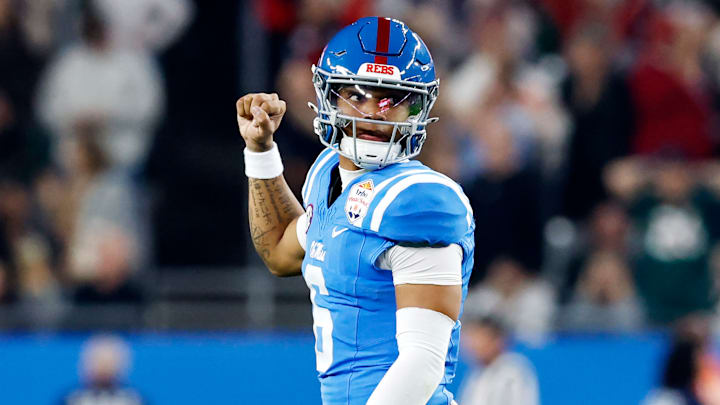
Pavia won his case and opened a pandora's box that more players are going to take advantage of. In fact, one already is. Ole Miss quarterback Trinidad Chambliss sued the NCAA on Friday for denying his request to get an additional year of eligibility. He argues his 2022 season at Division II Ferris State was plagued with respiratory issues that prevented him from playing, therefore qualifying him for an injury waiver.
More college players should fight for their eligibility like Trinidad Chambliss
Pavia and Chambliss are high-profile players in the sport and easily make headlines, something the vast majority of players won't be able to do. But with an example to follow, assuming Chambliss wins his case too, there's now an avenue for them all to fight for their eligibility outside the troubled systems of the NCAA.
There a multitude of reasons players may be denied additional eligibility but Pavia and Chambliss are trailblazing legal pathways for them ensure they can squeeze every last minute of time they have in college.
Not everybody gets to go to the league and with NIL and revenue sharing essentially legalizing paying players, those with little chance of earning a multi-million dollar deal will want to maximize their earnings. A good chunk of those guys transfer from JUCO or a lower division once they've caught the eyes of DI programs.
The NCAA also cannot have things both ways. It can't consider JUCO separate from its illustrious competitions but then count players' years of service there toward eligibility. It can't lay out exceptions for medical reasons and then subjectively claim a player hasn't sufficiently proven his injury.
Chambliss and Ole Miss claim they submitted 91 documents from a physician supporting the injury claim, according to the lawsuit. Something isn't adding up on the NCAA's side and the issue shouldn't be dropped.
Fighting the NCAA in the courts is the only way players can ensure they get a fair shake while the governing body flounders for a way to adapt to the new landscape of college sports. Its bylaws are archaic and any adaptations it makes are rife with loopholes and harmful contradictions.
Unless there's intervention from the highest levels on behalf of student-athletes, players - particularly those without big name agents - will continue to get the short end of the deal. While Chambliss' case is still pending, it should be a courage-inducing rallying point for others to fight for their careers while they still can.
More college football news and analysis:
 Add us as a preferred source on Google