
Key Points
Bullet point summary by AI
- The New York Jets face a pivotal decision at the No. 2 overall pick, with Arvell Reese and David Bailey at the forefront.
- Reese has been the most consistent projected pick for the Jets, but Bailey has his own merits as a fast riser.
- This choice will significantly impact the Jets' defensive strategy and long-term viability, making the selection process a critical juncture for the franchise.
In a perfect world the New York Jets would be able to turn the No. 2 overall pick in this year's draft into a franchise quarterback to pilot the franchise for years to come. Unfortunately, this draft class's lack of quality at the game's most important position will not allow that dream to become reality. Instead, the Jets will likely use the second pick in the draft to select a new leader for their defense.
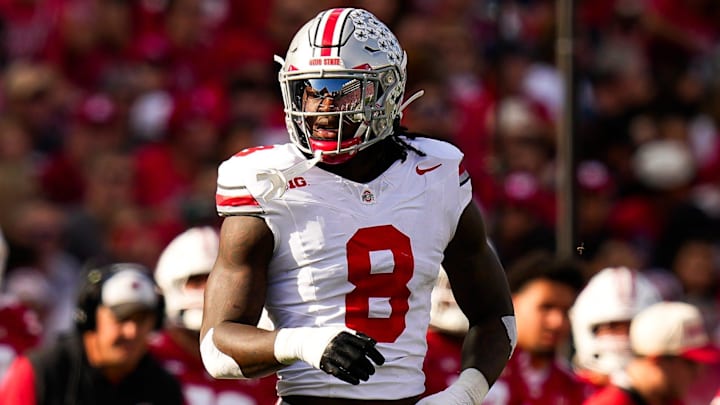
Former Ohio State standout Arvell Reese and former Texas Tech edge rusher David Bailey seem to be the two players generating the most interest from New York's front office. Reese played most of his snaps with the Buckeyes as an off ball linebacker. Bailey soaked up nearly all of his collegiate reps as an out-and-out defensive end with a penchant for harassing opposing quarterbacks.
Arvell Reese and David Bailey have New York Jets fans and analysts divided

Neither highly touted star is a perfect prospect. Reese was a dominant linebacker in college, but he wasn't asked to rush the passer from a conventional defensive end spot very often. Off-ball linebackers typically aren't considered value selections so early in the draft, which puts pressure on Reese to develop into an ace pass rusher if he's going to provide real value to the Jets at No. 2.
Bailey comfortably projects as a plus pass rusher, but there are serious questions about his ability to do the other things required of a top-flight defensive end. He lacks the ideal frame to set the edge against NFL offensive tackles looking to spring holes for their star running backs. That skill can improve over time for the former Red Raider, but he could easily to limited to a role as a pass-rushing specialist during his first season or two as a pro.
The flaws of each prospect leave the Jets with an imperfect choice to make at No. 2. Here's a breakdown of why New York might go with each prospect on draft night.
The case for the Jets drafting Arvell Reese

The reality that Reese only played 327 snaps for Ohio State on the defensive end last year is a double-edged sword for his NFL prospects. On one hand, he clearly has a lot to learn before he can catch up to his peers in terms of experience. The other side of the coin is that Reese should have more untapped pass-rushing potential compared to other edge-rushing prospects in this class.
Reese also gets bonus points as a prospect because he can fall back onto being a Pro Bowl off-ball linebacker if things don't work out with him on the edge. That would not represent maximum value as the second pick in the draft, but it does raise his floor as a rookie for a Jets franchise that needs defensive talent all over the depth chart.
It's unfair to expect Reese to turn into Micah Parsons, but there is a chance he can turn into something approximating that level of edge rusher. At worst, Reese can give the Jets a defensive leader at linebacker who makes plays for the next decade. That combination of that certainy and upside will be tough for the Jets to pass up.
The case for the Jets drafting David Bailey

The case for New York casting their lot with Bailey is absurdly simple. He profiles as a potential double-digit sack artist right away during his rookie campaign. The value of edge rushers who can win one-on-one battles continues to be sky-high in the modern NFL and Bailey has that ability in spades.
The argument against Bailey is that he could turn into a player who can only really thrive as a pass rushing specialist. He'd still give the Jets decent value in that role, but that's too narrow a scope for a player who would be taken with the second pick in the draft.
If the Jets take Bailey it's because they believe he can be their No. 1 defensive end for all three downs for the better part of the next decade. He does not have the certainty a team with New York's level of need would like to have in a top pick, but he does possess the upside to be a value at No. 2.
Who should the Jets take with the No. 2 overall pick?
There's a lot of discourse over whether or not Reese can turn his talent into becoming a dominant edge rusher at the pro level. There's no reason to think he can't make that transition given the prodigious athetic gifts at his disposal.
That's why he should get the nod over Bailey at No. 2. Reese may not have quite as high a ceiling, but his floor as a prospect gives him a significant advantage over his Texas Tech counterpart. Reese may not turn into a Hall of Famer but it's easy to see him becoming a perennial Pro Bowler for a team that can't afford to miss with this premium draft pick.
 Add us as a preferred source on Google