
Special Olympics coaches are working on the front lines of the inclusion revolution
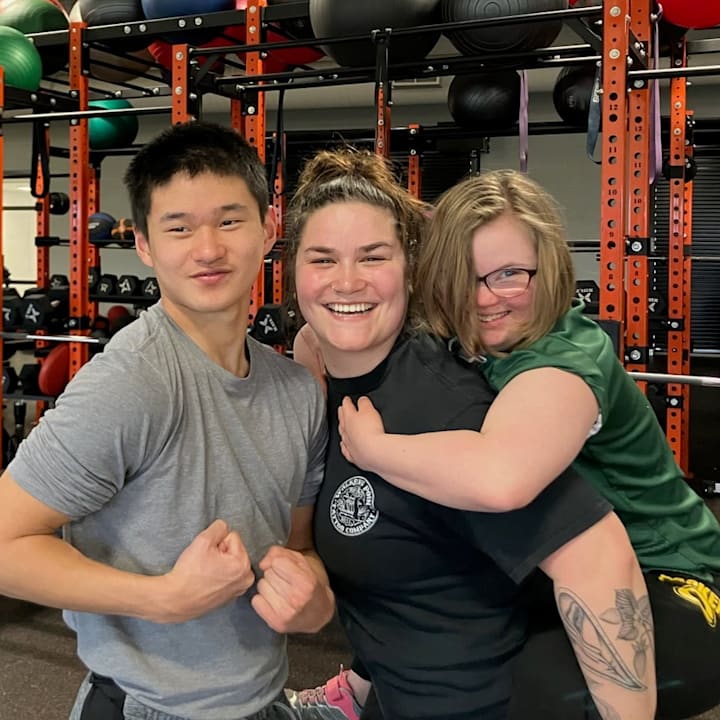
Identical twins Brynn and Britta Hesselberg began working with Special Olympics early, and it's since become a lifelong passion. After years of involvement at every level, they’ll represent Wisconsin at the 2026 Special Olympics USA Games in Minneapolis, with Britta coaching powerlifting and Brynn coaching volleyball.
Across the country, stories like theirs show how Special Olympics coaches are building something bigger than sports, creating inclusive communities one athlete and one program at a time. For the Hesselbergs, it all started when they were 14.
How Special Olympics builds inclusion from the ground up
The Special Olympics Unified Sports programs bring athletes with and without disabilities together to compete side by side. The Unified Champion Schools program takes that one step further, "promoting social inclusion through intentionally planned and implemented activities affecting systems-wide change in K–12 schools and across college campuses."
The Hesselberg's high school in Columbus, Wisconsin, was a Unified Champion School, and they were both part of Project Unify, serving as peer partners and working with classmates with disabilities. They become leaders of the club by the time they graduated and both decided to attend University of Wisconsin, jumping right into the Special Olympics community in Madison.
"I fell in love with it all over again because we got involved with Unified Sports," explained Britta. "We were playing Unified Flag Football, Unified Basketball, Unified Volleyball, Unified Bowling. Then we realized they had a board of directors for the club and we both applied to be on the board and became leaders of the group."
Soon they were organizing events, running social media for the group, leading Unified book clubs and more. After graduation, Brynn became an audiologist and Britta became a special education teacher, now running a Special Olympics club at her high school. Championing inclusion is in their bones, and even with all the different ways they've engaged in that work, coaching holds a special place.

"Coaching is really unique because, you're supposedly the one guiding, but at the same time the athletes are guiding you in different ways," said Britta.
"You're teaching, but you're also learning at the same time."
Even with their years of experience, moving from advocate, participant and Unified partner to coach was a nerve-wracking experience. "I was a little nervous," said Brynn, "just because of all the responsibility to make sure that everyone was feeling included and like they were being seen. But I feel like with my team, they just made my life so much easier."
"From the first time they were together they were just like one team. They were joking with each other. Some of the athletes that had been playing volleyball for longer, or maybe had strong skills, were immediately helping the other athletes who weren't as strong yet."
What the USA Games mean for athletes and coaches

More than 3,000 athletes, representing all 50 states, will be on hand for the Opening Ceremony of the 2026 Special Olympics USA Games on June 20. With them, will be as many as 1,500 coaches leading them through 16 different team and individual sports, both traditional and Unified.
Special Olympics is built around the opportunity for everyone to be included in sports, but it's more than just the opportunity to play. It's also giving everyone the opportunity to develop their skills, to improve, to set and meet individual and collective goals, to work together as part of a team and to be part of a community. Those 1,500 coaches will be there to offer strategy, guidance, motivation and leadership and follow up on all the work they've done to help their athletes reach this stage.
The Hesselbergs will be there, as will Travis Haley and Rose Segovia, basketball coaches with Special Olympics Arizona and Special Olympics Southern California. Haley has been a Special Olympics coach for more than a decade and will be at his second USA Games, after coaching flag football at the 2022 USA Games in Orlando.
"It was kind of fate, I guess," explained Haley about his coaching origin story. "I was teaching in a private day school that served students with emotional disabilities. The special education director from the district we predominantly served came to me and said, 'Hey, I have this Special Olympics opportunity. Is it something you'd be interested in?'"
No one else wanted to commit to it, so Haley stepped up, running a Unified Basketball team as an afterschool program. "I joke with people that our very first jerseys were ones I spray painted myself in my backyard."
Building Special Olympics programs from nothing
They may have started small, but it's grown tremendously — no longer just an afterschool program, it's integrated into Haley's local school district across three campuses. According to Haley, they work with more than 100 students, both with and without disabilities, with programming in nine different sports, along with a running club, and Unified culinary and theater programs.
Haley is quick to share credit for the growth of the program, saying, "I've got fantastic coaches that I get to work with. I've got amazing people all the way around me. They're committed to the mission, the vision."
But he also admits that it might not have worked without his tenacity — his administrator nicknamed him the Bulldog for his willingness to do whatever it took to get resoures for his athletes.
"If it came to advocating for kids or getting resources or making things happen so we could participate and have fun, he just turned me loose. We had a goal of adding one sport a year and we did, and now we have three campuses that all have National Banner Recognition."
The impact goes far beyond the scoreboard

Segovia's first experience with Special Olympics was watching the World Games in Los Angeles in 2015. Inspired by what she saw, she helped start a basketball program through the South Central Los Angeles Regional Center. Like Haley's program, it started small but never stopped growing.
"That first day, we met up at a small park in South Central Los Angeles named Lauren Miller Park, and we showed up with seven athletes," said Segovia. "And 11 years later, we have a total of three teams, different levels and over 40 athletes who are now involved in our sports program."
The SLARC Avengers, as the team is known, have become an institution in Southern California, and Segovia said that at least five of those original seven players who showed up on that first day are still with the program more than a decade later.
The growth of the program is, of course, driven by the personal growth of the individual athletes. Segovia talked about helping her team become more vocal, better communicators, more comfortable speaking up for themselves both on and off the court.
"Through the years, we've had the opportunity to witness most of our athletes becoming more vocal, becoming leaders, welcoming new athletes onto our team and also taking the time to coach those who don't have experience."
Traveling to Minneapolis for the USA Games will be a new experience for both Rose and her team. Most of her athletes have never even flown before, let alone traveled out of state for a tournament. Answering questions about what the plane will feel like and what to pack are just as important as preparing them for competition on the court. She's trying to bring that same mindset to measuring success.
"My goal at the USA Games goes beyond just medals and results. I want our athletes to compete with confidence, trust in their skills, believe that they belong on that court on that big platform. This is a once-in-a-lifetime experience and I want them to feel proud of how far they've come."
That's the bottom line when it comes to coaching with Special Olympics — winning is about the final score and so much more. It's about growth and development, sharing successes and failures and being a part of something bigger than yourself. Segovia, Haley and the Hesselbergs all want you to know that's what you're in for if you want to explore coaching with Special Olympics.
Why coaches say yes — and keep saying yes
"It's so much more than a game, it's a model for what inclusion should look like in our everyday lives," said Segovia.
"When you tell people about it, you always get 'Oh, it's amazing that you do this,'" said Haley. "But no, it's amazing that I get to do this. That I get to be a part of these things."
"It only takes one bowling tournament and one sweaty hug to really lock you in," said Britta. "You might be thinking to yourself, 'I don't know if I'm cut out for this.' But you have no idea how easy it is to be included when you walk into a room for a Special Olympics event."
"I just tell people, if you're nervous about Special Olympics and joining in any capacity, just come with me to one basketball tournament and it will change your mind forever."
Why We Play features stories about the power of sports to bring us together, overcome obstacles, make positive change and reach everyone. Read more here.
 Add us as a preferred source on Google
Ian Levy is creative editorial director for FanSided and helps direct coverage of the NBA, soccer and women’s sports. He’s been working at FanSided since 2015, working in numerous roles and on projects as diverse as the launch of Nylon Calculus, Fandoms of the Year, Fan Voices, FanSided FORE, Why We Play, The Whiteboard and more. Before joining FanSided, he wrote about the NBA for multiple outlets including FiveThirtyEight, The Washington Post, Rolling Stone, VICE Sports, ESPN, Bleacher Report, The Sporting News and The Cauldron at Sports Illustrated.
Follow HickoryHigh