
Key Points
Bullet point summary by AI
- As the WNBA grows in popularity, players face increasing media scrutiny and personal questions from reporters.
- Research shows women athletes often face questions unrelated to their sport, highlighting unequal treatment compared to male athletes.
- Players have the ability to set boundaries about what they will share, though attention and access remain separate issues.
About a week and a half ago, The Athletic published an article titled “In the WNBA’s money era, players should know a bigger platform brings a brighter spotlight.” In it, senior writer Candace Buckner argues that as the WNBA grows in popularity, players should expect more scrutiny, including more personal questions from the press.
The premise of Buckner’s argument rings true. Across the entertainment industries, whether it be television, movies, music, or sports, more visibility begets curiosity, which brings more scrutiny. As audiences grow, so does the demand for access beyond each star’s public persona.
For a growing enterprise like the WNBA, the players are the product. Their willingness to interact with the media as celebrities represents a massive opportunity for the league to keep fans engaged, reach new audiences, and keep the metaphorical ball rolling. Buckner’s argument reflects harsh reality: visibility and scrutiny are a package deal.
Yet, the article’s framing that increased scrutiny is an inevitable consequence of higher salaries overlooks how that dynamic takes shape — not just as a result of fame, but as a consequence of journalistic norms. There is no contractual agreement requiring athletes to disclose personal information, yet expectation functions as though there were. We helped get you here, therefore, you owe us.
In her piece, Buckner cites a recent interaction between a reporter and Indiana Fever star Aliyah Boston. After being asked where her offseason home workouts took place, Boston responded, “Oooo…you’re in my business.” Buckner’s analysis suggests Boston overreacted: “It was as though she had been asked to reveal her Social Security number and bank account PIN.”
The interaction captures the tension between player and media assumptions about where the boundary between public and private life lies. For the reporter, the question might have felt routine, an opportunity to give fans more insight into Boston’s training regime. For Boston, the question felt overly personal.
Buckner's article raises the question — where should the boundary between public and private life lie for players? Does Aliyah Boston have to tell us where, exactly, her home workouts took place? Buckner says that she does.
Yet the question becomes particularly complicated when we consider how media coverage differs across genders. Widespread research, including a study conducted by Cornell University, has found that women athletes are more often asked questions unrelated to their sport compared to male athletes. The questions often center around female athlete’s appearances, their bodies, and their personal relationships. Athletes have been asked to “twirl” for the cameras or give updates about their relationships mid-press conference.
The 2015 #CoverTheAthlete campaign made the disparity impossible to ignore. The viral video takes real questions asked to women athletes and overlays them onto interviews with male athletes. It opens with a clip of Sidney Crosby being told his female fans want to know “if you could date anyone in the world, who would you date?” Crosby stares back in stunned silence. Though the question and the reaction are the product of a stellar editing rather than a real interaction, his confusion and discomfort underscore how normalized such questions have become for women athletes, but not their male counterparts.
With this added context, the pressure on women athletes to “open up” reinforces a level of scrutiny that has never been applied equally. It also suggests the primacy of “women,” over “athlete.”
There is no denying that as the league continues to grow, WNBA players will garner more and more attention. And they should expect it. But expectation does not equal obligation. Athletes have the ability to set boundaries about what they will and won’t share, either by declining questions directly or opting to share directly with fans on social media.
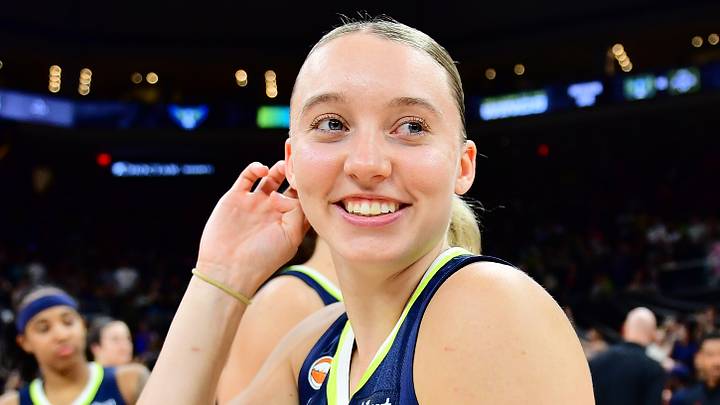
When faced with speculation about her relationship with Azzi Fudd, Dallas Wings star Paige Bueckers told the press she would engage once, but decline or deflect moving forward.
Bueckers made it clear. Though attention may come with the territory, access does not.
More WNBA news and analysis:
 Add us as a preferred source on Google