
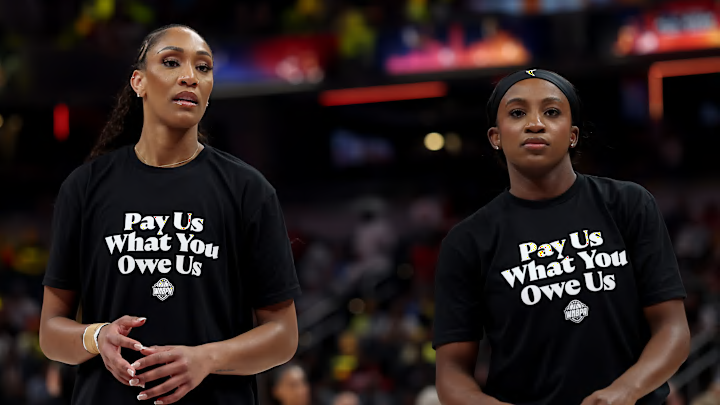
As of Thursday, the Women's National Basketball Players' Association announced that they would strike “when necessary”, signaling dissatisfaction with the current state of CBA negotiations. According to the WNBPA, 93 percent of eligible players participated, and 98 percent voted in favor of authorizing the strike. Noting “historic participation” and sweeping consensus, the WNBPA statement called out the WNBA for its failure to meet players’ demands:
"Time and again, the players' thoughtful and reasonable approach has been met by the WNBA and its teams with a resistance to change and a recommitment to the draconian provisions that have unfairly restricted players for nearly three decades. The players' vote is neither a call for an immediate strike nor an intention to pursue one. Rather, it is an emphatic affirmation of the players' confidence in their leadership and their unwavering solidarity against ongoing efforts to divide, conquer, and undervalue them.”
WNBPA statement makes it clear that players won't back down
Player participation — reportedly 93 percent, with 98 percent of voters voting yes for strike authorization — speaks for itself and sends a clear message: We are invested, united, and not backing down. In a counter-statement, the WNBA refuted the player’s negative categorization of the negotiations:
“We strongly disagree with the WNBPA’s characterization of the current state of negotiations, which fundamentally misrepresents the ongoing discussions taking place at the bargaining table. It is difficult to understand claims that the league is resistant to change, particularly given that we are proposing numerous CBA modifications, including significant immediate salary increases and a new uncapped revenue-sharing model that would ensure continued salary growth tied to revenue growth.”
Most recently, the league proposed to raise salaries of the highest-paid players to at least $1 million and increase minimum pay to $220,000. Though this is a significant jump from the current maximum salary of just below $250,000 and minimum of just over $66,000, the league paired the salary increases with the elimination of league-funded housing, an earlier season start date, and a draft combine for league rookies.
Negotiations over revenue sharing appear to be at a standstill, with the league offering 15 percent in response to the players’ bid for 30 percent.
After two deadline extensions, the league and the WNBPA have until January 9, 2026, to come to a decision. If either side opts-out of the current agreement — something the WNBPA would have to do before going on strike — they must give 48 hours' advance notice. Though both the WNBA and WNBPA are veterans of prolonged labor negotiations, this would mark the first strike in the league’s 29 years of existence.
What strike authorization means in negotiations
A vote authorizing a strike does not guarantee that there will be one. Rather, the vote grants the WNBPA executive committee, made up of seven players, permission to call a strike when they see fit. As negotiations get down to the wire ahead of the Jan. 9, 2026, deadline, this move cuts through red tape and allows for swift action should the committee deem it necessary.
As WNBPA president Nneka Ogwumike told ESPN on Friday, “We're looking for a good deal to get done, but I think we're also prepared for whatever it takes for that to happen, while also understanding that we want a 2026 season…We want to make sure that that season is the way that it can be best for us to put the product on the court and for that product to be valued."
Thus, though the move is not a direct escalation, it signals readiness to act, and an unyielding commitment by players to fight until they are paid what they’re owed.
More WNBA news and analysis:
 Add us as a preferred source on Google