
Key Points
Bullet point summary by AI
- The New York Mets have fallen to 7-10 after six straight losses, scoring just nine runs in that span, with three of those games resulting in shutouts.
- A key veteran starter has drawn increased scrutiny for both offensive struggles and mental errors that have cost the team during this critical early-season stretch.
- Despite broader offensive issues, the team's strategy shifts have prioritized contact over power, creating challenges in generating runs against elite pitching.
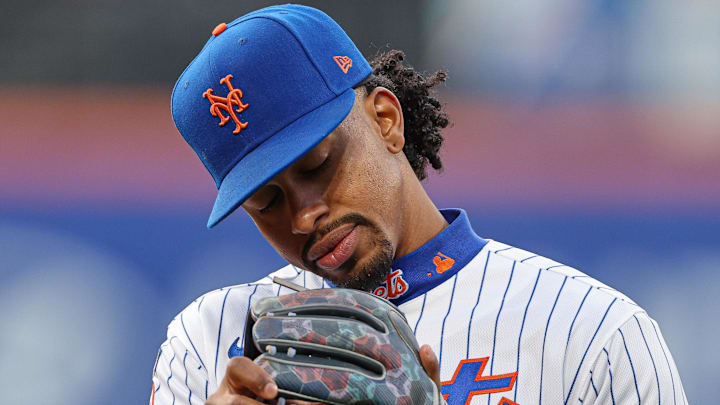
The New York Mets were held to no runs on three hits against the Los Angeles Dodgers on Monday night, dropping their sixth in a row to fall to 7-10 on the year. The Mets have scored just nine runs in these six games, and six of those came in one contest; they've also been shut out three times in that span. Virtually everyone is to blame for such a pathetic offensive display, but in keeping with New York tradition, fans are pointing the finger in one particular direction: Francisco Lindor.
Juan Soto is the highest-paid player, but Lindor is supposed to be the team's heart and soul, the leader in all facets of the game. But with Soto out and his lineup in need, he's hitting just .176 with a .541 OPS. Most alarmingly, he has not driven in a single run thus far this season. Is this just another slow start for Lindor and the Mets, or should the fan base be truly alarmed? Let's dive into everything that's going on right now.
Why Francisco Lindor's struggles stick out more than past years

Lindor has always been a slow starter. His career .753 OPS in March and April is the second-lowest of any month in his career, and one of only two months that sees his OPS dip below the .800 mark. His .789 first-half OPS is far below his career .852 mark in the second half. For whatever reason, Lindor only seems to truly get going once the weather warms up. Still, while a slow start isn't out of the ordinary for Lindor, there are a couple of reasons to be concerned.
First, Lindor is a slow starter even when he has a normal spring training. This season, though, Lindor missed most of Mets camp after suffering a hamate injury. If a player usually starts slowly under normal circumstances, why should anyone have expected him to perform well after a shortened spring when he probably isn't 100 percent — and is recovering from an injury that historically takes months to fully come back from?
Second, and more alarmingly, Lindor has made a slew of mental errors. From getting picked off to being out of position defensively, Lindor has committed several out-of-character blunders that have cost the Mets at critical points. It's one thing to slump at the plate, but it's another to make mental miscues.
These factors are concerning, and combining this with the rest of the team struggling has Mets fans panicking.
Mets struggles extend far beyond Francisco Lindor

It's easy to point the finger at Lindor only because of how great a player he is (and how much money he's making), but even if Lindor were performing as expected, how can this team win with how everyone else is hitting? Look at how some of the Mets' best players are performing relative to their career OPS marks.
Player | 2026 OPS | Career OPS |
|---|---|---|
Francisco Lindor | .541 | .814 |
Bo Bichette | .569 | .800 |
Jorge Polanco | .571 | .769 |
Marcus Semien | .533 | .754 |
This doesn't even factor in top prospect Carson Benge struggling mightily to begin his big-league career or Brett Baty not taking the next step forward as many had hoped he would. The only two hitters producing right now for the Mets are Francisco Alvarez and Luis Robert Jr., players who should not be tasked with carrying the offensive load.
Obviously, some of these struggles can be attributed to their best hitter in Soto being sidelined with an injury, and there's reason to believe some of these guys will get going offensively sooner rather than later. But again, it's been more than just Lindor who has let the team down.
Why the Mets offense has taken a nosedive

The Mets rank 25th in baseball in runs scored entering play on Tuesday. To put into perspective how bad this lineup has been, they're currently behind the Colorado Rockies. The easy answer as to why they're struggling is that Soto is out; since his calf injury, they've scored only 27 runs in nine games, and as mentioned above, it's only getting worse. But there's one glaring reason for the poor offensive display that even stretches beyond Soto's injuries and the slumping stars: This team lacks power.
The Mets have just 13 home runs on the year, one of the lowest totals in the league. Alvarez and Robert are responsible for six of those long balls. No other Met has more than one. That is a problem.
The most efficient way to score runs is by hitting the ball over the fence. Stringing hits together against the caliber of pitching that exists in the Majors right now is not easy. The Mets might've lost to the A's on Saturday, but they scored six runs thanks in large part to three home runs. The worst part about this power outage is that, while things should perk up some, it jives with preseason concerns about this lineup's lack of pop.
The Mets have a 45.4 percent ground ball rate, the eighth-highest in the league, and they've pulled just 35.2 percent of their batted balls, the fourth-lowest mark. They make a lot of contact — heck, they only struck out twice on Monday — but they had 13 groundouts in that same game. It's hard to do damage with ground balls.
Mets are playing like the team they were designed to be

Let me preface this by saying that no, David Stearns did not build a team that was supposed to look this bad. Obviously, there's a lot they can and likely will improve on. They are, however, doing a lot of what Stearns hoped they'd do.
Stearns made it a priority to improve their run prevention, and they've done that for the most part. Things have looked clunky at times, particularly with guys like Bichette, Polanco and Baty playing out of position, but the defense up the middle is much improved, and the pitching has looked good for the most part as well. Ultimately, though, preventing runs doesn't matter if you can't score.
Stearns also made it a priority to field a lineup that makes more contact, and the Mets have done that, dropping their strikeout rate from 21.4 percent in 2025 to 20.2 percent this season (and only getting better in that area). The issue, though, is that while they've made more contact, they've done less damage.
It was easy to anticipate these trends taking place. The Mets let offense-first players who slug like Pete Alonso and Brandon Nimmo go in favor of a defense-first player in major offensive decline in Semien and a contact-hitting machine in Bichette, both of whom better fit the Stearns mold. The defense is better, and they make more contact, but the loss of power has led to a severe offensive decline.
Given how Nimmo and Alonso will likely age, I still have no issue with Stearns moving on from them, but was shifting gears the way he did the right thing to do? I know I'd rather more home runs from my team even if that came with some more strikeouts. As annoying as the 2025 Mets were, they still finished in the top 10 in runs scored, and their power (fifth in MLB in long balls) had a lot to do with that.
How the Mets can turn their struggling offense around

A lot of what can help the Mets is out of their control. They need a healthy Soto. They need Lindor, Bichette and other slumping stars to get going. That goes without saying. They also just need time.
What must be remembered is that we're in mid-April. The Mets haven't even played 20 games yet out of a 162-game schedule. Do Mets fans remember how putrid the offense was in 2015? That team won the NL pnnant. Do they remember being 11 games under .500 in 2024? That team made it to the NLCS. Do they remember being the best team in the first half of 2025? That team missed the postseason entirely.
This offense is going to need more power to thrive, though. Some of that power will need to come from internal solutions; the Mets are hoping Jorge Polanco can repeat his breakout year, but after hitting 26 home runs in 2025, he's gone deep just once in 2026. Hopefully, Alvarez's power output will continue to rise throughout the year. It feels like New York will need to scour the market for a big bat, though.
The season is young, and while I question whether they have enough as constructed, they're not this bad. The same can be said about Francisco Lindor. It's frustrating, but he, too, is fine. Sometimes, patience is needed.
More MLB news and analysis:
 Add us as a preferred source on Google