
Key Points
Bullet point summary by AI
- David Stearns overhauled the Mets roster this offseason, letting go of key veterans like Pete Alonso and Brandon Nimmo.
- Luis Robert Jr. landed on the IL with a back injury, marking his tenth stint there in seven seasons and highlighting the risks of Stearns' moves.
- Multiple Stearns acquisitions have underperformed or gotten injured, leaving the Mets at 10-20 and raising serious questions about his strategy.
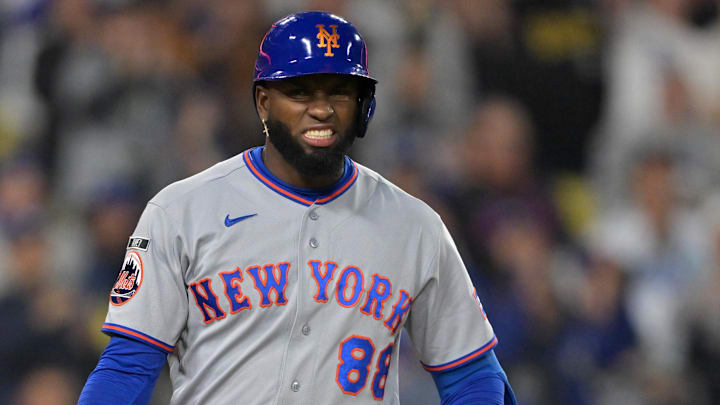
A major shake-up was needed after the New York Mets' historic collapse in the 2025 season, and to his credit, David Stearns made a slew of changes. He let several members of their previous core, headlined by Pete Alonso, Edwin Diaz and Brandon Nimmo, go elsewhere, while remaking the roster in his image. Well, nearly everything that could have gone wrong for the Mets since the changes has, and Luis Robert Jr.'s injury is the latest example of that.
Robert was placed on the IL with a back injury on Thursday, adding fuel to a pre-existing fire. The Mets' offseason was already looking disastrous, and there's no beating around that bush any longer after this injury.
Luis Robert Jr. risk is playing out how White Sox fans could've predicted

The Mets' offseason trade for Robert made a lot of sense, given their need for an outfielder, the fact that New York didn't have to part with much to acquire him and Robert's immense upside. This was also a risky deal, though, because of Robert's injury history and the fact that, ever since his MVP-caliber season in 2023, he's struggled to be productive when he's played. We're seeing that risk come to fruition now.
This IL stint for Robert will be his 10th in seven seasons, an unfathomably high number. He's played in more than 100 games just twice in his career. He's played more than 110 games just once. Staying on the field has been an issue his entire career, and even with pre-planned off-days, it was a risk to assume he'd be able to stay healthy throughout the whole year.
Beyond the injury, though, Robert has not produced. He got off to a hot start, even hitting a walk-off home run in just his second game with New York, but went just 5-for-38 in his last 10 games before landing on the IL. Might he have been playing through pain? Perhaps, but Robert's improved plate discipline, which he was showing for the first couple of weeks of the season, have gone out the window — and the results followed.
Robert was expected to play a huge role for the Mets offensively, and as his .656 OPS overall would indicate, he just hasn't done that, adding insult to his injury. The worst part is that Robert was far from the only risk Stearns took this winter that hasn't worked out.
David Stearns' offseason risks have all backfired

The Mets signed Jorge Polanco to a two-year deal, coming off a fantastic season with the Seattle Mariners. Well, Polanco, a player with an extensive injury history whose results have been inconsistent over the years, had a .532 OPS before landing on the IL with multiple ailments. He was New York's Opening Day clean-up hitter, and the team has gotten next to nothing out of him.
The Brandon Nimmo for Marcus Semien trade was another risk. Sure, the deal was made more with the future in mind, swapping a longer contract for a shorter one, but the Mets had to be assuming that Semien still had something left in the tank following a down year in 2025. Well, Semien has a .586 OPS and has not even been as good in the field as in previous seasons.
What about on the pitching side? Stearns took risks there too, primarily when it came to holding onto players who struggled in 2025. Sean Manaea, David Peterson and Kodai Senga all had miserable second halves last season, and rather than getting rid of them at lesser value, Stearns banked on bounce-backs. Manaea hasn't made a start all year, Peterson was just rocked in his return to the rotation and Senga had a 9.00 ERA before landing on the IL.
Stearns took a gamble on Devin Williams bouncing back from a down year in the Bronx, and all Williams has done is disappoint in Queens. Relievers can be volatile, and it's possible Williams will improve as the season progresses, as was the case in 2025. But it's not looking good.
The one "risk" that's played out well was the decision to play Bo Bichette at third base for the first time in his career. Bichette has graded out as an average to above-average defender at the hot corner despite some spring training struggles, but his bat (the reason he was signed to begin with) has been a non-factor.
David Stearns avoided long contracts, but at what cost?

These risks were made in the name of flexibility. They accepted a production downgrade, going from Nimmo to Semien to shed a longer contract in exchange for a shorter one. They allowed Alonso to walk, knowing he's one of the best first basemen in the game, to avoid a potential decline two or three years into his five-year deal. They refused to go beyond three years for closer Edwin Diaz, leading to his departure. They chose to pursue Robert instead of giving a free agent like Cody Bellinger a massive multi-year deal, with Robert's more reasonable contract the likely reason why.
There's reason to believe all of these decisions will pay off in the long run given how much money New York will have to spend, but at what cost? They replaced these icons with players on shorter-term deals, and all of them are struggling. Heck, even Freddy Peralta, their biggest pitching addition, is on a one-year contract and not pitching quite like the ace he was brought in to be.
It isn't easy to be good and flexible. A lot of good teams around MLB have to make signings they might regret in the long run in order to win now. Stearns' desire to prioritize flexibility is not proving to be the right decision. A lot can and should be blamed for the Mets getting off to a 10-20 start, but the offseason is at the top of that list.
More New York Mets news and analysis:
 Add us as a preferred source on Google