
The Automatic Ball-Strike (ABS) system was built to fix MLB's strike zone. One machine, one standard, every pitch the same regardless of count, park or pitcher reputation. The idea was simple: Remove the human element from the equation and the zone becomes uniform.
But because baseball wanted to retain umpires, the ABS became the ABS challenge system, giving each team the ability to contest a call they believed to be incorrect — while still leaving the men in blue to call most balls and strikes. The machine works just fine, but the human interface has a recognition bias. The machine is used to challenge the human interface. But in the process, the machine has proven the bias: The human knows exactly who is standing in the box, and may care about the outcome.
Through the first six weeks of the 2026 season, batters and catchers have combined for hundreds of challenges across all nine lineup slots. The overturn rates, sorted by batting order position, draw a picture that the system's designers probably didn't anticipate.
No. 3 hitter gets the call

Catchers challenging ball calls against No. 3 hitters have won 63.7 percent of the time. Put another way, nearly two-thirds of contested calls have proven to be in correct — the highest opponent overturn rate of any lineup slot.
The three-hole hitter is, by any reasonable measure, among the best pitch-recognizers on the roster. Four seasons of splits data across the whole league confirm it: The No. 3 spot in the lineup carries a 9.7 percent walk rate, the highest of any position. These hitters know the strike zone. They have always known the strike zone.
Umpires, apparently, have been giving them credit for that knowledge in the wrong direction.
No. 5 hitter doesn’t get the call

The No. 5 spot tells the other half of the story.
Batters hitting fifth challenge strike calls and win at a 60.8 percent clip, the best batter overturn rate of any lineup position. They are the only slot — along with the No. 6 hole, which nearly breaks even — where the challenge battle tilts in the hitter's favor. The five-hole edge is plus-0.086, meaning batters win the challenge exchange at a meaningful rate over opponents.
Five-hole hitters also lead the league in strikeout calls flipped to non-strikeouts: 25 across the sample, more than any other slot. When a five-hole batter says that a pitch wasn't a strike, the ABS system has been agreeing at the highest rate in baseball.
The five-hole hitter is not the most disciplined batter in the lineup. The splits say so clearly: 8.2 percent walk rate, a .248 average, a strikeout rate ticking upward from the top of the order. These are good hitters, but not the hitters most associated with elite plate discipline in the popular imagination.
Which is precisely the point. Umpires, consciously or not, appear to be extending borderline ball calls to hitters they perceive as having the best pitch recognition. The No. 3 hitter takes a pitch. The umpire sees a No. 3 hitter taking a pitch. The ball call follows. The ABS system later confirms, when challenged, that the pitch was actually a strike.
The No. 5 hitter takes a pitch. The umpire sees a No. 5 hitter. The strike call follows. The ABS system, when asked, confirms it was a ball.
No. 7 hitter gets squeezed

The No. 7 hole makes the case impossible to dismiss as mere noise. Seven-hole batters win their challenges just 30.2 percent of the time, the worst batter overturn rate of any slot. When they push back on a strike call, the machine agrees with them less than a third of the time. Meanwhile, catchers challenging ball calls against No. 7 hitters win at a 63.3 percent clip, nearly identical to the rate against No. 3 hitters.
The seventh spot is being squeezed on borderline strikes and is not getting the benefit of the doubt when it pushes back. The overall challenge edge for the slot sits at minus-0.331, the widest gap in the lineup. Batters in this spot are losing the challenge battle by a larger margin than anyone else in baseball.
The total-versus-expected value for the No. 7 hole is minus-0.762, also the worst of any lineup spot. The ABS system, in aggregate, is delivering negative value to hitters batting seventh relative to what the model expects from a neutral zone. Only the No. 8 hole comes close at minus-0.730, and that spot carries twice the plate appearance volume due to how the data is structured.
Four seasons of performance splits put this in context. Seven-hole hitters walk at a 7.8 percent rate and strike out at 23.3 percent, meaningfully worse than the top of the order. They bat .240 as a group. They are, on balance, the weakest-disciplined hitters in a lineup who can still expect something from the slot. And umpires, the data suggests, are treating the strike zone accordingly.
Just like children, there is no favorite among MLB umps

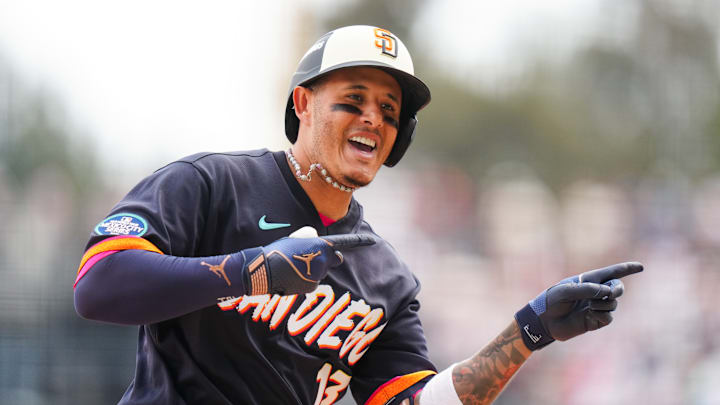
None of this is provable intent. Umpires are not sitting behind the plate deciding to give Manny Machado extra balls because of his career walk rate. The effect is almost certainly unconscious, a product of years watching elite hitters lay off borderline pitches and accruing an unspoken expectation that when a No. 3 hitter takes a pitch, it was probably a ball.
That expectation has a measurable cost. The ABS challenge data, compiled across 30 teams in 2026, is essentially a running audit of where human judgment diverges from a machine with no memory and no preconceptions. That divergence clusters, consistently, by lineup position.
How the ABS system can move forward and get better
The system meant to eliminate bias in the strike zone has instead given us the tools to measure a different bias entirely. Not a bias in the machine, but a bias in the man the machine was brought in to replace. It may be coincidence, it may be recognition or confirmation bias. All we've done so far is identify it. Now we have to get better at what we do. As they say in business, you can’t change what you don’t measure. Well, we just started measuring, so now we know.
The No. 3 hitter gets the call. The No. 5 hitter doesn't. Let’s learn from our mistakes and not repeat them.
 Add us as a preferred source on Google