
Key Points
Bullet point summary by AI
- The Chicago Cubs committed heavily by securing Pete Crow-Armstrong to a long-term deal before he hit free agency.
- Early performance metrics for PCA this season have raised concerns among fans and analysts alike.
- Despite the rough start, the team remains confident in the player's potential to develop into a cornerstone of their future lineup.
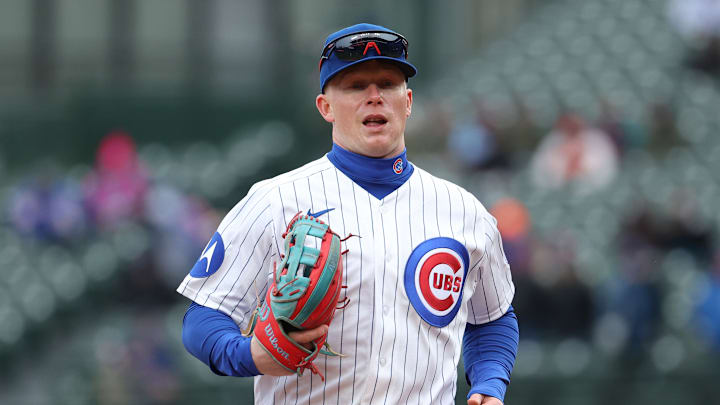
The Cubs' front office made a calculated gamble in the offseason to tie down centerfielder Pete Crow-Armstrong to a big contract extension in the offseason. The 24-year-old's early season struggles might have officials in the Windy City regretting rolling the dice on his big contract.
The six-year, $115 million deal paid Crow-Armstrong two years before he was slated to hit the open market. The theoretical exchange for the Cubs is that the average annual value of the deal would be locked in at somewhere below what his market rate would be in the latter years of the contract. It's a strategy that's recently come en vogue in the MLB as teams try to tie down their homegrown stars before they require lucrative deals to keep them away from free agency.
Inside Pete Crow-Armstrong's slump: What's wrong with the Cubs star?

It's fair to say the early returns on the deal are troubling from Chicago's perspective. Crow-Armstrong is off to a slow start to his 2026 campaign. His OPS of .629 is not what the front office envisioned when they handed him such a big contract in the offseason. In particular, Crow-Armstrong is struggling to elevate the ball. His ground ball rate of 43.8% on the early season is hampering his ability to hit the ball with any sort of authority.
“I’m late and I’m trying to create space, then the move’s not right,” Crow-Armstrong said via The Athletic. “That’s why I’m hitting a bunch of grounders. I’m not swinging harder. It’s not a conscious thing. It’s probably a product of something that’s not working.”
The good news in Crow-Armstrong's statistical profile is that his bat speed is on the rise. In theory, that should pay dividends for him once he starts to find a way to hit the ball in the air. It's instructive to note that Crow-Armstrong also suffered through a slow start to his 2025 campaign. It's possible that he's just a player who needs more time to settle into the hitting routine necessary to compete with major league pitching in the early stages of any regular-season.
Should the Cubs be worried about Pete Crow-Armstrong's contract?
It's far too early for the Cubs to be concerned about the value of Crow-Armstrong's deal. He's only got 26 at-bats on the young season. Any statistics logged on the young season are subject to all qualifications associated with the idea of small sample sizes. If anything, one look at his 2025 season should give Cubs fans some comfort. This is a player prone to early slumps.
Month | Batting Average |
|---|---|
March 2025 | .148 |
April 2025 | .312 |
May 2025 | .269 |
The front office also has the expectation that maximum value on the contract extension should be realized in the latter years of the deal. The Cubs knew it was distinctly possible that they would be overpaying Crow-Armstrong over the first season or two of the six-year contract. A slow start to this season should not set off any meaningful alarms for the team's front office.
A smart organization like the Cubs only makes a deal like this if they're confident in the player's long-term career path. Chicago projects that Crow-Armstrong will provide them long-term value as a centerfielder who can be a plus hitter and a borderline elite defender at a position with extreme defensive value. Nothing he's failed to demonstrate through eight games this season will do anything to discourage them about Crow-Armstrong's ability to grow into that kind of star over the life of his contract.
More MLB news and analysis:
 Add us as a preferred source on Google