
Key Points
Bullet point summary by AI
- The Philadelphia Phillies are enduring a historically poor offensive start. An 8-14 record has sparked fan unrest and put pressure on the organization.
- Missing out on Bo Bichette left a glaring offensive hole. The team's .220 batting average is awful, though manager Rob Thomson remains safe for now.
- Dave Dombrowski must aggressively pursue bats at the trade deadline. These crucial reinforcements will ultimately determine if the team makes the postseason.
For as bad as the New York Mets have been, the Philadelphia Phillies have been just as bad. Just without the 11-game losing streak. And there are legitimate cracks in the Phillies’ roster that threaten to derail their season. They lack another established bat alongside Kyle Schwarber, Bryce Harper and Trea Turner. Their .220 team batting average is their lowest mark through 22 games since 1970 and over the last 128 years, only four Phillies teams have a lower batting average in that span, according to The Athletic.
It’s already started some unrest in Philadelphia, with fans booing and leaving games early. And it surely has caught the attention of team owner John Middleton.
The Phillies have a ready-made Rob Thomson replacement they don't want to have to use

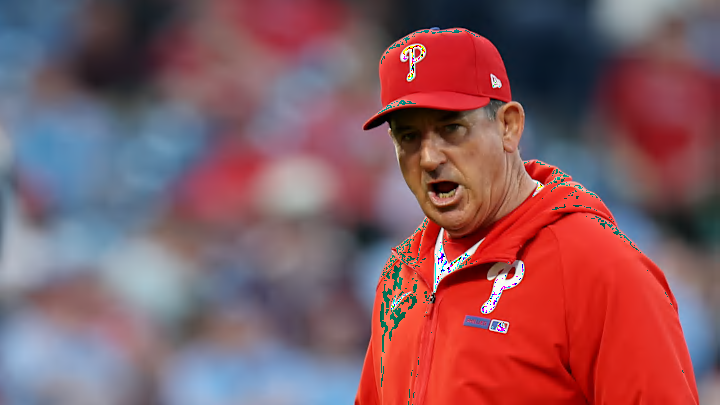
Middleton is very aware of what the Philadelphia fanbase feels and what the media is saying. This stretch, a six-game losing streak to go with an 8-14 record, is enough to reignite the narratives to fire manager Rob Thomson. There are no indications that Thomson is on the hot seat; they’ll want to give him, and especially the offense, time to sort itself out.
The Phillies do, however, have a natural in-house replacement if Thomson is fired. Bench coach Don Mattingly, a highly respected former manager, would command immediate respect. But Thomson is believed to be safe, at least for now, and both Thomson and Mattingly will be tasked to solve the Phillies’ woes.
Besides, firing a manager midseason rarely goes well. It can bring additional chaos to an already chaotic environment, especially in Philadelphia. They also have Zack Wheeler set to return and make his season debut on Friday, bringing their definitive ace back to the fold, and that should help settle the waters.
Losing the battle to sign Bo Bichette set the Phillies back

But what the Phillies need is offense, and fast, and the lack of firepower added in the offseason is glaring. The team believed that they were on the verge of signing Bo Bichette in the winter to a $200+ million contract. It was so close that the night before, in the minutes after breaking the Kyle Tucker deal, I received a tip that the Bichette/Phillies deal was at the finish line and I drafted a tweet for when an agreement was eventually reached.
No deal was ever consummated, of course, as the New York Mets swooped in at the eleventh hour to sign Bichette to a three-year, $126 million contract. After that, the Phillies’ options were slim. They scrambled to re-sign J.T. Realmuto to a three-year contract. They signed Adolis Garcia and let Harrison Bader, a player who fit in well in Philly, depart on a multi-year contract to San Francisco.
The lack of another bat was obvious entering the season and it’s even more glaring 22 games into it. Turning the season around will require Dave Dombrowski to be aggressive in finding a bat or two at the trade deadline, something he’s proven very strong at in his Hall of Fame career. And the Phillies will need his best work at the deadline to save their season.
Those are bold words only 22 games into the season. But reinforcements, and potentially significant ones, may ultimately determine whether the Phillies make the postseason – and also determine if Thomson keeps his job. The last thing he needs is a firesale.
More MLB news and analysis:
 Add us as a preferred source on Google