
Around 4:55 a.m., the alarm would blare in a one-room triple, reverberating off the terra-cotta walls. My roommates, bless their hearts, would pretend to remain asleep, or desperately attempt to claw back into slumber as I slipped into my laid-out clothes. When I rested my head on the pillow at night, I was a Brown University sophomore, caught in the gleeful interstitial period between juvenility and professionalism. When I awoke, I was the morning sports reporter covering the 2010 B-B-B-Boston Red Sox and their exploits of the previous evening for 95.5 WBRU.
Five minutes later, I would push through the heavy doors into the New England chill of the morning. Whether it was crisp autumn, the eye of winter's icy hurricane, or the dawning of the spring, it somehow always felt the same. It woke the bones.
I wouldn't walk the 10 minutes to the studio; I would sprint. Neither the temperature nor the alarm represented enough natural caffeination. I'd plug in my iPod headphones — yes, with the cord — cue up Blink-182's "First Date" (always the same song), and race through the streets of Providence. Those mornings, jetting across campus with the world closed out and the cacophony of the opening drum riff canceling out the sounds of the city, will stay with me forever. I have never felt more invincible.
I lived a four-minute walk away from the Barus and Holley Engineering Building, the site of Saturday's horrific shooting that left two dead, nine injured, countless terrified and a bubble punctured.
Covering the Boston Red Sox at Brown University molded me. This weekend shattered me.
When I arrived on campus in September 2008, I was as intimidated as anyone. I'd never lived away from home, not even for sleepaway camp. I'd struggled to make friends through middle school, and couldn't imagine losing my grip on the few bonds I had. Even as a bit of an odd duck myself, I still arrived with arguably the most ridiculous notion I'd ever held: "What if everyone was a nerd?"
They were, son. So were you. So are you, in part because of the welcoming embrace of your dorm floor, your classmates, your professors, your directors, the people you clinked cups with at a party, and the waves of alumni celebrating their 10th, 20th, 50th and 70th reunions who cheered you as you walked through the gates and out into the world.
My quirks were embraced. Celebrated, even. There was a home for those who rattled off statistics of the Baseball Hall of Fame Class of 1986, and those who could recite Prime Simpsons verbatim, and those who had higher ambitions. Who wanted to build. Who wanted to crack the ceiling and keep going.
It didn't take long for me to feel like one of them, or to realize I always had been. Midway through my freshman year, I found sports radio. They handed us a local pronunciation guide — the 2008 Bruins head coach was Clow-d Zhu-lee-ehn — but believed in us to figure out the rest. By second semester, I was on the air twice a week, three times a morning. Just one year later, I had a partner and a weekend show.
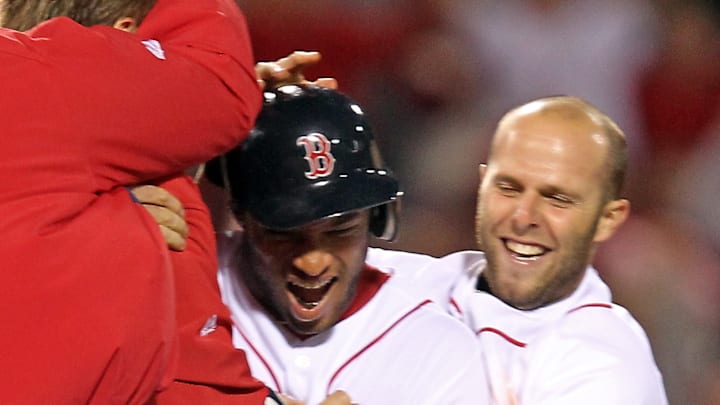
One April evening, they even sent us both to Boston, me to cover a Bruins playoff game, him to a coveted ultra-rare seat in the Fenway Park press box, a game that ended in improbable hero Darnell McDonald clearing the Green Monster with a walk-off. In lieu of a train ticket, we were picked up outside the station by a credentialed photographer, unaffiliated with the program, who drove us all the way and picked us up in the aftermath, the cool light of midnight. The implicit trust we had in those who desired to keep us safe.
Since graduating, Brown University has reached my external news sphere only twice. Once, it was for Olivia Pichardo's joyous pursuit, as she became the first woman to ever make a Division I varsity baseball team. Brown? Baseball? I couldn't believe it. The sport helped fuel my experience on campus, but it was hardly our calling card. It was my personal drumbeat, the way I categorized events in my life, recalling birthdays and summer outings based on whether the Yankees had left me deflated or elated. Now, Brown was part of baseball's mainstream narrative, and for helping to blaze a trail. I beamed with pride.
The second time is too horrific to describe. I have struggled with a desire to speak and write. Every word that can accurately sum up Saturday's events has already been written and feels reductive. It has happened before. It will happen again. It will not stop. Each time, it is personal. Each time, it is scarring. It must end. It will not. It refuses to yield. It is haunting, piercing and festering. Students, once safe, are now barricaded. Students, once looking forward, are stuck in time.
Everyone deserves the chance to, at least once in their lives, sprint the streets unfettered by inhibitions. To know they are exactly where they should be, where they were intended to land. To shut out the world not because we are afraid, but because we have all we need.
There is no community on earth that I trust more to provide the necessary nurture, to find its bearings and begin again. It will take a while. It will take a very long while. It will feel impossible. It will be impossible. But I believe in you the way you believed in me.
 Add us as a preferred source on Google