
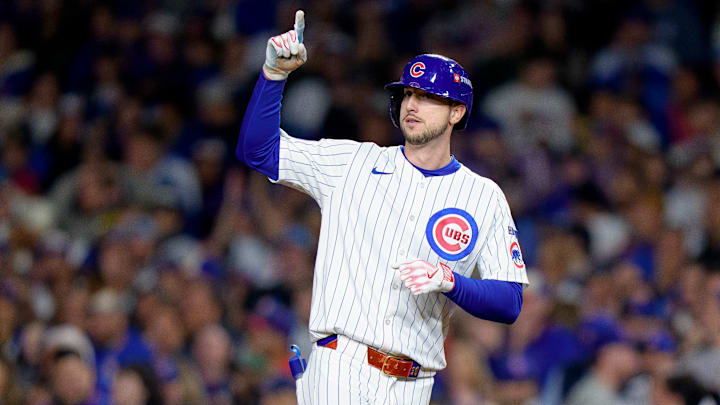
Major League Baseball is unique in that its free agency period does not come with a race to the finish line. In most sports, the first day of free agency is a sprint to spend the most money and get the best players to fit a team’s issues before another team beats them to the punch. In baseball, there’s a ton of patience in these deals. Just look at last season, when the big fish (Juan Soto) didn’t sign until Dec. 8. Last offseason, Alex Bregman, Clayton Kershaw, and Pete Alonso all signed in February, either during Spring Training or right before.
Right now, a decent percentage of the top free agents are still available. They didn’t get those big signing bonuses before Christmas, so nobody is getting a BMW with a big bow in their driveway this holiday season. Looks like many of these free agents will have those big bonuses in their contracts in time for Valentine’s Day.
And many of those contracts will be very regrettable. Free agency has a pretty paltry batting average for franchise-changing pieces. There are more misses than hits, as many would argue. This is why it takes so long to get deals done. It’s so much money, and oftentimes, red flags are going into the agreement. So, let’s take a look at the red flags that could be giving teams pause prior to the free agents still waiting to put ink to contract.
1. Kyle Tucker
Biggest Red Flag: The Price Tag
Kyle Tucker has been considered the top free agent since the offseason opened in November. He’s been in talks with several teams, including the New York Yankees, Toronto Blue Jays, and his current team, the Chicago Cubs. Teams are putting together their best offers, but clearly, Tucker hasn’t seen anything impressive enough to get him over the hump.
Tucker is just 28 years old, so he should still be in his prime for a few more seasons. However, what is that prime worth? Is he the type of player that deserves a nine or 10-year deal? There’s talk he could sign for $400 million. Is Kyle Tucker worth $400 million? We get that he’s worth what someone will pay for him, but putting pen to paper on a deal like that means there are other deals you can’t sign as a franchise for years.
He’s also had a few injuries that took him out over the past two seasons. He played just 78 games in his last year with the Houston Astros, and he missed a little over 20 games with a calf injury last season. That might be the reason the Cubs haven’t come to the table with the contract that gets it done. Does Tucker take a shorter-term deal with an out, similar to what Pete Alonso and Alex Bregman did when their negotiations went late into the offseason last offseason? It could solve the “money” issue.
2. Framber Valdez
Biggest Red Flag: His Reputation
Framber Valdez is the type of big-money starting pitcher that teams usually line up to sign to a massive contract. We’ve seen it so many times. Even with their own red flags, Max Fried, Yoshinobu Yamamoto, and Jacob deGrom signed massive deals in recent years despite some questions about whether they could be top-line starters. Yet, for some reason, the two-time All-Star who was at the top of the Astros' pitching staff and has a World Series ring in his trophy case can’t get a team to spend the big money on him.
As this process remains, we’re starting to hear the rumors as to why teams might be hesitant to sign Valdez. It seems like his reputation is costing him tens of millions of dollars. Valdez is being called some nasty things online when it comes to how easy it is to deal with him in the locker room. Teams generally don’t want to bring a problem into the locker room for free. Paying a 32-year-old $200 million to do it seems preposterous.
Is the reputation fair to Valdez? There’s no way to know for sure right now. Only the guys in the Astros locker room know what the situation is there. It doesn’t help that the Astros have been open in saying they want to upgrade their current pitching staff, but they don’t seem to have much interest in giving Valdez the contract he seeks.
3. Cody Bellinger
Biggest Red Flag: Length
Cody Bellinger has watched a few outfield options sign this offseason, including his likely former teammate Trent Grisham, who signed a one-year, $22 million deal to stay with the New York Yankees. Bellinger has a chance to return to the Bronx, but it seems unlikely based on everything happening with his negotiations. It’s not that the Yankees don’t want him back, but Bellinger basically wants this deal to take him through the rest of his career, and that could be a real risk for many teams.
The consensus is that Bellinger is going to sign for a minimum of five years and a maximum of seven years. He was great last year with the Yankees, but he hasn’t been great in years prior. Since winning MVP in 2019, Bellinger had a WAR of 1.5, -1.6 (yes, that’s a negative), 1.3, 4.8, 2.2, then 5.1 last year with the Yankees. There is no five-year stretch where he was worth the price he’s asking for right now.
Bellinger is good to pop for a season or two, but then he’s just above average in the other years. He’s also on the wrong side of 30. Do we expect him to get more consistent with age? There is a real issue with going too long with this contract, and it looks like another former Cubs great, Kris Bryant.
4. Alex Bregman
Biggest Red Flag: Age and Position
The Alex Bregman debate is interesting because he actually has been incredibly consistent. He’s been one of the better third baseman in his career for his entire career. Heck, many in Boston were happy that he came in and ushered out Rafael Devers, who was one of the best hitters on the hot corner of this era. The Red Sox made the big move and made their star mad, eventually trading him to the San Francisco Giants.
Less than a year later, he’s a free agent again. He opted out of the final years of his deal in Boston to secure another long-term deal. The Red Sox are still in the race. So are a few other teams, including some surprisingly small-market teams. Bregman is open to anything, as far as we know.
The biggest problem with Bregman is that he’s going to turn 32 years old around Opening Day. Third basemen tend to go one way or another when they hit this age. Some can still have a good career at third base, but others start to really fight injuries in this age range. Troy Glaus and David Wright come to mind as ‘worst-case scenarios.’ Bregman might stay consistent through his career, but it’s hard to see him staying at this level of third base late into his 30s, and he’s looking to get paid late into his 30s.
5. Bo Bichette
Biggest Red Flag: Speed
Bo Bichette is a good player with a major question mark. It’s almost like he’s overcoming a few issues in his game. For one, he’s not very fast. For a player at his position, one might expect some speed. He doesn’t really steal bases anymore, and he needs good contact on the ball to get on base.
And that brings us to issue number two: he has atrocious bat speed. According to Statcast, his average bat speed dropped to 69 mph. A lot of his other numbers are incredible. His eyes might be his best asset, and that’s not a concern; he could lose his eyesight at 27 years old. He might lose some bat speed as he gets older, and he’s already in the bottom half of the league in that stat.
Bichette has a lot of transferable statistics that should take him into the next era of his career, whether that’s back with the Blue Jays or somewhere else. We do think, based on his age and what he’s really good at, he can stay consistent with the hitting, but that bat speed would scare us if we’re giving up a nine-digit contract to the guy. He should be good in the first half of any contract, but his legacy can only take him so far. Maybe this is also something he can work on, since it wasn’t this bad in previous years, but that can’t be guaranteed.
6. Ranger Suarez
Biggest Red Flags: His Fastball
Ranger Suarez pitches like he doesn’t need a fastball. He threw his fastball just 15% of the time, which has to be one of the lowest percentages in the National League. He’s got an incredible package of pitches to choose from, including an elite sinker and a decent cutter. He changes his pitch decision based on the handedness of the hitter, and he has things figured out on the mound.
Yet, the fastball is the most reliable pitch in baseball for a reason. When we see a flamethrower, we expect them to continue dominating long into their career. Yes, velocity tends to go down, but when you’re starting at 100 mph, then going down is still an impressive pitch. Suarez is starting with a pitch that is lucky to get to 90.
If he loses the feel for any of his pitches, he could get smashed at his next destination. We’ve seen this many times. These pitchers who have an arsenal of pitches can lose the feel for one or two, and the rest is a house of cards. Now, instead of five pitches to choose from, he has four. Hitters have an easier time reading his pitches. He gives up more home runs. It goes on and on. It’s not the biggest risk on the market, and it’s why Suarez is still well regarded on the market, but it’s something to think about.
7. Eugenio Suarez
Biggest Red Flag: Repeating Power Performance
Eugenio Suarez hit 49 home runs last season. He did great at the plate with both the Arizona Diamondbacks and Seattle Mariners. It was a great season from a really good player. And he’s done it before, hitting 49 home runs in 2019 while with the Cincinnati Reds. However, there are other parts of his game that are very concerning. He strikes out A TON. His batting average fell to .229 this season. That includes hitting .189 for the Mariners.
The question is now: Is Suarez Adam Dunn or Kyle Schwarber? If he’s the latter, you’ll take a few strikeouts in random spots for big home runs when you need them. If he has the clutch gene that Schwarber possesses, then any team would be lucky to have him. If he’s Adam Dunn, and he’ll just have a season where all he does is strike out, then it’s going to be a disastrous contract.
Suarez is 33 years old, so he’s at that career crossroads where things can go one way or another. He’s clearly focused his efforts on hitting home runs. That’s where he sees the most value in his game, but will that sustain? It has so far, but age can be detrimental to a player like Suarez. Plus, he hasn’t been the beacon of consistency.
8. Tatsuya Imai
Biggest Red Flag: His Best Pitch Might Not Translate to MLB
Some of the best investments in free agents in recent years have been taking the leap on players coming over from the Pacific leagues. Japanese and Korean players have often proven to be worth the investment, especially the ones the Los Angeles Dodgers are targeting. A few are becoming huge stars in MLB, with one winning NL MVP for the second year in a row and another winning World Series MVP.
It makes sense that some of the top teams are targeting Tatsuya Imai. He’s been mostly connected to the Cubs and Yankees, and he’s facing a January 2nd deadline to sign with his MLB team before the posting window closes. Whichever team signs him also has to pay a hefty posting fee to his Japanese team. So, there’s a huge financial commitment coming that could get into the $150 million range.
Imai went 10-5 with a 1.92 ERA this season with the Pacific League's Seibu Lions. He did it with an insane slider that looks like a forkball. The forkball hasn’t always translated well to American baseball. While it looks crazy and like it’s hard to hit, players tend to have better batting eyes in the States, and that pitch could be harder to control. He has other pitches in his arsenal, including a great fastball, but this is considered his “out” pitch. If he does get hitters out with it in MLB, he might be one of the best signings of the offseason.
9. Luis Arraez
Biggest Red Flag: A Disappearing Impact
Luis Arraez was a social media darling when he was on the Miami Marlins. Fans were begging teams to trade for him, saying he could change the foundation of a club. During his time with the Marlins and Twins, he didn’t get his proper credit for how good he was at the plate. He’s considered one of the best in the league, if not the best, at avoiding strikeouts. Last season, he struck out just 21 times and led the league with 181 hits.
The issue is that the hits aren’t bringing enough impact since his trade to the San Diego Padres. In 271 games with the Padres, he has a 2.1 WAR. In 180 games with the Marlins, he had a 4.7 WAR, and with the Twins, he won the Silver Slugger.
Last season, Arraez had just 1.2 WAR. He finished with a career-low .719 OPS. He wasn’t walking nearly as much as he used to, and his back-to-back batting titles ended with him failing to hit over .300 on the season. Was this just a fluke year on a strange Padres team? Did the free agency thing hang over his head all season? These are questions teams can’t address in the offseason, which makes Arraez’s next contract downright scary.
10. Lucas Giolito
Biggest Red Flags: Missing Bats
We’ll be honest, there’s a drop off here. The last free agent on this list isn’t looking at a contract that’s paying him tens of millions of dollars per season, but Lucas Giolito will still get a decent bag. Multiple teams are looking at him, likely as secondary options if they decide to pass on the other pitchers on this list that have their own red flags.
He put up a 3.41 ERA in 26 starts for the Red Sox last season. It is a red flag that the Sox didn’t even extend Giolito a qualifying offer. They didn’t want to give him the option of returning despite his respectable results. The Red Sox are in a weird place when it comes to spending money, but that’s still an odd decision.
It might be because of how much contact Giolito welcomes in his advancing age. He’s on the wrong side of 30, and his strikeout rate is on the wrong side of 20%. He is still one of the better free agent starting pitchers left, and that almost scares us more. He should be a player who rounds out a rotation, and then he can play above his head and earn a better deal. Instead, we think someone will pay him to be the answer at a lower price than other “answers” on the market.
More MLB news and analysis:
 Add us as a preferred source on Google