
Key Points
Bullet point summary by AI
- UConn, coming off a national championship game appearance, faces a crucial season to rebuild their roster and maintain their status as contender.
- Braylon Mullins as decided to forego a projected first-round NBA Draft opportunity to remain with the Huskies for another year.
- This decision highlights the growing influence of NIL deals in college sports, as it allows top talent to stay in school longer, strengthening team dynamics.
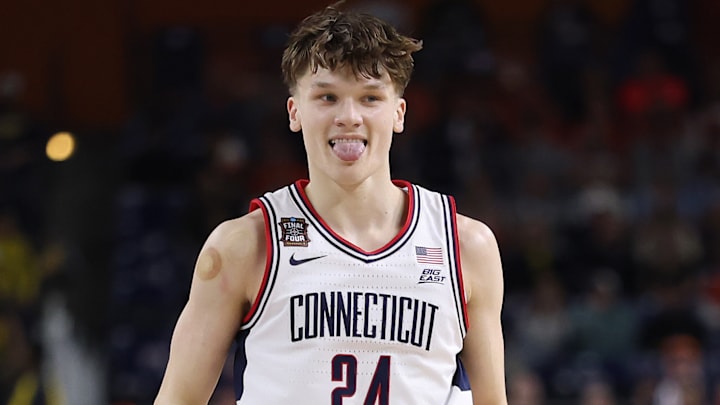
The NBA Draft is going to be stacked with premier talent from the college basketball ranks, but UConn's Braylon Mullins will not be in that group. Despite entering the offseason as a projected first-round pick, Mullins is planning to return for his sophomore season with the Huskies, who lost the national championship game to Michigan this year.
A loaded draft class, which inspired a tankathon for the ages in the NBA, was surely a factor in Mullins' choice to stay since he didn't quite live up to the massive hype assigned to him after he committed to UConn. Mullins did have a signature March Madness moment when he hit a clutch late shot to stun Duke in the Elite Eight, but his performance wasn't strong enough as a whole to guarantee a lottery selection.
Even if the lottery wasn't a sure thing for Mullins, his profile as an elite shooter with some defensive chops all but assured him of being a first-round selection in June. The big difference, here, however is the fact that UConn was able to allocate a sizeable portion of their NIL budget to make it worth Mullins' while to stay in school.
The Huskies are the rare college program that prioritizes basketball over football in terms of NIL distribution, which made Mullins' retention a top priority. The combination of a strong NIL deal, which could nearly equal what Mullins earned as a rookie in the NBA next season, along with the odds of boosting his draft position in a weaker class next summer made a return a good call for Mullins.
Why Braylon Mullins' return is a good sign for the health of college basketball

Mullins' decision is the highest profile case of a player turning down a chance to go to the NBA in order to remain in school for another year. The allure of the NBA Draft has been too strong for many players to turn down over the years, especially if they are guaranteed to be a first rounder like Mullins was.
Prior to the NIL revolution, it would have made no financial sense for Mullins to stay in school since he was guaranteed a professional contract. Mullins can now, however, stay in school to bolster his draft position and make as much money now as he would as an NBA rookie.
These types of NIL deals can be helpful for college basketball in the long haul since it helps keeps stars like Mullins in school for more than one year. One of the biggest issues of the one-and-done era is that star players were not sticking around for long, making it harder for fans to develop the kind of program loyalty that they had in the days when stars like Patrick Ewing played all four years of his career at Georgetown in the 1980s.
While no one expects the likes of Cameron Boozer or AJ Dybantsa to play multiple years in college, being able to retain players like Mullins is a huge victory for the sport. Mullins is a recognizable name for fans entering next season, which should draw more eyeballs to the sport in the early months of the campaign when college basketball has to compete with college football, the NFL and the start of the NBA season.
Players also benefit from this arrangement, particularly those who could use more time to develop to maximize their pro earning potential. It is unlikely Mullins will stay with Uconn beyond next season, when he could be a headliner in a weak draft class, but the example he set with this decision could pay huge dividends in the long haul.
More college basketball news and analysis:
 Add us as a preferred source on Google