
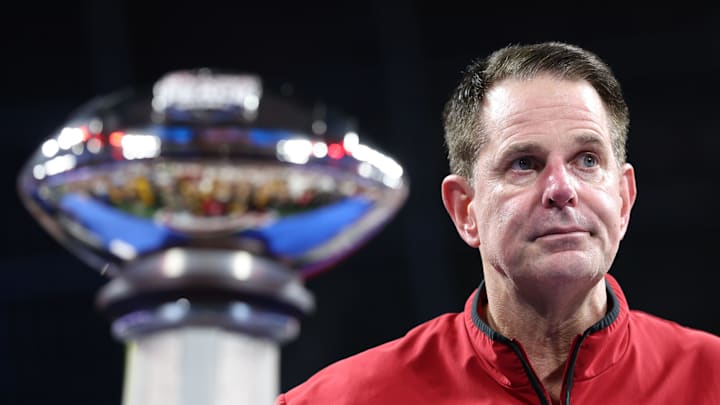
If you want to be the best, you've got to beat the best. That's exactly what Indiana head coach Curt Cignetti has done since taking over in Bloomington last season.
The Hoosiers, who hadn't recorded a season with more than 6 wins since 2018 (the only such season since 1993), have gone 26-2 under his leadership and are one win away from claiming the program's first ever national championship. That's a legendary turnaround at a school that traditionally has been a bottom feeder in the Big Ten Conference.
Cignetti's achievement, regardless if a national title is heading back to Bloomington on Jan. 19, will be studied by football historians, but even current head coaches at blue blood programs are likely to attempt and reverse engineer his success.
That's a lot easier said than done and it's because Cignetti built his machine over the course of his career and has seen it culminate at Indiana simultaneously with the evolution of the sport under NIL and now revenue sharing. There is no magic pill or blessing the Hoosiers have incurred to make this all happen and that might be hard for wannabes to swallow.
Curt Cignetti's success at Indiana won't be easily recreated at CFB blue bloods
So, if a team like Clemson or Florida State - previously perennial CFP contenders - wanted to take a stab at the Cignetti approach, how would they have to do it? There is no one-step fix all that will set them on the right path in as short a period as Cignetti has gotten it done.
It starts with the staff. Cignetti has acquired a group of guys who just know how to evaluate talent and get the players to buy in on the program. That also offsets costs. Guys who want to be there rather than having to be lured via major cash offerings are less expensive and usually more motivated.
Texas, Ohio State, LSU, Georgia and Texas A&M top the list of schools with the most endowed NIL collectives. None of them reached the College Football Playoff semifinals this season and out of the three that qualified for the tournament, none won a single game. It's not all about the money.
Indiana has also built a roster of veterans - mostly through the transfer portal - that has mixed well with young recruits that have raw talent but need that mentorship to develop properly. The Hoosiers have no five-star recruits which would usually spell disaster for a blue blood but it works in Bloomington.
Cignetti seemingly would rather have the guys who have learned through trial and error and are motivated by what they haven't achieved versus the heaps of praise mounted on them from an early age. At a blue blood, sometimes you've got highly-rated guys who just aren't ready for the big lights and just need time to develop but then transfer when that success isn't immediate. That's where Cignetti's ability to get guys to buy in comes in handy.
His coaches also just know ball. Indiana isn't stealing signals to get ahead but the staff scouts ahead and has the team so prepared it appears as if the players know what's coming before it happens. That's what has their defense ranked No. 2 in the country averaging just 11.07 points per game allowed.
Anybody that wants to replicate Cignetti's model is going to have to take their time and completely redesign how it builds a team. Those programs will have to swim against the current of the sport and buck the desire to spend the most money to build the best roster. It won't happen overnight but it's very possible to repeat the kind of success the Hoosiers have seen.
More college football news and analysis:
 Add us as a preferred source on Google