
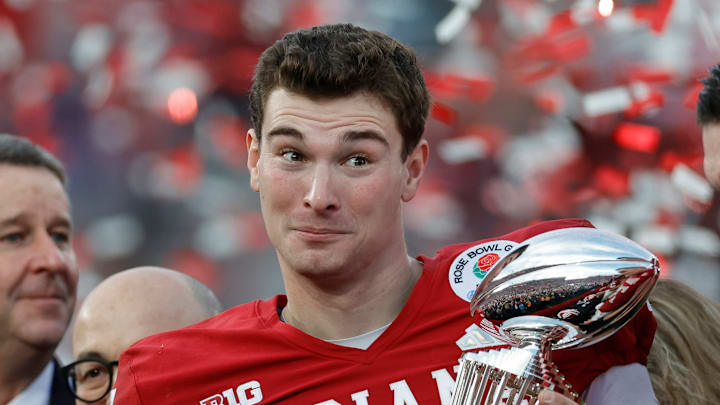
The Indiana Hoosiers made history on New Year's Day 2026 as the only team in the College Football Playoff era to win a quarterfinal game after receiving a first round bye. In two years, seven of eight programs to get the extra rest and preparation have failed to advance to the semifinal.
Not only did the top-seeded Hoosiers advance, they absolutely throttled an Alabama program with its own history of domination in the CFP. Indiana's 38-3 dismantling of the Crimson Tide was a nationally televised funeral for the modern dynasty. No longer shall we see the days of Clemson, Alabama or Georgia being automatic contenders.
That's largely due to the leadership and innovation of head coach Curt Cignetti who proved last year's revival of a traditional Big Ten bottom feeder was no fluke. Cignetti took full advantage of NIL, transfers and shifting on-field strategy to build the most unlikely of contenders. There will be more like Indiana as this trend is studied and replicated.
Indiana's blueprint for ending the CFB dynasty will become the norm
As the college football transfer portal officially opened on Friday, thousands of players entered and will have new homes come time for spring ball. Programs that were stacked with five-star recruits and seemingly built long-term contenders could be completely stripped of competitive juice. Championship potential will be spread out among the rest of the sport and predictions for next year's CFP bracket will be even more varied.
That's a good thing for the sport. Even with the chaotic nature of the portal and increasing compensation for players and coaches, parity in college football is on the rise and will likely reach never before seen heights.
If this CFP semifinal field has proven anything, it means more teams like Indiana will emerge if their coaches play their cards correctly. We may not be too far away from seeing middling programs like Minnesota or Virginia Tech turn things around and find themselves with championship expectations.
For fans of perennial contenders like Ohio State, Georgia and Alabama, your winning days aren't over by a long shot. They just might be less frequent as you've come to know them. Don't be surprised if at least one of those three misses the CFP at least once over the course of the next five seasons.
But until the CFP solidifies its format - whether that be a 14 or 16-team bracket with eight bids reserved for the Big Ten and SEC, we'll have to wait and see - the evolution to a more varied championship pool will be gradual. Big programs still have a lot more money than others and that will keep them afloat.
Eventually an abundance of opportunity will make college football an "employee market" instead of an "employer market." Cignetti and Indiana is just one example of that opportunity. Seeing NFL talent emerge consistently from unlikely spots like Arizona State (Cam Skattebo, Jordyn Tyson, etc.) will entice players to seek development over spotlight exposure.
We're well on our way to the day where the best teams in college football could come from anywhere year in and year out. And the golden rule will ring as true as it ever has. Any team can beat any other team on any given day.
More college football news and analysis:
 Add us as a preferred source on Google