
Key Points
Bullet point summary by AI
- Ohio State faced a tough loss to Miami in the Cotton Bowl, finishing short of defending their national title.
- The star wide receiver turned down a lucrative offer from a top contender, choosing loyalty over financial gain.
- His decision highlights the value of staying developed within a strong program amid college football's transfer portal era.
Ohio State star wide receiver Jeremiah Smith revealed Saturday he could've easily left Columbus for a new school and a much bigger pay day this offseason but chose not to. In the age of financially- influenced careers and fluid allegiances, Smith's decision to stay loyal to his program is just the redemptive story college football needs right now.
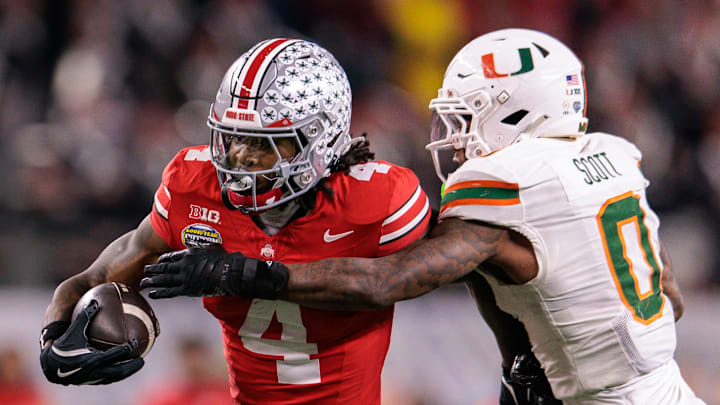
The 20-year-old was the Buckeyes' top offensive player in 2025, racking up 1,243 yards and 12 touchdowns on a career-high 87 catches. Despite those efforts, Ohio State came up short of defending its College Football Playoff national title after falling to Miami 24-14 in the Cotton Bowl.
Smith, a Miami Gardens native, posted an impressive 157 yards on seven catches, scoring once in the brutal loss to his hometown team. The Hurricanes apparently took notice and, according to the wide receiver, made a predictable run at acquiring his services for 2026.
Jeremiah Smith was asked about the offers he may have received this offseason to leave Ohio State. He said there was never a moment he considered leaving, although he wasn’t surprised to see a certain program make a big push.
— Dillon Davis (@DillonDavis56) March 28, 2026
“I think everyone here knows who it was,” he said. pic.twitter.com/oBCSfgysbv
“I knew especially at the end of that game that a certain program was going to come at me very hard," Smith said. "Not gonna say no names, I think everybody here knows who it was. But I wasn’t goin’ nowhere.”
Jeremiah Smith's loyalty to Ohio State should inspire more CFB players to stay where they are
College sports, specifically college football, has become a wild west of financial opportunity with the advent of NIL and waning stature of the NCAA in enforcing its own rules. The transfer portal has essentially morphed into free agency, especially with players able to transfer in consecutive seasons and be immediately eligible to play.
The eventual implementation of revenue sharing will effectively make student-athletes de facto employees, opening up a whole other can of worms in the amateurism conversation. Jeremiah Smith could make as much money as he wants at any program in the country being arguably the top receiver in the sport.
But he sent a message to the rest of the college football world by choosing to remain at Ohio State: Prioritizing your development in a locker room where you feel most at home is worth more than chasing a bag.
Smith's going to the NFL, probably as early as 2027, so he potentially wouldn't have to worry about which school logo is on his helmet when he declares for the draft. But the intangibles of his game like his leadership skills, locker room presence and chemistry with teammates can negatively change by transferring.
Granted, Smith already has it pretty made given his talent level and the fact that he's already playing for one of the best Power Four programs. It's a luxury many other players don't have and you could argue transferring to Miami and the ACC would be a downgrade from the Big Ten.
However, with Miami making it to the national championship game, Smith could've easily taken the "if you can't beat 'em, join 'em" attitude and made a triumphant homecoming with a significantly bigger bank account. He didn't and college football is better off for it.
Star players at other programs need to take note and at least give their current homes a chance to develop them before departing for greener pastures. That mostly goes for guys in the Power Four but we've seen plenty of athletes from mid-majors stick things out for three years or so and still emerge elite in the pros.
Until solid regulations are in place preventing constant transfers and rampant NIL collectives, it's going to take examples like Smith's to restore some semblance of hope to the idea that adversity produces higher quality futures.
More college football news and analysis
 Add us as a preferred source on Google