
The 2025-26 College Football Playoff was anything but typical. Despite the fact the No. 1 team in the nation walked away with the trophy, who that team is was probably more unusual than its opponent in the national championship game.
The Indiana Hoosiers completed a perfect 16-0 season — something not seen since the 1894 Yale Bulldogs — defeating the No. 10-seeded Miami Hurricanes who were controversially included in the 12-team bracket and also defied expectations.
The usual blue bloods like Ohio State, the defending national champions, Georgia and Alabama suffered upsets to these usurpers, signaling the age of parity in college football has arrived.
With the offseason now in full swing, teams that came agonizingly short of the national title will be licking their wounds and evaluating what exactly went wrong and prevented them from becoming champions. Let's dive into each of their fatal flaws and how they can fix them.
James Madison Dukes: The secondary
Curt Cignetti's former home continued his legacy of blinding offense and surprising the opposition. But that came at the price of sacrificing efficient defense. In the CFP first round, JMU made sure the score line was respectable by putting up 34 points on a tough Oregon defense, but surrendering 51 points and 313 passing yards in the process ensured their early exit.
Without head coach Bob Chesney, who now leads UCLA, it's going to be difficult to address those deficiencies in the transfer portal and recruitment. Defensive coordinator Colin Hitschler is going to have to be patient as the roster is replenished over time.
Tulane Green Wave: The defensive line
Ole Miss running back Kewan Lacy only had 87 yards for a single touchdown on 15 carries in the Rebels' first-round victory over Tulane. However, it was the defensive line's lack of pressure on quarterback Trinidad Chambliss that doomed the Green Wave. Chambliss threw for 282 yards and scored two of his three touchdowns via his own legs.
Three defensive linemen entered the transfer portal this cycle and none followed former head coach Jon Sumrall to Florida. That means new head coach Will Hall will have some veterans to coach up, but he will also need to dip into the recruiting trail to beef up what appeared to be their weakest position.
Oklahoma Sooners: Second-half defense

The Sooners held a 10-0 lead after the first quarter and found themselves tied at 17 with the Crimson Tide at halftime. After that, Alabama doubled their lead and Oklahoma could only muster seven more points of their own at home.
This is a simple coaching fix. Head coach Brent Venables, who came from leading Clemson's championship defenses, is in charge of play calling on that side of the ball. That clearly didn't work out when it mattered most, so Venables should consider letting co-defensive coordinator Todd Bates have more control and see if things improve.
Texas A&M Aggies: Rushing attack
The Aggies managed only seven points and lost by three to the eventual runner-up Hurricanes. So, defense wasn't the problem down in College Station. However, with how explosive Texas A&M's offense was all year, one of its biggest weapons was entirely silenced. Running backs Reuben Owens II, Le'Veon Moss and EJ Smith were held to just 50 combined yards on just 18 carries.
Moss and Smith are both graduating out, so it'll be up to Owens and some youngsters to pick up the slack in 2026. Four-star recruit KJ Edwards will be one to keep an eye on as he develops in his freshman year.
Alabama Crimson Tide: Quarterback

It was quite painful watching starter Ty Simpson struggle to get anything going and then go down injured with a fractured rib in the Rose Bowl. Backup Austin Mack did his best, posting 106 yards on 11 completions, but he failed to find the end zone. Alabama lost the quarterfinal 31-3 to Indiana.
Simpson declared for the NFL Draft, so it'll be Mack's starting job to lose with true freshmen Jett Thomalla and Tayden Kaawa arriving in Tuscaloosa. Backup Keelon Russell will also have an opportunity to show what he's got and potentially surprise the coaching staff.
Texas Tech Red Raiders: Offensive efficiency
Texas Tech would've been the last team on anybody's list to be the only one shut out in the CFP. After finishing the season with a top 10 offense and top 3 defense, the Red Raiders looked like anything but on both sides of the ball. However, quarterback Behren Morton seemed to be the weakest link, throwing two interceptions, half of the team's lost turnovers.
Well, Morton won't be back next season as he tries to make it in the NFL. But ball security is easily taught and practiced in the offseason. Head coach Joey McGuire will make sure turnovers are at a minimum in 2026, especially with a healthy shot at repeating as Big 12 champions with new quarterback Brendan Soresby from Cincinnati at the helm.
Georgia Bulldogs: Handling the bye

The Bulldogs played their hearts out in the quarterfinal but ultimately fell victim to the fact that Ole Miss had the ball last and scored a game-winning field goal (forget about the last-second safety part). Georgia was just another casualty in the CFP first-round bye curse that has taken down every Top 4 team in the bracket (except Indiana).
There's not a whole lot you can do about that except maybe aim for the 5-seed? That seemed to do other teams good, like Ohio State in 2024. But we all know Georgia is a perennial contender and should be back in the CFP next year.
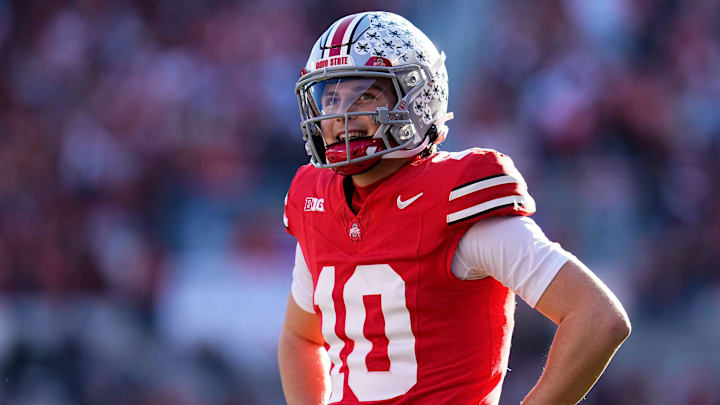
Ohio State Buckeyes: Adversity
The Buckeyes lost back-to-back games for the first time since 2023, showing their ability to bounce back from a tough loss isn't necessarily there. They lost to the eventual national champions in the Big Ten Championship and then to the eventual runners-up, so it's not like they were bad losses by any means, but if you're going to be the best, you've got to find ways to win in tough situations.
Ryan Day will be running it back in 2026 with quarterback Julian Sayin but will surely lose some top talent to the NFL Draft. Ohio State always finds a way to replenish its roster. It'll just come down to whether the coaching staff will have them ready to take on a gauntlet of a schedule that will feature challengers like Michigan, Texas, Oregon and Indiana.
Ole Miss Rebels: 4th down defense

Like Georgia, Ole Miss didn't really make many mistakes in the Fiesta Bowl. A missed field goal early in the third quarter was tough, but it wasn't the nail in the coffin. Where the Rebels needed to step up was on fourth down when Miami had the ball. The Hurricanes converted both of their attempts and extended drives that ate up crucial clock, which ended up biting Ole Miss at the end of the game.
Both fourth downs were converted on rushing plays, so beefing up the Rebel defensive line will be key. That can occur in the transfer portal or by developing some young talent out of high school over the next couple of seasons. It would be naive to say Ole Miss won't be challenging for another CFP berth in 2026.
Oregon Ducks: Ball security
We all know Indiana's offense was like a blitz and its defense was smothering. But Oregon didn't help itself by starting the game off with a turnover that put it in a 7-0 deficit right off the bat. In fact, quarterback Dante Moore turned the ball over three times in the semifinal matchup in which the Hoosiers converted into 21 points. Though, even without those mistakes the Ducks still would've lost 35-22.
Moore decided to return to Oregon for another season in 2026, and ball security should be at the top of his and head coach Dan Lanning's checklist for offseason workouts. He just missed out on being a Heisman finalist in 2025. If he limits the turnovers next year, he'll get a trip to New York and potentially back to the CFP.
Miami Hurricanes: Special teams
Miami had a legitimate shot at upsetting Indiana in the national championship games but some crucial plays just did not break their way. A missed field goal at the end of the first half and a blocked punt for a touchdown in the third quarter could've been a potential 10-point swing in the Hurricanes' favor at best.
Miami already secured top kicking transfers in Jake Weinberg (Florida State) and Jack Olsen (Northwestern), so that's one problem solved. But special teams coordinator Danny Kalter will have to drill his guys into better protection for his punter. Less punting would also be a solid tactic, but that can sometimes be easier said than done.
 Add us as a preferred source on Google