
The NFL scored a big, controversial win over its own players on Friday, when an arbitrator upheld the league's grievance that NFLPA team report cards violated the collective bargaining agreement.
Since the ratification of the most recent CBA, players submitted anonymous assessments of their workplace environments, and the union published those ratings in the form of an annual release. At the conclusion of the 2024-25 season, the Miami Dolphins and Minnesota Vikings were graded the best places to work while the Arizona Cardinals, New England Patriots and Cleveland Browns rounded out the bottom three.
In a letter to teams, the league informed them that the arbitrator had ordered the union to cease any publication of future report cards.
The NFL has won its grievance against the NFLPA related to the union’s report cards, source tells @NFLonCBS. Those report cards were considered successful by the union, but the league has always upheld it went against the collective bargaining agreement. pic.twitter.com/ETRtStqtbj
— Jonathan Jones (@jjones9) February 13, 2026
"The record established that the Report Cards were designed by the union to advance its interests under the guise of a scientific exercise," the league stated.
The episode ends a year-long battle over the language of a specific clause in the CBA which reportedly requires NFL owners and the union to "use reasonable efforts to curtail public comments by club personnel or players which express criticism of any club, its coach, or its operation and policy." The league argued that the report cards qualified as such criticism, while the union claimed that it was simply a way for players to hold their organizations to account without fear of reprisal.
Technically, speaking this is a win for the league office. But it's hard to see what good this will actually do them in the long run. Sure, some of the worst owners in the NFL now avoid a bad round of PR, while fans' view of how the league and its teams operate only gets more cynical.
NFL's worst owners successfully silenced players' ability to hold them accountable
The league and team owners are telling on themselves with how little they want to be held accountable for treating players unfairly. When the grievance against the NFLPA was first filed, an owner anonymously told ESPN that it was his poorly rated counterparts which wanted the practice ended.
"The only owners who don't care for [the report cards] are the ones who get the subpar grades," they said at the league owners meeting in March.
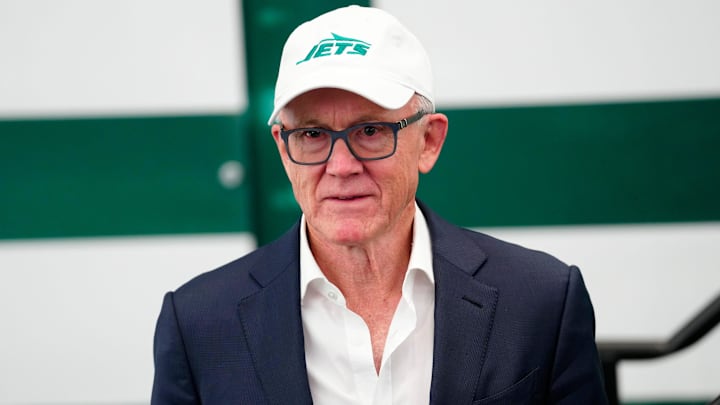
One of those is New York Jets owner Woody Johnson, whose team finished 29th overall while Johnson himself received the only "F" grade. He eventually called the assessments "totally bogus" and claimed — just as the league's memo said Friday — the methodology was "not fair" and "not balanced."
Cardinals owner Michael Bidwell (D-), Patriots owner Robert Kraft (D) and Browns owner Jimmy Haslam (C+) have yet to be as publicly critical as Johnson, but it makes sense why he has been. Though from a PR standpoint, he's just telling his players he couldn't care less about their well-being under his employment.
Among the rest of the owners poorly rated a year ago were:
David Tepper (D) - Carolina Panthers (25th)
The Glazer Family (D+) - Tampa Bay Buccaneers (27th)
Art Rooney II (D) - Pittsburgh Steelers (28th)
Despite the tough ruling, players are still going to have opinions on their workplaces. Word spreads quickly around locker rooms and group chats, and it'll get from team to team just as quick. Fans should keep an eye on how frequently free agents depart the above mentioned teams and how few join them over the offseason.
One thing is for sure: The NFLPA will be reevaluating accepting language like the clause the league used in this case in the next CBA negotiations.
 Add us as a preferred source on Google