
The Seattle Seahawks and New England Patriots are set to meet in what should be a thrilling Super Bowl. Given how close the spread is, we could be in for a classic decided in the final moments of regulation, if not overtime. In other words, a long night of football could be ahead.
A look at the longest Super Bowls ever played, though, shows that even if this game does go to overtime, it won't necessarily be the longest Super Bowl game ever recorded.
What is the longest Super Bowl in NFL history?

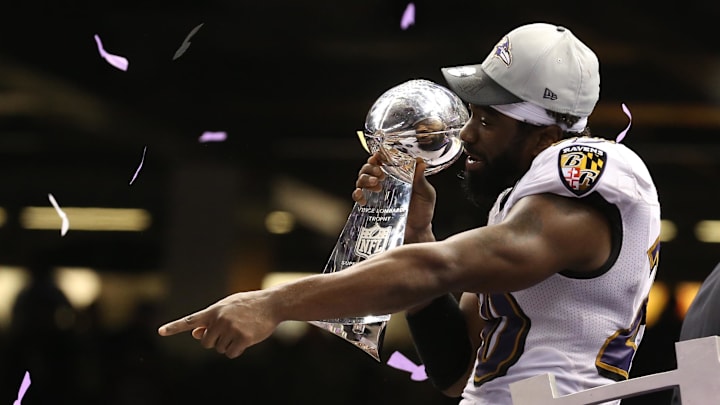
The longest Super Bowl recorded did not go to overtime, although it was pretty close to doing so. The Baltimore Ravens narrowly defeated the San Francisco 49ers 34-31 despite leading 28-6 after returning the second-half kickoff for a touchdown. A 34-minute power outage at the Superdome sparked a Niners comeback attempt that fell just short and led to the longest Super Bowl ever.
The power outage obviously played a huge role in this game, leading the list of longest games played, but the Niners crawling back into the game slowed it down a bit as well. Even without the delay, this game would've narrowly missed the list.
Rank | Super Bowl (Year) | Time of Game | Final Score |
|---|---|---|---|
1 | Super Bowl XLVII (2012) | 4 hours, 14 minutes | Ravens 34, 49ers 31 |
2 | Super Bowl LVIII (2023) | 4 hours, 6 minutes | Chiefs 25, 49ers 22 (OT) |
3 | Super Bowl XXXVIII (2003) | 4 hours, 5 minutes | Patriots 32, Panthers 29 |
4 | Super Bowl LI (2016) | 3 hours, 47 minutes | Patriots 34, Falcons 28 (OT) |
5 | Super Bowl LII (2017) | 3 hours, 46 minutes | Eagles 41, Patriots 33 |
Why the shortest Super Bowls in NFL history stood out

Super Bowl XLIV between the New Orleans Saints and Indianapolis Colts isn't only the shortest Super Bowl game ever played, but it's the shortest by nearly 10 minutes. There are several reasons for that.
Two pass-heavy and efficient offenses were on full display
Incompletions stop the clock, but completions keep it running. Drew Brees and Peyton Manning, the starting quarterbacks of this game, completed 63 of their 84 pass attempts, good for a 75 percent completion rate. The clock rarely stopped, and the game was a very entertaining watch.
Penalties were limited
Another thing that stops the clock is penalties. For reference, 20 penalties were called in Super Bowl XXXVIII. A total of eight penalties were called in this game, which is a very low number for any contest. The clock kept moving without many self-inflicted mistakes.
Timeouts were rarely called
As many as 12 timeouts (six per team) can be called in a regulation game. Oftentimes, especially in a Super Bowl, most of those timeouts will be used, as they can't be carried over. Only six total timeouts were called in this Super Bowl, though, with four of them coming in the first half. Ultimately, once New Orleans went up by two scores with a little over three minutes to go and got the ball back with less than a minute to go, there wasn't much of a reason for timeouts to be called.
Rank | Super Bowl (Year) | Time of Game | Final Score |
|---|---|---|---|
1 | Super Bowl XLIV (2009) | 3 hours, 14 minutes | Saints 31, Colts 17 |
T-2 | Super Bowl XXXV (2000) | 3 hours, 23 minutes | Ravens 34, Giants 7 |
T-2 | Super Bowl XLVI (2011) | 3 hours, 23 minutes | Giants 21, Patriots 17 |
T-2 | Super Bowl XLVIII (2013) | 3 hours, 23 minutes | Seahawks 43, Broncos 8 |
5 | Super Bowl LVI (2021) | 3 hours, 26 minutes | Rams 23, Bengals 20 |
How commercials impact the Super Bowl

The Super Bowl is the biggest game on the calendar in the world every year. It's must-see TV, particularly in the United States, and commercial slots are extremely expensive and valuable as a result of that.
Knowing how much they cost, the NFL has a duty to ensure a certain number of commercials are shown. At the change of many possessions, at the end of quarters and when timeouts are called, the game often goes into commercial breaks to fit as many in as possible. The breaks in the Super Bowl are longer than they are in the regular season, too.
These breaks add up. They don't necessarily impact the on-field product, but if you look at your clock sometime during the Super Bowl and wonder how the game is over three hours long, commercials play a role in that.
Super Bowl overtime rules: How bets could go up in flames

The New England Patriots won the first-ever overtime game in Super Bowl history, and did so in a way that wouldn't stand in 2026. They won the coin toss after rallying from their 28-3 deficit and immediately scored a touchdown, ending the game and enhancing Tom Brady's GOAT legacy.
While a coin toss does still determine who gets the ball in overtime first, it is no longer a sudden-death period. Even if a team were to begin the overtime period with a touchdown, the game will continue. The other team will be given one drive to respond with a touchdown of their own. From then on, it becomes a sudden-death period in which the next team to score would win.
Each team gets three timeouts in overtime, and no challenges are allowed. All replays are conducted from the booth. There is technically a clock, but since the Super Bowl cannot end in a tie, the clock is meaningless.
The new playoff overtime rules could greatly impact betting. Lines are made with the game ending in regulation in mind. We could see as many as three touchdowns in overtime, and that'd greatly inflate players' stats as well as the final score line. Bets that appear set to cash in regulation could go up in flames depending on how overtime shakes out.
More NFL news and analysis:
 Add us as a preferred source on Google