
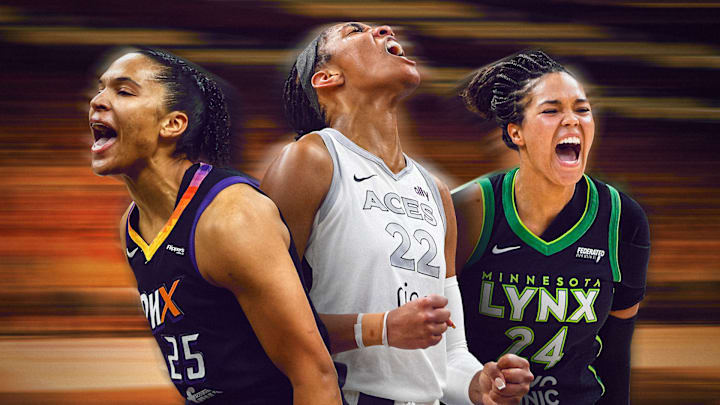
Negotiations between the WNBA and the WNBPA over the latest CBA have been nothing short of contentious. After an initial October 30 deadline, both parties agreed to extend the date on two separate occasions. It now stands at January 9, 2026, threatening to delay the league’s expansion draft and standard season start date.
WNBA is staring down disaster as labor negotiations continue
Salaries offered by the WNBA in its latest proposal seem promising. The league’s highest-paid players are set to make a baseline of $1 million, while its lowest-paid players would take home a minimum of $220,000. However, these numbers come with serious strings attached: The league would push the season start date earlier in the year, no longer provide players with guaranteed housing and require select rookie players to attend a mandatory draft combine or see their salary cut in half. The league is also still not conceding significantly on the sticking point issue — revenue sharing — which would sit at 15 percent, up from the current CBA’s 9 percent.
Running parallel to these developments, we can chart the rise of offseason leagues: Unrivaled, Athletes Unlimited and the nascent Project B. Offseason leagues, typically used by players to supplement WNBA income, are now promising salaries that equal or eclipse current WNBA compensation, offer equity in their respective leagues and have attracted serious WNBA talent.

Unrivaled is slated to kick off its second 3-on-3 season with the addition of two new teams, expanding from an inaugural 36 roster spots to 56 while offering players a starting salary of $222,222. Athletes Unlimited, entering its fifth season of 5-on-5 play this February, runs for only four weeks but offers 40 roster spots with a salary between $30,000 and $40,000; this year, the league estimates that around 70 percent of those spots will be filled by WNBA players. The newest model of offseason play is Project B —– an international 5-on-5 league with teams competing in seven two-week long tournaments in major global cities —– which has offered players a starting salary of $2 million and has already pulled big names including Nneka Ogwumike, Alyssa Thomas, Jonquel Jones, and Jewell Loyd, among others.
The WNBA has reached an inflection point: Meet the WNBPA’s demands or face the potential consequence of a major talent exodus, which would not only decrease the league’s competitiveness and entertainment value but also dim its reputation as the top organization in the country, if not the world, for women’s basketball.
Why NBA history should serve as an object lesson

The WNBA’s present position after 28 seasons is strikingly similar to that of the NBA after 25 seasons. After establishing itself as the premier basketball league in the United States, the NBA faced a threat to its basketball domination: the American Basketball Association (ABA). The ABA offered a new type of basketball, one with a 30-second shot clock, a three-point shot and an eye-catching red, white, and blue ball. Most importantly, though, they offered players more competitive salaries.
Star players of the time, such as Rick Barry, ditched the NBA for a $30,000 pay raise while new talent opted to surpass the NBA altogether. Mel Daniels, for example, joined the ABA for a yearly paycheck of $36,000 compared to the NBA’s meager $12,000.

The NBA had to adapt, and it did. According to the New York Post, the NBA allegedly helped subsidize the $250,000 salary of marquee player Kareem Abdul-Jabaar when he joined the Milwaukee Bucks in 1969. Ray Patterson, the owner of the Bucks at the time, told the Post that “[the League’s funds] helped us save the franchise and helped the NBA compete against some very vibrant and resourceful ABA owners who had amassed an awful lot of dynamic talent.”
Though the league was allegedly not turning a profit during the 1970s, it knew that talent retention was the bedrock of long-term success; the average salary in 1970 was $90,000, the equivalent to around $770,000 today. Taking it one step further, the NBA successfully merged with the ABA in 1976, adopting four teams that have since become household NBA names: the Denver Nuggets, Indiana Pacers, New York Nets and the San Antonio Spurs. We can see this moment’s historical shadow in the current WNBA CBA negotiations.
Though players are at the heart of any league, they, too, are mercy to market forces. They likely do not share the same loyalty to the league as fans. As lockout looms, the WNBA faces a real existential risk. The NBA knew that players would play in the league that valued them most. It's time the WNBA came to the same conclusion.
 Add us as a preferred source on Google