
Key Points
Bullet point summary by AI
- The 2026 MLB season has seen multiple rookies make immediate impacts across the league.
- Several first-year players, including Kevin McGonigle and JJ Wetherholt are already drawing comparisons to standout rookies from recent years.
- This year's class could challenge historic rookie classes — like 2012, 2006 and 2015 — if current performances continue.
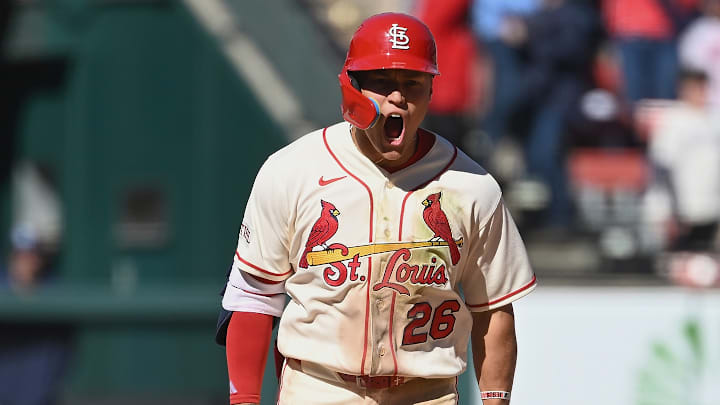
As rookies in the Opening Day lineup, Detroit Tigers shortstop Kevin McGonigle and St. Louis Cardinals second baseman JJ Wetherholt began the 2026 season with that unappealing combination of pressure, high expectations, and outside noise.
If either player felt nervous, they certainly haven’t shown it thus far. McGonigle is the early AL Rookie of the Year favorite after hitting .364 with three extra-base hits, five RBI, and a .985 OPS through six games. Although Wetherholt hasn’t had the same offensive success, he’s held his own with a home run, four RBI, and a .721 OPS for the Cards. Elsewhere in the Midwest, White Sox first baseman and Japanese import Munetaka Murakami mashed three home runs in his first three games.
It’s been so far, so good for the 2026 newcomers, and there is growing optimism about how special this group could be, especially with how successful previous rookie classes have been.
Before we go any further, we must clarify how MLB eligibility rules work. As of April 2026, a player’s rookie eligibility ends when they exceed 130 at-bats, 50 innings pitched, or 45 total days on an active MLB roster, though that does not include time on the injured list or a September call-up.
You don’t have to be a “rookie” all year to win Rookie of the Year; you just have to start that way. As long as a player enters the season under the 130 AB/50 IP threshold, as Yankees pitcher Luis Gil did in 2024, they are eligible for the hardware regardless of when they cross those marks.
All of that makes sense, right? Let’s get to talking about rookies while feeling old about ourselves in the process.
The 2026 MLB rookie class has quickly turned heads

The trio of McGonigle, Murakami, and Wetherholt isn’t the only first-year MLB players to catch our attention. Guardians designated hitter Chase DeLauter has already socked four home runs after a terrific spring. Blue Jays third baseman Kazuma Okamoto is quietly hitting .292 with two homers and a .912 OPS through nearly 30 plate appearances, although his 40.7% strikeout percentage is concerning.
On the pitching side, Phillies top prospect Andrew Painter threw 5 1/3 innings of one-run ball in his MLB debut against the Nationals. The Reds’ Rhett Lowder, who missed all of last season with injuries, held the Red Sox to two runs and two walks across five innings last Sunday. It’s been so far, so good for the 2026 newcomers, and I’m excited to see how things progress.
Remember how good the 2025 and 2024 MLB rookies were? We certainly do

Paul Skenes. That is all.
While Skenes was busy carving through lineups, he wasn’t alone among the rookies who impressed throughout the 2024 and 2025 seasons. Braves catcher Drake Baldwin recorded 80 RBI, an .810 OPS, and 3.3 bWAR in less than 450 plate appearances en route to earning NL Rookie of the Year honors last year. The Athletics’ young duo of Jacob Wilson and Nick Kurtz, the latter of whom tied MLB single-game records with four home runs and 19 total bases against the Astros last July, gave A’s fans reasons to feel positive amid another rebuild and the team’s controversial departure from Oakland.
We can’t forget about Trey Yesavage, who started last year in Single-A Dunedin and ended it with a 12-strikeout performance in Game 5 of the World Series. As for the 2024 crop of rookies, look no further than Padres center fielder Jackson Merrill, who hit 24 homers, 31 doubles, and gave San Diego an .826 OPS and 4.5 bWAR. If not for Skenes, Merrill would have become only the third player in franchise history to win Rookie of the Year.
Bryce Harper and Mike Trout headlined the 2012 rookie class

At this point, we feel comfortable suggesting that Trout will find himself in the Hall of Fame, and Harper remains well on pace. Although Trout had debuted in the summer of 2011, he still had his rookie eligibility and nearly won the AL MVP. Harper arrived early in the season and led the Nationals to their first playoff berth since moving to Washington.
The 2012 class also featured the debut of Manny Machado, who has built his own Hall of Fame case with the Orioles and Padres. Speaking of the Padres, their former first base prospect, Anthony Rizzo, emerged as a mainstay in the Cubs’ lineup. Yu Darvish, Machado’s current teammate in San Diego, racked up 16 wins and 221 strikeouts for the Rangers.
Justin Verlander and the 2006 MLB rookies certainly left their mark

As was the case in 2006, Verlander is still toeing the mound in a Tigers uniform. It’s hard to believe that it’s been two decades since Verlander burst onto the scene with 17 wins and a 3.63 ERA in his Rookie of the Year season. Surprisingly, Verlander only averaged 5.6 strikeouts per nine, considerably below his lifetime 9.0 average.
Cole Hamels began his Phillies career with 2.3 bWAR in 23 starts, and Marlins shortstop Hanley Ramírez captured NL Rookie of the Year honors. I was also a massive fan of Ramírez’s teammate, Josh Johnson, a future two-time All-Star who gave the Marlins a 3.10 ERA over 157 innings. Unfortunately, injuries forced Johnson to throw his final pitch before turning 30 years old.
You’ll likely recognize some of the other 2006 rookies, from Red Sox closer Jonathan Papelbon to Orioles outfielder Nick Markakis. And, of course, the Marlins found a gem after adding a former Diamondbacks second base prospect in the Rule 5 Draft.
I’m blanking on who he was, though. All I remember is he had a habit of hitting home runs. What was his name again?
happy birthday to Dan Uggla, whose name is Dan Ugglahttps://t.co/4Kjhuz9HV1 pic.twitter.com/BYRaqzgDHz
— Céspedes Family BBQ (@CespedesBBQ) March 11, 2021
All too easy.
Kris Bryant’s 2015 rookie class overcame controversy to shine

Arguably, the most memorable memory I have of the 2015 MLB rookie class is the Cubs intentionally keeping Bryant at Triple-A to open the season so they’d have another year of team control. The move was even more egregious considering that Bryant recorded 5.4 bWAR with 31 doubles, 26 home runs, 99 RBI, and an .858 OPS after debuting in mid-April.
Among the other players who debuted alongside Bryant: Francisco Lindor, Carlos Correa, Kyle Schwarber, and Corey Seager, all of whom grew into multi-time All-Stars. We also can’t ignore then-Marlins catcher J.T. Realmuto, who’d played 11 games a year earlier but completed his first full season in 2015.
More MLB news and analysis:
 Add us as a preferred source on Google