
Key Points
Bullet point summary by AI
- The NL Central entered 2026 as one of baseball's most predictable divisions, but has become MLB's only division with five teams above .500 this season.
- Veteran additions and breakout performances have transformed unexpected contenders into legitimate contenders, challenging traditional powers.
- Despite the current standings, run differential metrics suggest the division's dominance may be temporary, with underlying numbers indicating a potential regression for some teams.
At the start of the 2026 season, the NL Central was viewed as just about the most settled division in baseball. It would be the Milwaukee Brewers and Chicago Cubs battling it out at the top for what felt like the zillionth consecutive year, with both the Cincinnati Reds and Pittsburgh Pirates sniffing around a Wild Card spot if things broke right and the St. Louis Cardinals bracing for year one of what figured to be an extended rebuild.
Flash forward about a month, and instead what we've gotten is ... both MLB's best and its most chaotic division? Just look at the standings entering play on Tuesday.
Team | Record |
|---|---|
Cincinnati Reds | 15-8 |
Chicago Cubs | 13-9 |
Pittsburgh Pirates | 13-9 |
St. Louis Cardinals | 13-9 |
Milwaukee Brewers | 12-9 |
Yes, the NL Central is the only division to feature five teams with winning records right now, and even more remarkable is that all five are multiple games above .500. Which begs the question: What on Earth is going on in the heartland? How did we get here? And is this a sign of the season to come — or a small-sample fluke we'll look back and laugh it in a few months?
How the NL Central has turned into MLB's toughest division

Both Milwaukee and Chicago felt like known quantities entering the year, and while both have endured more than their fair share of injury adversity already — the Brewers without Jackson Chourio, Christian Yelich, Andrew Vaughn and Quinn Priester, the Cubs without Cade Horton, Matthew Boyd and fully half of their Opening Day bullpen — they've managed to keep their heads above water. These are deep, talented teams, and it's not surprise that Chicago's offense and Milwaukee's athleticism and relentless pitching development have stabilized things.
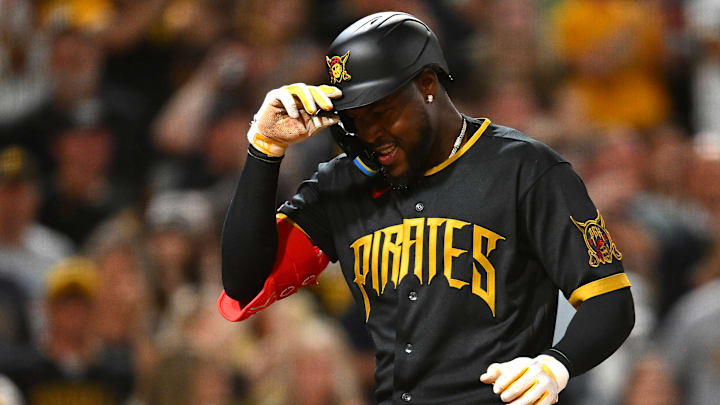
From there, though, pretty much nothing has gone according to plan. The Pirates generated some moderate buzz over the offseason thanks to finally spending at least some amount of money in free agency, but this still felt like a a lineup one or two bats short of supporting what was still a young pitching staff. Instead, veteran additions like Brandon Lowe and Ryan O'Hearn are raking, Oneil Cruz is putting it all together in front of our eyes and arms like Braxton Ashcraft and Bubba Chandler have hit the ground running. It's exactly the formula Pittsburgh envisioned when it built this team over the offseason.
More surprising, though, have been the Cardinals and the division-leading Reds. Cincy is 15-8 without getting anything from Nick Lodolo or Hunter Greene (both injured), as righty Chase Burns looks like an ace in the making and infielder Sal Stewart just keeps on mashing. St. Louis, meanwhile, had a more talented lineup than they were given credit for before the year began — Ivan Herrera, Alec Burleson and Masyn Winn are all quality big-league players, plus top prospect JJ Wetherholt at second base — but things really took off once Jordan Walker shook off the bust label and finally started realizing his sky-high potential all at once. Walker becoming a 30-homer, middle-of-the-order bat changes everything, and suddenly gives the Cardinals a legitimately solid offense to build around.
Don't expect the NL Central's dominance to last

Unfortunately, the truth is that the NL Central hasn't actually been head-and-shoulders above the rest of baseball — they've been a very normal division with better luck than the rest of baseball. If you strip away the records and look only at each team's run differential, than suddenly things come crashing back to reality.
- Cubs: +34
- Pirates: +25
- Brewers: +19
- Reds: -3
- Cardinals: -10
That's much more in line with the norm, and a far different picture than the standings present. Run differential is by no means the only metric that matters — games are won and lost on the field, after all — but it does give us an idea of which of these teams are really built to last this summer.
The Cubs and Brewers, surprise surprise, are going to be good. Chicago still has more offensive firepower than anyone in this division, and Milwaukee just knows how to win a whole lot of regular-season games. And it's fair to be bullish about the Pirates: Sure, Cruz is hard to trust and Lowe and O'Hearn will cool off eventually, but those regressions can be offset by more contributions from guys like Konnor Griffin and Marcell Ozuna — and again, there's little reason to think a rotation of Paul Skenes, Ashcraft, Chandler and Mitch Keller can't be competitive in a wide-open NL. Pittsburgh will probably still have problems scoringn runs, but they should at least be mediocre, and that might be enough.
Cincinnati and St. Louis, however, are hereby being put on fraud watch. I have no idea how the Reds have been doing this, considering their offense is literally the worst in baseball (30th in wRC+) and their rotation doesn't have much of anything beyond Burns and Rhett Lowder at the moment. Cincy's bullpen has been pitching way over its head, and when that normalizes, a 6-0 record in one-run games won't last long. You simply can't get away with being this punchless at the plate for an extended period, and I'm not sure where they'll find more offense.
I think even Cardinals fans can acknowledge that this team isn't as good as its record — they've got the fourth-highest team ERA in baseball, for crying out loud, and the underlying numbers are pretty much just as bad. They're a whopping 5-0 in extra innings and 5-0 in one-run games; yes, this offense is respectable, but eventually the complete lack of pitching is going to catch up with them. Which is fine, really; it's not like anyone expected much of this team in 2026. What matters is that there are pieces to build around moving forward, Walker foremost among them.
 Add us as a preferred source on Google