
Key Points
Bullet point summary by AI
- The 2026 MLB free agent class is under intense scrutiny as early performance sparks debate among fans and analysts.
- Several high-profile signings, including a star outfielder for the Dodgers, have shown mixed results in their new teams.
- The pressure is on for these players to justify their lucrative contracts as the season progresses and expectations remain sky-high.
Before you say it: Yes, we know, it's been less than two weeks. That's not nearly enough time to judge any individual player, especially not a proven star. And yet ... well, when you make the big bucks — in some cases more than $50 million a year! — expectations are heightened, and fans are desperate to render judgment one way or the other based on first impressions.
Some members of the 2026 MLB free agency class have hit the ground running. Others, however, have very much not. An inordinate number of the biggest names who changed teams this past winter have struggled so far in their new cities, which means it's time to sort through and figure out some early winners and losers — and who has reason to panic for real.
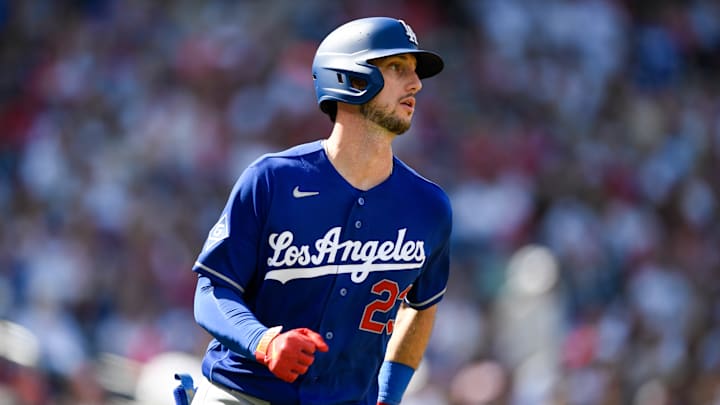
OF Kyle Tucker, Los Angeles Dodgers
Grade: C+
Just when it seemed time to officially sound the alarm on Tucker — sky-high K rate, uncharacteristically terrible walk rate, way too many whiffs and bad decisions — he delivered five hits over the first two games of L.A.'s series against the Washington Nationals this weekend. Granted, it's the Nats, but it was still a welcome sign of life for a player making nearly $60 million this season.
Tucker's top-line numbers look much better now than they did just a few days ago, and the odds are still high that he eventually winds up playing to the back of his baseball card. But Tucker was always a slightly riskier profile than people wanted to admit during his free agency, a player without elite athletic traits who produced star-level outcomes in the past thanks largely to an elite approach. When that approach breaks down — like, say, in the first week with a new team that just handed you a record contract — the floor is lower than you'd expect, and he still has questions about his health track record and overall streakiness to answer.

RHP Edwin Diaz, Los Angeles Dodgers
Grade: B
Diaz has done what's asked of him so far, nailing down a pair of one-run games and giving up one meaningless run in a four-run win earlier this week. The underlying numbers don't paint the picture of a dominant closer, though: The righty's fastball velocity is down, and he's not earning much swing and miss at all so far.
It's early days still, obviously, and Diaz's velo should tick back up as the weather warms and his arm picks up strength. It's worth remembering that he's alternated elite seasons with just fine ones, though. Relievers are volatile by nature, and the Dodgers are paying a ton of money for him to be lights out and erase this team's one remaining weakness. The true test is yet to come.
1B Pete Alonso, Baltimore Orioles
Grade: C-
Alonso has a sub-.700 OPS for a disappointing Orioles offense, and the batted-ball data shows plenty of cause for concern. The K and whiff rates are way up, the bat speed is way down and he's pulling the ball in the air way less than we've ever seen — no small thing for a home-run hitter.
Again: It's still early, and it's still pretty cold on the East Coast. Alonso was very good last year, and could well catch fire as soon as I'm done writing this sentence. And yet ... well, he's already 31, and his is a profile known for not aging particularly well. Add in the fact that he already showed signs of physical decline in 2025, and you can understand why Baltimore fans might be feeling antsy about paying this guy $31 million a year for the next half-decade.

3B Bo Bichette, New York Mets
Grade: D-
It sure seems like Bichette is pressing right now. His chase rate is way up, and as a result he's swinging and missing well above his career norm. The result? A K rate almost double his number from last season, plus lots of suboptimal contact. Oh, and did we mention that the third-base experiment hasn't gone well so far?
Amid the Mets' teamwide struggle to score runs, it's understandable that Bichette has come in for particular scorn. I'm not ready to hit the panic button here, mostly because we've never seen Bichette fail to hit in the Majors as long as he's been healthy. It's been undeniably ugly so far, though, and it's fair to question whether a New York team that needs more over-the-fence pop should've handed him such a hefty AAV.
3B Alex Bregman, Chicago Cubs
Grade: D+
The beginning was always going to be bumpy. Bregman's whole thing is hitting the ball in the air, and Wrigley Field is notoriously brutal on right-handed hitters before the weather warms up and the wind changes direction. Sure enough: He currently has a gap of more than 20 points between his expected wOBA and his actual wOBA.
Slightly more concerning are the poor defensive metrics, but I'm willing to chalk that up to a small sample size based on his track record of quality at third base. Bottom line, there isn't much to suggest that Bregman is suddenly over the hill at age 32. But this Cubs team could really, really use his bat soon, especially with recent injuries to their pitching staff.

RHP Dylan Cease, Toronto Blue Jays
Grade: C+
It took Toronto less than two weeks to get the full Dylan Cease experience. There was the dominant upside in his first start with the Blue Jays, striking out 12 over 5.1 innings of one-run ball. And then there was the maddening inefficiency and lack of command, allowing three runs (two earned) on five hits and three walks over just 4.1 innings against the Chicago White Sox.
This is and has always been the deal with the right-hander, who has lightning coming out of his elbow but all too often struggles to lock in his locations and can struggle to keep runners off the bases and go deep in games. The good news is that he's showing a more diverse arsenal than we've ever seen from him, which should hopefully help him become the ace Toronto is paying him to be. But the bar is high here based on his $30 million salary, and even higher with the Jays' rotation reeling.
LHP Framber Valdez, Detroit Tigers
Grade: A
There are plenty of teams likely kicking themselves right now for letting Valdez fall into Detroit's lap. The lefty has taken full advantage of one of the best pitcher's parks in the league, with just one run allowed across 12 innings so far. He works deep into games with the best of them, providing some much-needed consistency for a Tigers rotation that's still struggling to find reliability from Jack Flaherty and the currently injured Justin Verlander.
The really scary part is that Valdez still doesn't really feel locked in yet, with an uncharacteristically low ground-ball rate. Once he fully finds the feel for his trademark sinker, Detroit will have arguably the best one-two punch in the league alongside Tarik Skubal.

LHP Ranger Suarez, Boston Red Sox
Grade: F
After allowing four runs on seven hits in 4.1 innings in a loss to the Houston Astros in his Boston debut, Suarez gave up four runs on six hits in four innings in a loss to the San Diego Padres — after which fans at Fenway Park were so fed up they started "sell the team" chants in the ninth inning.
It's not going great right now, is what we're saying. And while Suarez has been an excellent pitcher over the last few years, he's also on the wrong side of 30, with declining fastball velocity that puts even more pressure on his command to carry his profile. That command simply hasn't been there so far, and his sinker and cutter are getting lit up as a result. Will he be this bad forever? No, of course not. But there's real reason to be concerned here.
 Add us as a preferred source on Google