
Key Points
Bullet point summary by AI
- Our ABS challenge analysis reveals which hitters are wasting their teams' limited dispute opportunities this season.
- The metric accounts for pitch location, count and game state to measure net challenges lost against optimal strategy.
- Gary Sanchez and Nolan Schanuel headline a group of hitters struggling to properly read the automated strike zone.
Every MLB team starts each game with two ABS challenges. Two. Waste one on a pitch the model already knew was a strike, and you have spent half your budget on nothing. Do it twice and your lineup plays the rest of the game without a safety net.
That cost is invisible in the box score. It does not show up in batting average or OPS or any of the standard lines fans check after a game. But it is real, and some hitters are paying it at a rate that should concern their coaching staffs.
Using Statcast's 2026 ABS challenge data, we ranked batters by net challenges lost, a metric that compares actual challenge outcomes against a model built by Tom Tango that accounts for pitch location, remaining challenges, base-out state and count. It is a better measuring stick than raw overturn rate because it reflects the quality of the opportunities a hitter is choosing to dispute, not just whether they won or lost. Minimum eight challenges to qualify.

Gary Sanchez is wasting more ABS challenges than anyone
- 16 challenges
- 43.8 percent overturn rate
- 7.1 net challenges lost
Sanchez leads this list in both volume and damage. Sixteen challenges is the highest total of any batter in this group, and he is getting confirmed nearly 56 percent of the time. The model says he is losing 7.1 more challenges than an optimally calibrated challenger would in the same pitch situations. One strikeout flipped in his favor across all sixteen attempts.
The volume makes this worse, not better. He is not a guy who challenged twice and got unlucky. He has done this repeatedly, and the pattern holds.

Nolan Schanuel is consistently misreading the ABS zone
- 12 challenges
- 33.3 percent overturn rate
- 5.5 net challenges lost
Schanuel's actual walk numbers and contact profile suggest a hitter who understands the strike zone. The ABS data does not agree. At 33.3 percent, he is winning less than one in three challenges, and the model says the pitches he is disputing are not close calls. One strikeout flip across twelve attempts. This is a correctable problem, but it requires the Angels identifying it first.

Josh Naylor is hurting the Mariners with bad ABS challenges
- 10 challenges
- 30.0 percent overturn rate
- 5.5 net challenges lost
Nearly identical net loss to Schanuel with four fewer challenges. That means each individual bad challenge is costing Naylor more on average than almost anyone in baseball. He won three of ten, combined for one strikeout and one walk flip in favorable outcomes. The pitches he is challenging are not borderline. The system is confirming them quickly and decisively.

Ronald Acuña Jr. proves good hitters can still be bad challengers
- 11 challenges
- 36.4 percent overturn rate
- 5.2 net challenges lost
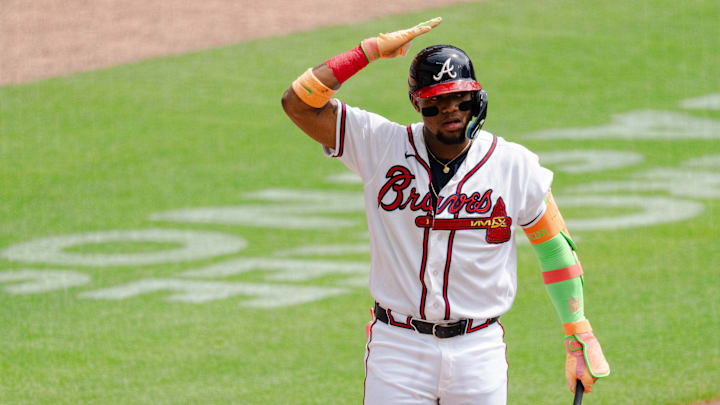
Acuna is the most complicated name on this list. He has two strikeout flips, more than anyone else in the top five, which means the upside is real when he reads it right. But at 36.4 percent, he is still losing nearly two out of three challenges, and 5.2 net lost is meaningful drain on Atlanta's shared budget. The ability is clearly there. The calibration is not quite there yet.

James Wood’s ABS challenge profile is especially concerning
- 9 challenges
- 11.1 percent overturn rate
- 4.4 net challenges lost
One successful challenge in nine attempts. Wood's overturn rate is the worst of any qualifier on this list, and the net loss number understates how badly the challenged pitches are missing. The Statcast model defines a reasonable challenge opportunity as one where the pitch is within three inches of the zone edge and an overturn would gain at least 0.3 runs. Wood is not finding those pitches at a meaningful rate.
He is 23 years old and still developing his read of an ABS zone that is calibrated differently than a human umpire. This is the most fixable name on the list.

At catcher, Edgar Quero’s ABS challenge numbers are shockingly bad
- 42 challenges
- 42.9 percent overturn rate
- 12.0 net challenges lost
Batters get the attention, but catchers challenge too, and no catcher in baseball has done more damage to his team's challenge budget than White Sox catcher Edgar Quero. Forty-two challenges. 42.9 percent overturn rate. 12.0 net challenges lost.
The volume alone sets him apart. Forty-two attempts is a staggering number at this point in the season, and winning less than half of them at that frequency creates compounding drag. The next worst catcher by net challenges lost is Nick Fortes at 8.1. Quero is 48% worse.
Five strikeouts flipped in his favor show the upside when he reads it right. But 12 net challenges lost is not variance. It is a pattern, and for a White Sox team already fighting for every edge they can find, it is a quiet problem with real consequences.
Catchers operate under different conditions than hitters. They are reading pitch movement in real time from field level, often on pitches that look very different from behind the plate than they do on Statcast. That context matters. But at forty-two attempts the sample is large enough that the data is telling a clear story.
How bad ABS challenges quietly hurt teams
Two challenges per game is not a lot of runway. The teams that use them on reasonable opportunities, pitches near the edge of the zone where the model says a dispute makes sense, protect their lineup's ability to dispute calls in critical moments later in the game.
The hitters and catchers on this list are not doing that consistently. Some of them will adjust. Some will not. The ones who do will quietly give their teams back a resource most fans never think about. The 2026 season is still early. These numbers will move. But the pattern is already visible, and the cost is already real.
Data: Baseball Savant 2026 ABS Challenge Statcast metrics. Minimum eight batter challenges. Expected challenge model via Tom Tango.
 Add us as a preferred source on Google