
Key Points
Bullet point summary by AI
- MLB is seeing a noticeable drop in fan attendance across more than half of its teams in the first two weeks of the season.
- Despite factors like cold weather and poor team performance, several teams are defying expectations and actually seeing increased attendance.
- All that implies that bad weather and bad teams aren't the primary factors affecting attendance.
With the start of a new Major League Baseball season comes the return of massive home runs, infuriating bullpen collapses, and the sight of many empty seats at ballparks leaguewide.
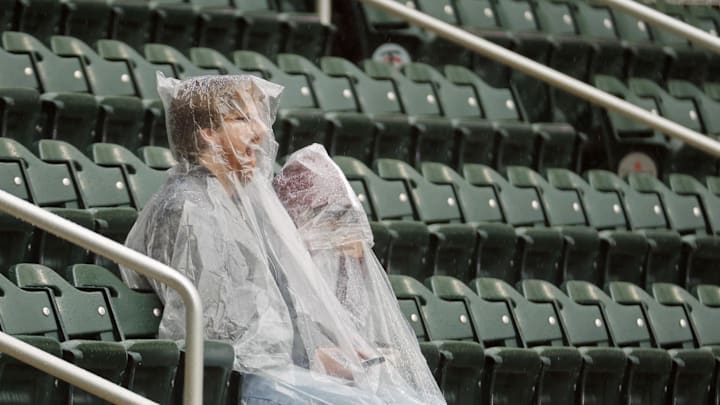
Unlike the other three major North American professional sports, it’s incredibly easy to see when a stadium isn’t anywhere close to packed. Sometimes, we can understandably blame rain delays or temperatures in the 30s, a problem that teams in the Northeast often face.
Then, there are the teams likely destined for 90+ losses, which in itself might not be worth the price of admission.
Through the season’s first two weeks, over half of the league’s 30 teams are seeing a reduced year-over-year average, ranging from the Mets (-19) to the Angels (-6,599). The answer as to why isn’t so simple, though it’s nonetheless worth investigating and discussing.
What truly classifies as poor attendance in Major League Baseball?
Tracking Major League Baseball attendance isn’t as easy as checking how many fans a team averages per home game.
Before we go any further, we need to discuss stadium capacity, because it’s vital to understanding how poor attendance works. Most NFL stadiums, especially the newer ones, typically have a seating capacity between 61,500 and 70,000.
Major League Baseball stadiums are much smaller, at least in terms of seating. Keep in mind that no NFL and MLB teams have shared a stadium since the Raiders left Oakland following the 2019 season.

Outside of Sutter Health Park (capacity of 13,416) and Tropicana Field (capacity of 25,000), most MLB stadiums seat between 34,000 and 45,000. Only five stadiums hold more than 46,000 people, led by the Dodgers at roughly 56,000.
The most effective ways to gauge strong and poor attendance are fairly obvious: How much of the stadium is packed, and what is the year-over-year difference?
Going off average fans per game naturally puts the Athletics and Rays at a massive disadvantage because they play in the league’s smallest stadiums. However, the year-over-year difference shows that the A’s averaged nearly 1,000 more fans during their three-game set against the Astros last weekend.
This distinction is vital. You cannot claim the A’s have the league’s worst attendance, not when Sutter Health Park had over 82% attendance last weekend.
We can’t fully blame the weather for poor attendance

Maybe it’s me having grown up as a Yankees fan in New York during the Core Four era, but I’ve always felt that the “weather and poor attendance” combination only goes so far in baseball. If your team is good enough, you’ll brave through a chilly April night.
That hasn’t been the case in Kansas City, though, where most nights have been in the high 50s to low 60s in recent weeks. Elsewhere in the AL Central, the Twins are down nearly 2,800 fans on average through five home games, and Minneapolis has been its typical, cold April self.
And, although the 10-minute storms have returned to South Florida, the Marlins play in a stadium with a retractable roof. Rain isn’t a problem once you get into the ballpark. Yet, they’re averaging over 1,800 fans fewer than last year, and they’ve already played eight home games.
How much does an MLB team’s record play into early-season attendance?
With regards to April, a team’s record and overall direction matter as much as we’d initially think. The Rockies and White Sox are both averaging more fans than last year despite a string of dreadful seasons, while the Yankees and Phillies are both down.
Even the Dodgers are only seeing an increase of roughly 200 fans through six home games. You’d understandably think that Shohei Ohtani’s presence alone would warrant a sellout every night.
Should we be concerned about MLB attendance?

Who doesn’t love overreacting to early-season trends? That rebuilding NFL team that starts 2-0? They’re probably going to finish 5–12.
There are so many factors that go into attendance. How accessible is a stadium? What time does the game start? Does a 7:05 p.m. start time on a Tuesday night work with your schedule in April, or is it easier to go in June? That’s not even considering the prices of some tickets.
In other words, don’t read too much into the Braves’ or Cubs’ year-over-year attendance drops. Both have playoff-caliber teams, though the Cubs’ postseason chances have taken a hit with the injuries to starters Matthew Boyd and Cade Horton.
As for the Angels? Maybe they can work a benches-clearing brawl into every homestand. Teams already have all sorts of promotions. How about a bobblehead of Jorge Soler throwing a haymaker?
More MLB news and analysis:
 Add us as a preferred source on Google