
Key Points
Bullet point summary by AI
- A veteran slugger's performance has shifted the narrative around his future with his current team this season.
- The recent surge has created internal debate about whether to hold or sell at the upcoming trade deadline.
- The decision now hinges on whether short-term stability outweighs long-term roster building needs.
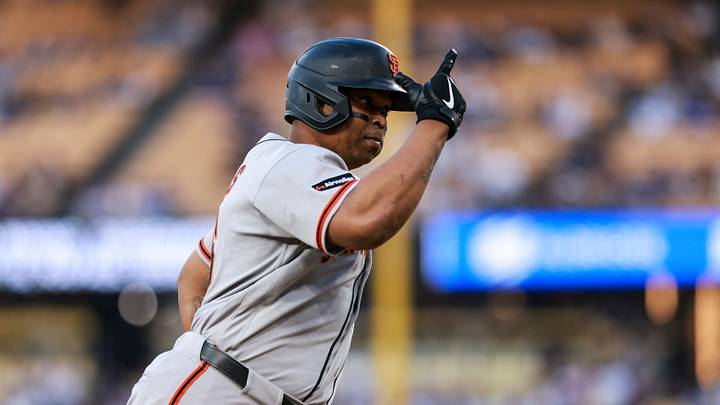
Just when it looked safe to kick the final dirt on the grave of Rafael Devers ... he might be back? Or at least he's stirring in that general direction: After a downright miserable start to the 2026 season — like, so bad it looked like he might already be well and truly cooked as a hitter — the San Francisco Giants slugger has been looking like his old self, homering again on Tuesday night as part of a breakout May.
April | May | |
|---|---|---|
OBP | .231 | .370 |
SLG | .284 | .606 |
HR | 2 | 4 |
SO | 36 | 21 |
Granted, we're talking about a sample size of just 73 plate appearances, and there are still some red flags under the hood (notably, very few walks and a whole bunch of strikeouts). But while Devers might not be a whole new player, he's at least stabilized things a bit, doing the sort of damage on contact that San Francisco envisioned when it traded for him out of nowhere last season. And that should put to rest any lingering notion that he might be on the move again at this year's trade deadline.
Rafael Devers' recent hot streak should put trade talk to bed

The Giants are still looking like clear sellers barring some sort of miraculous turnaround between now and July; Devers' resurgence hasn't meant much in the standings, where San Francisco still sits mired in fourth place in the NL West at 20-29. And given just how far away this team appears to be from meaningful contention, you can understand why fans and onlookers began to wonder whether Buster Posey was already looking to get out from under the massive contract he just went out of his way to acquire less than 12 months ago — the last thing a rebuilding roster needs is to be paying a one-dimensional, 30-something corner bat tens of millions of dollars through the end of the decade.
But the reality is that Posey is looking for a reason to keep Devers, no matter how ill-advised that might be. The Devers trade is the sort of thing that defines legacies; admitting defeat was always a last resort, a failsafe that could well have heralded the end of Posey's time at the helm of San Francisco's front office. It would of course be in the Giants' best interest to cut bait as soon as they can: Power surge aside, Devers is clearly trending in the wrong direction, and it's only a matter of time before his deal gets really ugly. But that's simply not how this business works.
Posey planted his flag here. Devers was his biggest bet, and now the two are inextricably linked. The leash was always going to be long, and any sign of life before the deadline was going to be clung too like a life raft. Is that what's best for San Francisco moving forward? Of course not; this team needs to build from the ground up, and by the time they're ready to get seriously competitive, Devers is more likely to be an albatross preventing them from investing in free agency than he is a middle-of-the-order cornerstone. For an executive and an organization desperate to get back toward relevance, though, that's further ahead than they can afford to look.
 Add us as a preferred source on Google