
Many of us are old enough to remember the days of the Bowl Championship Series — when the New Year's Six were the pinnacle of college football's postseason, a national champion crowned at one of them.
The dozens of lower bowls were still honorable arenas of competition for programs with at least six wins, rewarding them one last opportunity to earn a trophy of some sort and end the season on a high note. Now? It's rare to find a full roster of college players who look forward to playing in the Bad Boy Mowers Pinstripe Bowl or the Xbox Bowl.
And that's a shame. Sure, we finally have a proper College Football Playoff tournament to crown a national champion, rather than relying on a series of polls and algorithms to determine which two undefeated teams get to play for the title. But it came at the cost of relegating the New Year's Six to quarterfinal and semifinal status. A team could win two of those games in a single postseason after finding it impossible to reach them ever before.
That has cheapened the value of not just those venerable contests but bowl season in general, and raises the question of whether playing any other bowl game besides the playoff, let alone winning it, is even worth it.
The case for bowl wins: Momentum is everything

We can't abandon hope for bowl games just yet. There's a deeper benefit for fans and programs beyond just participating in an extra opportunity for ESPN and Co. to entertain folks and rake in cash in December. Teams really can gain much-needed momentum with a non-Playoff bowl win.
Exhibit A: Northwestern smacked Central Michigan, 34-7, in the GameAbove Sports Bowl on Friday. The Wildcats were just weeks removed from losing head coach Pat Fitzgerald to Big Ten neighbor Michigan State, which can usually result in depleted morale and instant transfer portal departures. Showing up and showing out in their final game of the year, even if against a Group of Five opponent, gives the program momentum heading into the offseason and shows any wavering commits there is still a winning culture in that locker room.
On that same day, Minnesota came away with a dramatic 20-17 overtime walk-off win over New Mexico in the Rate Bowl in Phoenix. The Gophers and Lobos proved non-Playoff bowls can still be wildly entertaining, and the win likely gave Minnesota head coach P.J. Fleck a little more job security — considering he's now led the team to its fifth consecutive postseason victory and the seventh of his nine-year tenure.
MINNESOTA WALKS OFF THE RATE BOWL ON A GAME-WINNING TD 🤯
— ESPN (@espn) December 27, 2025
THE GOLDEN GOPHERS WIN THEIR 9TH-STRAIGHT BOWL GAME 🔥 pic.twitter.com/da2gMvOcwM
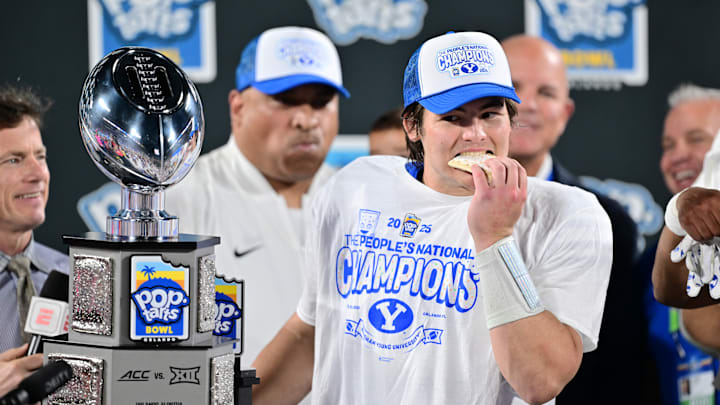
Speaking of entertainment: Some non-Playoff bowls are taking advantage of the void in between rounds, fabricating a new layer of sports Americana. The most flamboyant of those efforts has been seen in Orlando with the Pop-Tarts Bowl. Fans flock to their televisions for the antics of the mascots and the power conference matchup that has typically delivered in just three years of its existence.
We as fans need that kind of entertainment, especially if the programs we support are not in the College Football Playoff. We need something to cheer for instead of making a temporary annual alliance with one of 12 national title contenders. If bowl-qualifying programs start the offseason just as early as those that won less than six games, it would be worse for the sport than keeping bowl games around — even if they have become relatively obscure and inconsequential in the grand scheme.
The case against bowl wins: Who really cares anymore?
Now, with all that being said: Do the vast majority of fans actually care about all bowl games anymore? It would seem those with skin in the actual game are those tuning in to watch, and that could ultimately result in networks like ESPN glancing at their ledgers and realizing there isn't much profitability in non-Playoff games.
So, you won the SERVPRO First Responders Bowl. Does anyone actually believe UTSA is hanging that banner at the start of next year? Absolutely not.
On top of that, the developments in the sport like the transfer portal, NIL and eventually revenue have created an environment in which non-Playoff bowl games feature rosters of second-stringers and backups looking to boost their profiles before the portal eventually opens in January.

That's a suboptimal product for programs and fans alike. Why would commits stick around when there's high turnover at a team that didn't make the Playoff? That goes double for teams that see their head coaches and staffs depart in the carousel ahead of (or sometimes even during) the postseason.
Programs may be better off preserving their dignity by letting guys clean out their lockers and those remaining begin training for next year. Now, some may say that's unfair to seniors who won't get one last chance to play before hanging up their cleats. That's true, I'll concede. But when have college sports been fair to anyone?
This is a new era of capitalist football, and amateurism has died along with it. Unfortunately, that means those playing for the love of the game and then moving on to their careers in finance or management are going to be collateral damage.
With more and more fans caring only about meaningful football, bowl games have become increasingly irrelevant and sooner than later the networks and the NCAA are going to catch on.
 Add us as a preferred source on Google