
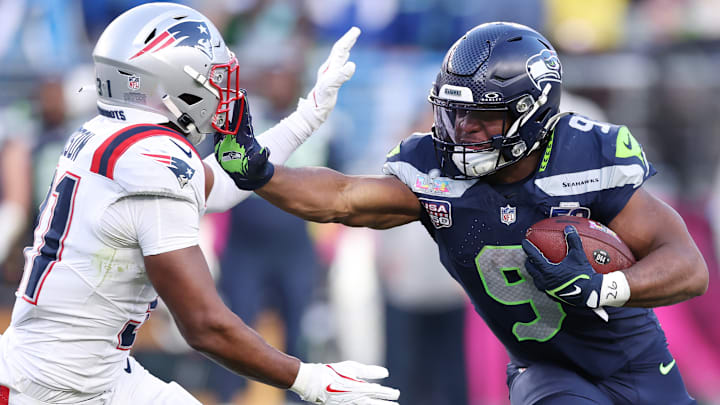
The Super Bowl is over; it’s all about the money now. Specifically, the NFL salary cap money, the most important thing to think about with free agency looming in just a few weeks. The good thing is that even teams staring down tight cap situations have some cause for hope, as substantial cap increases each year make it possible to still compete for free agents in the offseason.
That said, there’s quite a few teams that can be big spenders. Remember last year when the New England Patriots had among the highest cap space in the league? Well, they put that to good use and turned a 4-13 roster into a Super Bowl appearance. Who will be this year’s team to go on a spending spree and reap the benefits?
Here’s everything to know about this year’s salary cap and who might rule NFL free agency.
What is the NFL salary cap in 2026?
The exact salary cap amount won't be announced until late February or early March, as the league wraps up its final accounting. But the NFL tries to give teams some heads up in order to help with their offseason planning, and recent reports suggest the number will land somewhere between $301 million and $305 million. That’s roughly $20 million up from last year, the continuation of a years-long trend. As long as the league keeps raking in money through sponsorships and TV deals, the financial picture for front offices will only improve. That said, not everyone can be a spender; even with the increase from last year, there are still 11 teams that are above the cap as things stand.
On the other end, there’s one team with at least $100 million in cap space and six teams with more than $70 million in cap space. There are also quite a few big-name free agents this offseason, so expect teams to take huge swings to try and bolster their rosters.
Which NFL teams have the most salary cap space this offseason?
TEAMS | CAP SPACE |
|---|---|
1. Tennessee Titans | $104,769,062 |
2. Las Vegas Raiders | $91,522,807 |
3. Los Angeles Chargers | $83,542,941 |
4. New York Jets | $83,263,050 |
5. Washington Commanders | $76,041,469 |
6. Seattle Seahawks | $73,284,461 |
7. Cincinnati Bengals | $54,504,672 |
8. Los Angeles Rams | $48,214,355 |
9. Pittsburgh Steelers | $44,943,582 |
10. San Francisco 49ers | $42,950,176 |
All numbers courtesy of Over the Cap.
The Tennessee Titans top this year’s salary cap leaderboard with over $100 million in space. They can’t just sit on that money, either: They need to build around young QB Cam Ward, building up their offensive line and giving him real perimeter weapons. If Tennessee uses their space wisely, who knows, they could sneak up and be a threat in the wide-open AFC South. Having a lot of money is one thing, but knowing how to use it is another.
Interestingly enough, the defending-champion Seahawks have the sixth-most cap space in the league. They're set to lose some key pieces from this Super Bowl roster and probably won’t bring everybody back, but they have the room to be able to reload while retaining some of their best players for years to come.
The Los Angeles Chargers may be the most intriguing team on the list, given the amount of cap space they have and how much potential is still on this roster. They need to improve their offensive line, but getting Rashawn Slater and Joe Alt back should help. The Chargers’ defense was the reason they reached the playoffs this season. The offense needs to be the reason they go further next year.
How the NFL salary cap is determined
The salary cap is based on league revenue. The collective bargaining agreement between the league and the NFLPA stipulates that the NFL has to split its revenue with the players, with the latter getting about 48 percent of the pot. That revenue comes from three sources: Media/TV deals, league sponsorships and ticket sales. The 48 percent that the players receive is then divided by 32 teams to determine how much the salary cap will go up each season.
With the lucrative TV deals the league has locked in, the salary cap will continue to balloon. That’s a good thing, too, because it means that teams that do have hefty contracts on the books still get to compete. The 2025 season is officially over, so buckle up; this is set to be a riveting offseason full of spending and aggressive roster-building.
More NFL offseason news and analysis
 Add us as a preferred source on Google