
Key Points
Bullet point summary by AI
- The Texans made Will Anderson Jr. the highest-paid non-QB ever. This $150 million deal changes how teams should value elite edge rushers on rookie contracts.
- With $134 million guaranteed, Anderson’s deal forces GMs to consider pass rushers as "timed" assets, much like QBs, before their massive extensions become due.
- This market reset makes the 2026 NFL Draft critical. Teams must now prioritize cost-controlled defenders to balance the skyrocketing price of veteran stars.
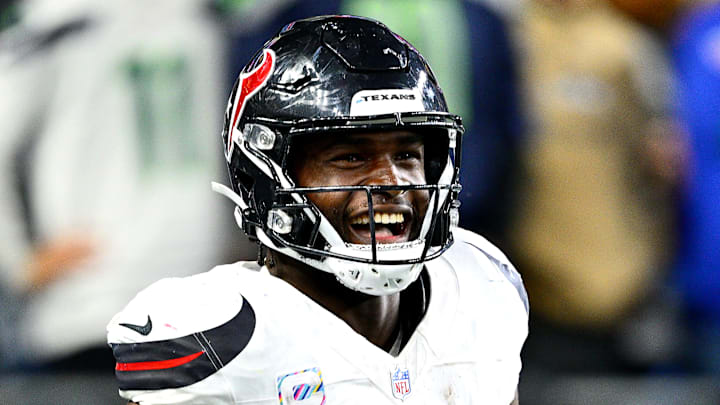
The Houston Texans just gave Will Anderson a LOT of money. To be exact, the edge rusher agreed to a three-year extension worth $150 million with $134 million of that guaranteed. He's now the highest-paid non-quarterback in NFL history and has immediately reset the market for edge rushers.
And that's got to leave a lot of teams scratching their heads about the direction of the league. If elite edge rushers are getting deals that approach those of top quarterbacks, how are you supposed to build a good roster? Could this impact the way teams view edge rushers in the upcoming NFL Draft?
Re-thinking edge rushers and rookie deals

While it doesn't always work out this way, the accepted "best way to build a good roster" is to have a quarterback on a rookie-scale contract. Then you can spend money elsewhere before that quarterback is due for a massive raise. This has largely been Houston's approach with C.J. Stroud, and if Stroud hadn't completely fallen apart in the postseason last year, it might have turned out to be true.
Is it time to start thinking about edge rushers in the same way? If you luck into a Will Anderson-type talent in the draft and it becomes clear he's going to need a big extension after his fourth season, should you go hard at building a title-contending roster before that extension comes due? It's how we think about quarterbacks. So shouldn't it be how we talk about the position that's becoming the defensive version of the quarterback, a position where having an elite talent can change everything?
I mean, yeah, probably. It's common sense to use the salary cap in smart ways to improve your odds of winning. So if Anderson's deal is a sign of the future — and not just the Texans spending a bit too much to keep one of the game's truly elite defenders in H-Town — then teams should definitely start conceptualizing edge rusher contracts similar to how they conceptualize quarterback contracts.
How does Anderson's deal impact the NFL Draft?

Okay, so we talked about this theoretically, but now let's think about it more practically. If the edge rusher market is about to explode, what can teams do in the draft with that knowledge?
I think it obviously depends on what your team's situation is. If the price of veteran edge rushers is about to skyrocket and you have guys who are getting close to free agency, then you probably should try to get young edge rushers on rookie-scale deals if you aren't comfortable paying for those guys.
For example, Jermaine Johnson will be a free agent next offseason. The Tennessee Titans just traded for Johnson and I would assume plan to give him a big extension, but if it's expected to be close to the Anderson deal, could they balk at that? If so, would the Titans suddenly be more willing to look at Sonny Styles or David Bailey at Pick No. 4 since they'd want to think about a cheaper replacement?
Or heck, even if they do decide to extend Johnson at a hefty price, would adding a rookie-scale edge rusher still now be the way to go?
And if we dip deeper down the well of upcoming free agents, do teams with guys who aren't at Johnson's level start to get more antsy? Do the Steelers want to look at an edge rusher later in the first round because they might suddenly worry that Nick Herbig is going to cost them too much to extend?
Maybe a cap-strapped team that thought "oh, we could sign an edge rusher in free agency" is now looking at the Anderson deal and thinking "oh, no, nevermind." That could also change the draft calculus, as a team in that spot might now be more willing to overdraft an edge rushing player to ensure they have someone with cost-controlled years instead of spending huge money on a veteran.
This is all theoretical still, as we won't know the real impact until draft night. It certainly seems that a reset edge rusher market could make teams more interested in adding edge rushers during the draft to prevent them from having to spend big in free agency. Of course, they then will have to think about big-money extensions a few years from now, but with how much front-office turnover there is around the league, a lot of GMs will likely be okay with kicking that can down the road.
More NFL news and analysis:
 Add us as a preferred source on Google