
Key Points
Bullet point summary by AI
- The WNBA's Rookie of the Year race features a mix of college stars and international talent with guards dominating early performance.
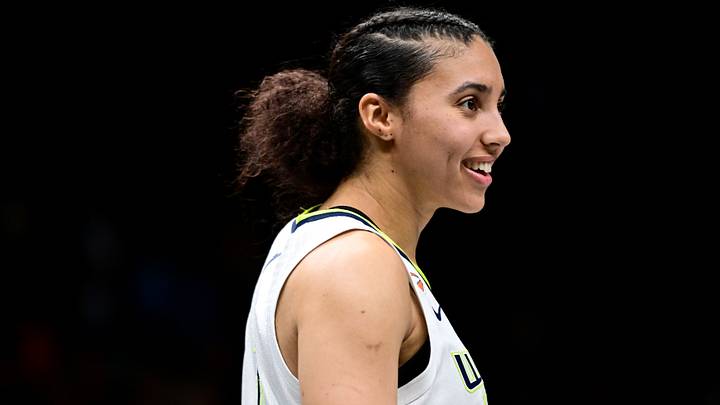
- Azzi Fudd has surged into contention after overcoming early struggles and could impact a playoff contender's title chances.
- Olivia Miles, the current frontrunner, has been dominant, raising questions about draft decisions that could reshape franchise strategies moving forward.
This year’s WNBA rookie class is one of the more interesting we’ve seen, largely because expansion has opened the door for more international players, so it’s not just the college players who are in the hunt for the award.
While a college player is atop the current rankings, at least one international player is lurking in the race. It's also worth noting that guards dominate this list so far, as the league's rookie bigs have taken longer to get up to speed. Could someone like Lauren Betts still be a late spoiler in the race?
5. Kiki Rice, Toronto Tempo

I’m sure the Chicago Sky are happy enough with Gabriela Jaquez — she would rank sixth if I expanded this list — but I still don’t get the decision to pass on Kiki Rice for her. Rice was clearly the best guard/wing prospect from last year’s UCLA team.
The Tempo defeated the Sky on Wednesday and Rice played a key role in that, scoring 14 points to go along with eight rebounds and seven assists. She was a plus-11, the best of all Tempo players.
Rice was a top prospect because she’s such a well rounded player. There isn’t necessarily one thing about her game that stands out; what’s apparent when watching her is that she does a lot of things well. That’s proven to be something that Toronto needed to help balance out a backcourt of Brittney Sykes and Marina Mabrey, a duo that is talented but doesn’t always do the little things as well as you’d like. Rice fixes that gap, and it’s going to keep her employed in this league for a long time.
4. Jovana Nogic, Phoenix Mercury

The Phoenix Mercury have not been a good basketball team. Losing Satou Sabally has hurt worse than expected, and the team has had to rely on multiple players with short or non-existent WNBA resumes.
One of those who has stood out in a good way, though, is Jovana Nogic. The 28-year-old Serbian guard has been Phoenix’s best outside scorer this season, making multiple 3-pointers in all but one game so far. She’s connecting on over 50 percent of her deep looks.
Now, there is one big concern, which is that Nogic has struggled immensely when it comes to scoring inside the arc, shooting under 30 percent on 2-pointers. If she winds up pigeonholed as only a shooter in the W, that hurts her ability to see the floor enough to make a valid run at this award. For now, though, Nogic has been a clear top five rookie.
3. Flau’jae Johnson, Seattle Storm

The Seattle Storm are surprisingly not awful, and rookie Flau’jae Johnson deserves a lot of credit for that.
The team has played solid defense this year, but finding offense has been an issue. Johnson has been their third-leading scorer at 12.0 points per game, providing the team with a source of scoring and someone who can make an impact in transition. She can really wreck things when she gets a head of steam.
One knock on her coming in was that she didn’t play in a very pro-development system at LSU. There were concerns with her adapting to the contexts she’d be placed in in the WNBA. I do think her overall efficiency struggles mean we can't rule that out as an issue — she's shooting 30.7 percent from the floor and 26.5 percent from deep — but Johnson seems to be on the right track.
2. Azzi Fudd, Dallas Wings

Fudd got off to a slow-ish start to her WNBA career, but she’s really starting to put it all together, and in Dallas’ most recent contest, we finally got to see what happens when she’s hitting 3-pointers like she did in college: she scores a bunch of points.
I defended Dallas not starting Fudd at the start of the year. Moving Paige Bueckers off-ball with Odyssey Sims at the point seemed like the way to go. And while I still believe the best future version of Bueckers is at the two, it’s also clear that for 2026, keeping her on-ball to allow Fudd to play as much as possible seems like the best solution. A change in the starting lineup should arrive soon.
Fudd is shooting the ball well and could still end up as the highest-scoring rookie, but one thing that hurts her in this race is that not all of her production shows on the stat sheet, like her help defense or her off-ball movement. She isn’t going to do much playmaking, so her assist numbers will be low, but something that should work in her favor is that she’s one of the only rookies who might be in the right place to really impact the title race. That, of course, assumes the next player's team doesn't magically keep winning.
1. Olivia Miles, Minnesota Lynx

Fudd will make this race close, but right now it’s Olivia Miles' to lose at the moment. The former TCU and Notre Dame point guard took over the reins of the point guard role in Minnesota immediately and has been crucial to this Minnesota team starting 5-2 without Napheesa Collier.
Miles is averaging 15.1 points, 5.0 rebounds and 5.9 assists per game for the Lynx, with the team posting a plus-15.5 net rating with her on the floor. That's plus-21.1 points per 100 possessions better than the net rating when she sits. She was a pro-ready player who has taken zero time to adjust to the WNBA game.
So, should Dallas regret passing on Miles, seeing as she’s the frontrunner for this award? I wouldn’t say that. Dallas might have opted to bring Miles off the bench behind Sims just like it’s done with Fudd, and it’s possible Miles may have struggled to figure out how to share the ball with Bueckers and Arike Ogunbowale. Adding an off-ball scorer still may have been the right call, though Miles is playing incredible basketball at the moment and there’s a clear argument that she’s the best player in this class.
More WNBA news and analysis:
 Add us as a preferred source on Google