
MLB arbitration is a process in which a neutral third party decides a certain group of players' salaries for the upcoming season. These players are trying to earn as much money as realistically possible before free agency, while teams want to keep costs down by arguing that players haven't done enough to earn whatever they're asking for. It's a last resort, something both teams and players strive to avoid by reaching their own agreements before it's too late, but there are almost always some cases every offseason.
With that in mind, let's dive into everything you need to know about the MLB arbitration process.
Who is eligible for MLB arbitration?
MLB service time determines who is eligible for arbitration. Players with one to three years of MLB service time (which means accruing 172 days of service time in three different years) make roughly the minimum salary, which is a figure less than $1 million. Players in years four to six of club control, however, become arbitration-eligible.
MLB Service Time | Contract |
|---|---|
1-3 Years | Minimum |
4-6 Years | Arbitration |
>6 Years | Free Agency |
When a player surpasses six years of service time, he is no longer under team control and can test free agency, as names like Kyle Tucker and Bo Bichette have done this winter.
How the MLB arbitration process works

The first time a player becomes arbitration-eligible, that player and their team begin negotiations to try to come to a contractual agreement for the next season — and, if possible, to avoid arbitration. If they're unable to agree on terms by the January deadline, it becomes a third-party arbiter's job to settle the dispute. Both player and team decide on salaries they believe are fair, and it's up to the arbiter to decide between the two.
After the two figures are made official, an arbitration hearing is scheduled, usually taking place sometime before Spring Training gets going. The two sides are allowed to continue negotiating up to the moment the arbitration hearing starts, but once arbitration gets going, it's on the panel to choose to side with the team or player.
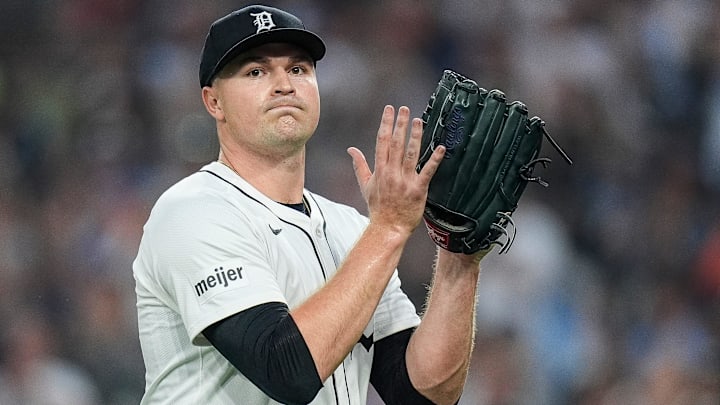
It's important to note that the arbiter cannot come up with a middle ground. All they can do is side with one party or the other, and that side's number becomes the player's salary for the upcoming season. Which makes Tarik Skubal's upcoming case one of the most fascinating yet: Skubal filed at $32 million, a record-setting number that is well above the Tigers' $19 million filing. That $13 million gap is the biggest we've ever seen, and again, compromise isn't an option. One side will be right, and one side will be very, very wrong.
What teams and players can argue in MLB arbitration hearings
What's discussed in an arbitration hearing is quite straightforward. The player is arguing for why he feels he's worth whatever contract he says he is, using things like the previous year's performance, his entire body of work, advanced metrics, durability and comparable salaries given his position and level of production.
As for the team, they're trying to make it clear why the player isn't worth what he's asking for. Yes, that's right: They'll attempt to talk their own player down right in front of him. It makes for tremendous theater, but an uncomfortable situation.
Why teams and players typically try to avoid arbitration

That uncomfortable situation is exactly why arbitration is a last resort, and one that everyone involved tries to avoid. On the player side, who wants to hear how bad you are? Teams go out of their way to prove the player isn't worth as much as he thinks he is — that's insulting!
From the team's perspective, an arbitration hearing can permanently damage the relationship it has with a player. Look at Corbin Burnes, for example, who had this to say after an arbitration hearing with the Milwaukee Brewers a couple of years ago.
"Obviously, it's tough to hear. It's tough to take. They're trying to do what they can to win a hearing,'' Burnes told reporters at spring training in Phoenix. "There's no denying that the relationship is definitely hurt from what [transpired] over the last couple weeks. There's really no way of getting around that."
Is that really worth saving, at most, a few million dollars, and often far less? Most would argue no, especially with players of Burnes' caliber. Even if a team wins the case, the damage it can do to the relationship with a crucial part of your organization just isn't worth it.
How MLB arbitration impacts trades, contract extensions and free agency

The MLB arbitration system can impact the futures of players on their respective teams in several ways.
How arbitration impacts trades
Arbitration is designed to pay players at least a semblance of what they're worth before hitting free agency. For some teams, what the player is worth in arbitration is too much for them to justify. For example, Mauricio Dubon was set to make more money in arbitration than the Houston Astros were comfortable paying, so they traded him for a lesser player in Nick Allen earlier this offseason.
How arbitration impacts contract extensions
Knowing how brutal the arbitration process can be, teams try their best to avoid it. This, in some cases, means negotiating an extension with players before or during their arbitration years. Sometimes, the extension only covers arbitration years, which helps players know how much they'll make and gives teams financial certainty without having to deal with the arbitration process. In some cases, the extension covers a year or two of free agency as well, giving the players some valuable clarity and giving teams more control.
How arbitration impacts free agency
As for free agency, teams can decide whether to tender a player a contract or non-tender that player rather than offering them a deal. Tendering him would mean keeping him around, while non-tendering would allow that player to test free agency. The Texas Rangers non-tendered both Adolis Garcia and Jonah Heim, serviceable players, because they were set to make more than they wanted to pay in their final years of arbitration. This allowed Garcia and Heim to test free agency a year earlier than they otherwise would have.
More MLB news and analysis:
 Add us as a preferred source on Google