
Key Points
Bullet point summary by AI
- Major League Baseball has entered a groundbreaking partnership with a leading prediction market platform.
- This collaboration aims to bring federal oversight and integrity measures to the rapidly evolving sports betting landscape.
- The timing reignites debates about past player conduct and eligibility for one of baseball's most prestigious honors.
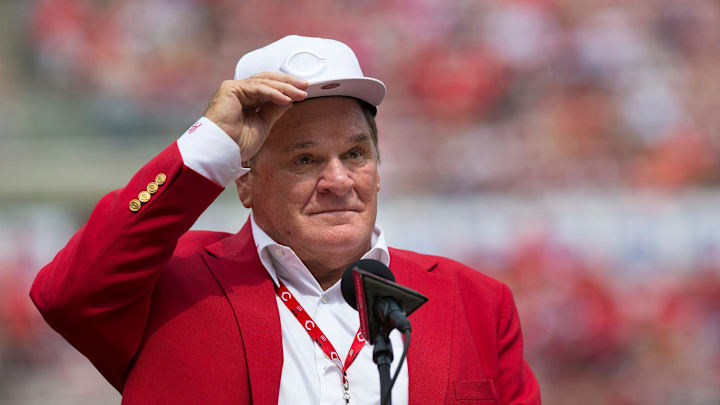
Of all the things to potentially complicate Pete Rose and “Shoeless” Joe Jackson’s Baseball Hall of Fame chances, of course it would be cryptocurrency and prediction markets.
After months of speculation, Major League Baseball officially partnered with Polymarket as the league’s official prediction market exchange on Thursday. Additionally, the league will share information with the Commodity Futures Trading Commission, which oversees the prediction market industry.
In theory, the partnership will allow federal oversight to ensure that there is no insider trading. MLB and Polymarket also intend to restrict individual pitches, as well as decisions by managers and umpires.
“I hope that it goes without saying that our primary concern, always first in our minds, is protecting the integrity of the game,” MLB Commissioner Rob Manfred said. “I think in today’s world, it is really important not to be chasing developments but try to be involved and in front of those developments because our world is so fast moving.”
Considering that MLB and its broadcasting partners have worked with gambling companies for years, the Polymarket news isn’t exactly surprising. However, it is a significant step beyond the norm, especially given all the gambling scandals that have rocked baseball and other sports in recent years. And at a certain point, those black marks threaten to shift public opinion in the decades-long conversations regarding Rose, Jackson and Cooperstown.
Major League Baseball’s Polymarket partnership changes the Pete Rose Hall of Fame discussion yet again

Before we go any further, let’s quickly run through how Polymarket and prediction markets work, because they aren’t as easy to initially learn as betting apps like FanDuel or DraftKings are. With Polymarket, you can use cryptocurrency to bet on anything from sports to world events. For example, you can pay 28 cents a share if you believe the Los Angeles Dodgers will win the World Series, or you can pay 73 cents if you don’t believe they’ll win the World Series.
For the sake of conversation, let’s say I placed $10 on the Dodgers winning the World Series. Based on the current odds, I would win $35.71. If I bet $10 on the Dodgers at +220 odds on Hard Rock Bet, my total payout would be $32. So the payouts are relatively similar, except I could deposit my money to Hard Rock via credit or debit card.
What does all of this have to do with Rose, Jackson and other players previously banned for gambling? Simple: How can Major League Baseball issue lifetime bans for those who either admit to or have been found to have gambled on games when the sport itself is working with sportsbooks and prediction markets?
Things are never that easy, though. In fact, that’s a weak argument, because it ignores why Rose and Jackson, along with the seven other Black Sox players who were found to have taken money ahead of the 1919 World Series, were banned in the first place. They knew what the rules were, and they broke them.
The overall argument against Pete Rose (and steroid users) for the Hall of Fame still stands, though

At this point, my feelings on the Hall of Fame are pretty straightforward: If there are clear rules in place, and you violate those rules, the punishment should be severe. Neither Roger Clemens nor Barry Bonds tested positive for performance-enhancing drugs after the league adopted its modern drug-testing program. Therefore, I have no problem with either being in the Hall of Fame.
The same does not apply to players like Alex Rodriguez, Manny Ramírez or Robinson Canó, nor would it apply to Guardians closer Emmanuel Clase had he played long enough to build a Hall of Fame case. All were suspended for knowingly breaking the rules.
Again, I can’t stress this enough: Pete Rose knew the rules, and he admitted to violating them.
I personally don’t care if Rose or Rodriguez are eventually inducted into the Hall of Fame. Remember a few years ago when Manfred casually dismissed the Commissioner’s Trophy as a “piece of metal” when discussing the Houston Astros’ cheating scandal? That’s more or less what the Hall of Fame is, except replace “piece of metal” with “plaque in a museum.” And I say that as someone who gets way too invested (financial pun not intended) in the Hall of Fame discourse every year.

We as fans know the impact of Rose’s hits record, and we know how dominant some of the alleged PED-users were on the field. Clemens and Bonds are almost certainly never getting in at this point, but that doesn’t change how incredible they were in their prime. Whether or not they’re in the Hall of Fame shouldn’t change our memories. We know where we were when Bonds set the all-time home run record, or when Mark McGwire passed Roger Maris in the summer of 1998.
But for those who were punished for breaking the rules, two wrongs don’t make a right. Just because Major League Baseball has partnerships with sportsbooks and a prediction market doesn’t excuse those who gamble on games, provide information to gamblers or intentionally play a certain way so that gamblers win their prop bets.
Ironically, as I was working on this, news emerged that Atlanta Braves outfielder Jurickson Profar lost his appeal of a 162-game suspension for a second violation of the league’s PED policy. Let Profar’s most significant contribution to the 2026 season be that he proved my point: Profar broke the rules, and his actions caused a reaction.
More MLB news and analysis:
- MLB insider answers biggest questions: Michael Kopech buzz, WBC and latest rumors
- Why Tarik Skubal got skewered on Reddit for accepting his Team USA silver medal
- The World Baseball Classic highlights what MLB could lose with a lockout
- MLB Power Rankings: Where all 30 teams stand after the World Baseball Classic
 Add us as a preferred source on Google