
Key Points
Bullet point summary by AI
- Aaron Rodgers' return to Pittsburgh creates a dilemma for the Steelers' long-term roster planning.
- Young players drafted for the future now face limited opportunities to gain experience under a veteran starter.
- The coaching staff must balance immediate competitiveness with developing talent that may not see the field this season.
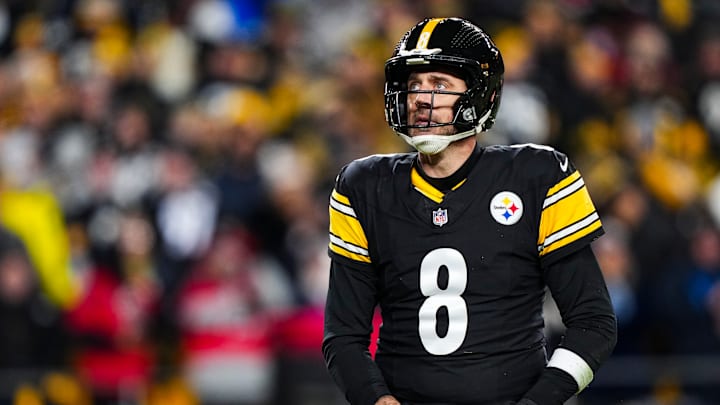
It's not about the money. Sure, Aaron Rodgers signed a contract that could pay him $25 million next season, which is a significant step up from the discount deal he signed to play for Mike Tomlin in 2025. However, the more concerning aspect of Rodgers reunion with Mike McCarthy isn't his own production in his age-43 season, but the answers the Steelers aren't getting to important questions about their future as a result.
The Steelers have spent much of their last two draft classes trying to build for the future while simultaneously competing in the present. It's possible to do both, but only if those young players are receiving consistent playing time. Tomlin and Rodgers cast the likes of Kaleb Johnson and Roman Wilson aside due to mistakes they made in important moments. That's also how young players learn — often through these mental errors — which puts the Steelers at a crossroads. Doing so for another season could be disastrous.
Kaleb Johnson

Johnson's mental mistakes began early last season, as he was tasked as the primary kick returner to open the season. The Iowa product didn't have a firm grasp on the NFL's confusing kickoff rules, leading to a special teams fumble. The mistake was inexcusable from a so-called professional, don't get me wrong, but Johnson was penalized for it the entire season.
Johnson also wasn't a great fit for Arthur Smith's blocking scheme. It was a misread that should've kept Pittsburgh from drafting him so early as their running back of the future. Now under a new coaching scheme and playing behind Jaylen Warren and Rico Dowdle, Johnson's Steelers career is in flux in just his second season.
If you think this Steelers offense, which is heavily influenced by Rodgers, is going to include many plays for Johnson, you'd be mistaken. Ideally, having a new coaching staff in tow would force the Steelers to give Johnson a second look. But that doesn't fit Pittsburgh's goal of making another postseason run.
Will Howard

I don't have any evidence that Will Howard will be anything more than a career backup, but the Steelers have been hyping up the Ohio State product ever since they drafted him on Day 3 in 2025. Now, Howard faces stiff competition with Mason Rudolph and Drew Allar to even secure a backup spot. Had Rodgers not signed, there was a slim chance Howard could've earned the starting role in Week 1. At worst, he likely would've gotten a chance to play at some point in the regular season, which would've provided the Steelers some much-needed answers.
Howard remains amped to play behind Rodgers. He learned a lot last season in the QB room, or so he insists. Rodgers has praised Howard for his willingness to learn and listen to everything the 42-year-old has to offer him. At some point, though, the learning has to turn into real-life experience.
Howard didn't even get a chance to play in the preseason last year due to injury. He's incredibly raw, and has some footwork issues McCarthy will surely want to help him with. Howard isn't necessarily starting from scratch like Drew Allar is, but his ceiling also isn't as high as his rookie counterpart. With Rodgers likely starting the entire 2026 season, Howard's reps will come in practice. That only means so much, especially with a loaded 2027 QB class on the horizon.
Roman Wilson

Roman Wilson was selected out of Michigan as a precise route-runner and a sound lot receiver option. He's been anything but that so far, and spent this offseason working with a self-proclaimed route god to improve in that department. While Wilson's new religion could made him a sound No. 4 wide receiver for Rodgers, he won't get on the field much in McCarthy's system, especially after the Steelers drafted Germie Bernard in the second round this April.
Wilson's inability to stand out isn't entirely on Rodgers, but it was no secret how frustrated the veteran QB became at the young receiver's inability to master the finer parts of his game. With Rodgers back in the fold in 2025, you can essentially count Wilson out. He will not play a major role in this offense, and thus serves as a cautious reminder that even the Steelers haven't mastered the science of taking Day 2 receivers despite their success in that department over the years.
Drew Allar

Allar was a surprise selection in the third round out of Penn State. He has all the tools to be a capable starting quarterback in this league, but as McCarthy noted during rookie minicamp, he has to start from scratch with his footwork. Allar picked up a lot of bad habits thanks to the Penn State offensive coaching staff and his own inability to perform in big games. Nittany Lions fans have been quick to remind us of that in just a few weeks since Allar was selected.
Allar was never going to start the season as QB1. Heck, he's better off as QB3, getting consistent reps with the Steelers practice squad. With Rodgers signed to start most if not all of the 2026 regular season, odds are he'll serve that role regardless.
But Allar faces many of the same hurdles as Howard. Rodgers is entrenched as the starting QB. Unless he can beat out Howard for a QB2 role at some point this season, there's little chance he sees the field in a regular season game. The 2027 QB class is loaded. Pittsburgh should select a QB in the first round next April if they get the chance, especially because they likely won't know much about Allar's potential in the pro ranks at that point thanks to the aforementioned Rodgers.
More NFL news and analysis:
 Add us as a preferred source on Google