
Key Points
Bullet point summary by AI
- Major League Baseball has implemented stricter height verification protocols amid the introduction of the automated ball-strike system.
- Several high-profile players have seen their official heights adjusted downward, sparking debates about previous reporting practices.
- The league emphasizes these changes aim to enhance the accuracy of the new ABS system, ensuring fair challenges for all teams involved.
Seeing as my Florida driver’s license officially lists me at 5-foot-9, I guess that I’m taller than established MLB players like Houston Astros star Jose Altuve, veteran Atlanta Braves second baseman Ozzie Albies, and Toronto Blue Jays catcher Alejandro Kirk.
Now, the key part there is that my driver’s license says that I’m 5-foot-9. Officially, I’m roughly 5 feet, 8.9 inches, but can you really blame me for rounding up? The Braves might list Albies at 5-foot-8, though for all we know, he’s barely 5-foot-7.
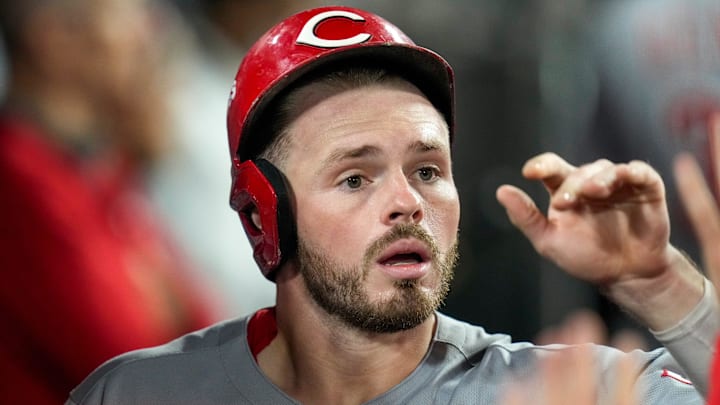
As we enter the era of the automated ball–strike challenge system, a new conspiracy theory has emerged, claiming that teams have stopped lying about players’ heights because the league has become more vigilant in ensuring there are proper measurements. Tampa Bay Rays infielder Gavin Lux went viral last week when an X post noted that the Cincinnati Reds listed Lux at 6-foot-2 last year, but he’s now 5-foot-11 on Major League Baseball’s official website.
Honestly, the widespread surprise on social media is itself surprising. It’s almost like the thought of people lying about their height is a new concept.
No, teams aren’t manipulating players’ heights just to combat the automated ball–strike challenge system

If you pay attention to the NFL, then you know that players’ measurements are taken at the combine every year. Suddenly, the receiver that a school lists at 6-foot-2 is actually 6-foot. The defensive back who draft analysts claim could run a 4.38 in the 40-yard dash instead posts a 4.49 at the combine and a 4.47 at his pro day.
Teams, coaches, and the players themselves lie — it’s all part of the game. Obviously, there are exceptions; if a school says that an offensive lineman is 350 pounds during the season, but he weighs in at 335 during his pro day, that doesn’t necessarily mean that he or the university lied. It’s entirely possible that he changed parts of his diet and revamped his workout routine during the pre-draft process.
We can all agree, though, that there is a massive difference between height and weight in this context. Both the Reds and Rays listed Lux at 190 pounds, but the height was all that changed. So, what happened? Suddenly, Major League Baseball needed to verify every player’s height, whether they were a top prospect or an established All-Star. The days of letting teams submit the heights and never batting an eye had to end.
MLB stars have suddenly shrunk after more precise MLB measurements
Lux isn’t the only player whose height has gone down. Alex Bregman was reportedly 6-foot when he played for Houston, but dropped to 5-foot-11 with the Red Sox in 2025 and is now 5-foot-10 with the Chicago Cubs. Bregman turns 32 on March 30, but there’s no reason to think that he’d lose a couple inches in his early 30s. Guardians catcher Bo Naylor was 6-foot and 205 pounds last season, and he’s now 5-foot-9, 205 pounds — at least, according to Major League Baseball.
Although it’s understandably easy to mock the players in question, let’s also note that the league is at least doing all it can to give the ABS system the best chance of succeeding. That’s how it should be, especially considering that teams start each game with only two challenges. If you’re going to challenge that kind of call, you need as much accurate background information as possible.
A couple of months from now, we won’t be thinking about Lux’s incredible height reduction. We’ll be questioning how CB Bucknor or Laz Díaz can continue getting basic ball–strike calls incorrect even with the new technology.
More MLB news and analysis:
- Gunnar Henderson among 5 players who could make MLB history this year
- Buy or sell on Didier Fuentes and more big MLB spring training breakouts
- 9 MLB rising stars who could be first-time All-Stars in 2026
- MLB best bets for 2026 season win totals: Which teams should you buy or sell?
 Add us as a preferred source on Google