
In some ways, MLB is in as good a spot as it's ever been. The talent in the game is undeniable, the pace of play is at a near-perfect spot, and the 2025 World Series was as good as any in recent memory. Despite this, MLB seems headed towards a lockout once the current CBA expires on December 1, 2026.
A lockout has felt inevitable for a couple of years now, but three offseason moves in particular could be what winds up officially causing the sport to enter a lockout.
Dodgers signing Kyle Tucker

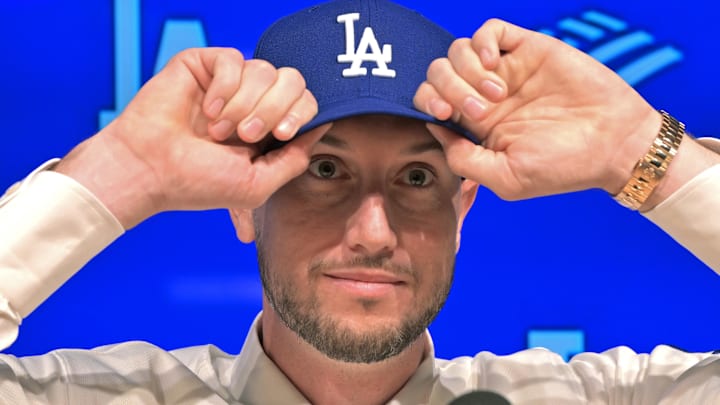
The most obvious lockout-aiding move was the Los Angeles Dodgers signing Kyle Tucker to a four-year, $240 million deal. Sure, Tucker didn't get the massive ten-year deal many expected he'd get, but instead, he got a deal that'll pay him an average of $60 million annually. Tucker's AAV is higher than Juan Soto's in his $765 million deal with the New York Mets, and is the second-highest in MLB history. In fact, if you include the deferrals in Shohei Ohtani's deal, Tucker's AAV is the highest in MLB history.
Don't get me wrong, Tucker is a fantastic player who is deserving of a mega-deal. A $60 million AAV, though? I get that it's a short-term deal, but that kind of AAV is ridiculous, especially when considering the Dodgers, as a team over the fourth luxury tax threshold, is taxed at a 110 percent rate for every dollar they spend. Essentially, the Dodgers are paying over $120 million in 2026 alone for Tucker to suit up for them.
This is not normal. Look at where that ranks in terms of MLB payrolls.
Team | Projected 2026 Luxury Tax Threshold | MLB Rank |
|---|---|---|
Pittsburgh Pirates | $121.1 million | 22nd |
Kyle Tucker's salary+CBT penalty | $120 million | |
Minnesota Twins | $119.2 million | 23rd |
St. Louis Cardinals | $118.6 million | 24th |
Colorado Rockies | $105.3 million | 25th |
Chicago White Sox | $105.2 million | 26th |
Tampa Bay Rays | $105.2 million | 27th |
Washington Nationals | $102.4 million | 28th |
Cleveland Guardians | $94.7 million | 29th |
Miami Marlins | $78.1 million | 30th |
Yes, the small market teams can and should be spending more than they are, but the Dodgers spending $120 million on one player this season is something only the Dodgers and maybe one or two other teams can realistically do. No team should be spending more on one player than eight teams are on their entire payroll. That is not normal and will be a focal point in lockout discussions. The Dodgers stretching the deal out and paying Tucker a lower AAV for more years would've prevented lockout discourse.
Tarik Skubal winning his arbitration case

Tarik Skubal won his arbitration case against the Detroit Tigers and will earn $32 million in his final year of club control before hitting free agency after the 2026 season. Skubal, obviously, deserves every penny of this, as the arbiters determined. We can't act as if small-market teams aren't panicking right now, though.
The whole point of the arbitration system is for teams to have cheap control over their players for a longer period of time before they hit free agency. Skubal, despite being in arbitration, is one of the eight highest-paid pitchers in 2025. This isn't to say he isn't deserving, but the point of arbitration was so players wouldn't get paid at a star-level until they reach the open market.
If Skubal is making $32 million now, what does this mean for a pitcher like Paul Skenes? If he continues on the trajectory he's on, he's going to make more than Skubal is in his final year of arbitration. Will that cut his time with the Pittsburgh Pirates even shorter than it otherwise would've been?
It's one thing for teams to be unable to afford to pay players as free agents, but it's another for this to happen in arbitration. The odds of the Pirates paying Skenes his worth in arbitration while surrounding him with enough talent capable of getting to the postseason feel slim. Yes, the Pirates deserve blame for that, but again, Skubal making as much as he will makes it feel likely that something is going to have to change with the arbitration format.
Brewers trading Freddy Peralta

Fresh off an MLB-leading 97 wins and an NLCS berth, the Milwaukee Brewers traded their best pitcher, Freddy Peralta, alongside Tobias Myers, to the New York Mets in exchange for Jett Williams and Brandon Sproat. Now, the trade itself wasn't a bad one by any means for Milwaukee. Williams and Sproat are two high-end prospects who can help the team for the better part of the next half-decade, and Peralta is on an expiring contract. Odds are, he was going to walk after the season anyway.
Deals like these are far from out of the ordinary from the Brewers' perspective. They've traded Josh Hader, Devin Williams and Corbin Burnes for prospects in recent years as those star pitchers approached free agency, so if anything, it would've been surprising to see Milwaukee hold onto Peralta. Isn't this a problem, though?
Yes, I understand that the Brewers play in a small market and that they can't run ridiculous payrolls, but did they really have to trade Peralta? It's not as if he's going to be making $300 million as a free agent. His contract will be on the high end of what small market teams can afford, but if the Brewers truly can't afford to pay Peralta (which is unlikely), how is that acceptable?
It's easy to give the Brewers the benefit of the doubt because they continue to find ways to make the playoffs despite trading their stars and running low payrolls, but shouldn't their goal be to try to win a World Series? It feels like the Brewers are more concerned with saving money and keeping their contention window open for longer than actually pushing their chips in and trying to win the whole thing.
It feels at times that only a select group of teams actually care about winning at the highest level, and that's a problem. I'm not asking the Brewers to run Dodgers levels of payroll. I'm not asking the Brewers to pay the likes of Tucker and Skubal. If they're refusing to pay a guy like Peralta, who won't set any records with his contract, is a star, and is an outstanding clubhouse presence while they're in what could be a contention window, how is that not a problem?
There are obvious issues with big market teams spending obscene amounts of money, but the small market teams that refuse to put their best foot forward need to be called out, too.
 Add us as a preferred source on Google