
Chris Sale didn't just sign the richest contract in Atlanta Braves history, but the $27 million he's due to make in 2027 as a result of his extension is the most a Brave has ever made in a single season. With that in mind, what are some of the other highest AAVs in MLB history? How did those massive contract figures age? Let's dive in.
Arizona Diamondbacks: Corbin Burnes
Contract: Six years, $210 million ($35 million AAV)
The Arizona Diamondbacks aggressively pursued a World Series title by adding Corbin Burnes, one of the best pitchers on the planet, onto a roster consisting of a dynamic offense and, on paper, an underrated rotation. Unfortunately, Burnes needed Tommy John surgery just 11 starts into his Diamondbacks career, knocking him out for most of the 2025 season and likely at least half of 2026 as well.
Burnes could easily look like the same guy he was pre-injury, which is why the grade is a fairly generous C- in my view. But as of now, it isn't looking good at all.
Contract grade: C-
Athletics: Luis Severino

Contract: Three years, $67 million ($22.33 million AAV)
The Athletics signed Luis Severino in part to avoid a potential grievance from the MLBPA due to their lack of spending, and their investment has backfired spectacularly. While Severino pitched well on the road in his debut season with the A's, the right-hander posted a 6.01 ERA when pitching in Sacramento and bashed the Minor League ballpark on numerous occasions.
Severino is not happy with the A's, and chances are, the A's aren't thrilled with him right now either. It'd be surprising if he wasn't traded before the contract expires, barring a massive turnaround in 2026.
Contract grade: D
Atlanta Braves: Chris Sale
Contract: One year, $27 million ($27 million AAV)
The Atlanta Braves have handed out plenty of large contracts. Heck, Austin Riley's pact clears the $200 million mark. With that being said, no Brave has ever gotten $27 million in a single season like Chris Sale will in 2027 when his extension kicks in.
The Sale deal comes with very little risk and the chance for outstanding reward. If he can't stay healthy or Father Time gets the best of him, it's only one additional year with the Braves. If he can stay healthy and look like the Cy Young-caliber arm he's been his entire Atlanta tenure, $27 million is a bargain — and there's a $30 million club option, allowing the Braves the opportunity to keep him around for even longer.
Contract grade: A-
Baltimore Orioles: Pete Alonso
Contract: Five years, $155 million ($31 million AAV)
The Baltimore Orioles finally made a major free agency splash in the 2025 offseason, inking Pete Alonso to a five-year, $155 million deal. On one hand, the Orioles locked in one of the best power hitters of the past decade for the remainder of his prime coming off a strong year and added the kind of veteran leader their team could really use. On the other hand, this contract is a very hefty one for a power-hitting first baseman on the wrong side of 30.
Can Alonso defy the odds and remain an All-Star-caliber player into his mid-30s? Sure. Will I bet on it? Not really. Players of his archetype usually age poorly, especially when they're poor defenders, as Alonso is. I mean, Orioles fans should know this all too well from the Chris Davis disaster: Once the power diminishes, there isn't much value he offers. I love the player and love the fact that Baltimore took a shot. If they win a World Series, nobody will care if he slumps later in the deal, but if they don't, this one might age poorly.
Contract grade: C+
Boston Red Sox: Alex Bregman

Contract: Three years, $120 million ($40 million AAV)
The Alex Bregman contract looked like a home run for the Boston Red Sox. He was by all accounts a perfect fit both on and off the field in Boston, and it felt as if it were a matter of when, not if, he'd be a Red Sox for life, especially after the team traded Rafael Devers away.
But Bregman opted out of his deal after year one, and wound up signing a massive deal with the Cubs this winter instead. So, the Red Sox traded Devers for a laughably bad return, then let Bregman walk as a free agent. They did trade for Caleb Durbin, a somewhat decent replacement, but Durbin isn't Bregman. He got them to the playoffs and was a tremendous leader, but just one season of Bregman in Boston is just so disappointing.
Contract grade: D
Chicago Cubs: Alex Bregman
Contract: Five years, $175 million ($35 million AAV)
Bregman is lucky enough to appear twice on this list, as after departing Boston, he signed a five-year, $175 million deal with the Chicago Cubs. Now, $70 million of the deal is deferred so the actual AAV is a bit lower, but it still clears the $30 million mark, making it the highest in franchise history.
This was a massive signing for a Cubs franchise that has typically shied away from making marquee investments. They're banking on Bregman's ability and leadership to guide them to multiple deep playoff runs, and in a fairly weak NL Central, their gamble could very well pay off. I don't necessarily love the ballpark fit, but think Bregman should age fine, and he can come up big in the postseason when called upon.
Contract grade: B
Chicago White Sox: Yasmani Grandal
Contract: Four years, $73 million ($18.25 million AAV)
The Chicago White Sox paid Yasmani Grandal handsomely after an outstanding prove-it season with the Milwaukee Brewers, and for the first half of the deal, it looked as if they had gotten a bargain. Grandal swung the bat fairly well in the shortened 2020 regular season, then homered in two of the team's three postseason games. A knee injury cost him nearly two months in 2021, but in the 93 games he played, Grandal had a .939 OPS, by far the best mark in his career.
Unfortunately, the back-end of the deal wasn't as kind. Grandal went from being a 155 OPS+ hitter in 2021 to a 72 OPS+ hitter in 2022 and 2023 combined. He went from star to liability offensively, and he was subpar behind the plate and on the base paths as well. Overall, Grandal's White Sox career ended with him being worth just 4.8 fWAR. That isn't what they paid for.
Contract grade: C
Cincinnati Reds: Joey Votto

Contract: 10 years, $225 million ($22.5 million AAV)
Joey Votto's 10-year, $225 million extension being tacked on top of the remaining two years on his initial deal with the Cincinnati Reds made it the longest contract in MLB history. Yes, the Cincinnati Reds of all teams handed out the longest deal in MLB history once upon a time. It aged quite well, too.
Votto was who he had been pre-extension: an on-base machine. From when the contract technically kicked in through the remainder of his career, Votto slashed .279/.402/.487 while averaging 20 home runs annually despite battling through some injuries later in his career. Votto was only a two-time All-Star during this contract, but he received MVP votes four times and was one of the most underrated players in the sport throughout his prime. It's a shame the success of this deal hasn't convinced the Reds to spend more in recent years.
Contract grade: A
Cleveland Guardians: Jose Ramirez
Contract: Seven years, $175 million ($25 million AAV)
Jose Ramirez chose to add four years and $106 million on an already existing three-year, $69 million contract, breaking his own Cleveland Guardians AAV record in the process. Even holding that record, though, Ramirez is still greatly underpaid, something he acknowledges and takes pride in. It's not about the money for Ramirez; it's about being in Cleveland, which, in addition to his play, makes him such a fan favorite.
How will this age? Likely beautifully. There's an age risk, but Ramirez, even at 33, remains one of the best players in the sport. Even if there's some decline as the contract ages, Ramirez is taking such a discount that it really shouldn't matter. It's a shame the Guardians don't spend money to surround him with the kind of roster he deserves.
Contract grade: A
Colorado Rockies: Nolan Arenado
Contract: Eight years, $260 million ($32.5 million)
Desperate to keep him off the free agency market, the Colorado Rockies handed Nolan Arenado an eight-year, $260 million extension ahead of the 2019 season. The contract, while not the greatest right now, certainly wasn't an albatross for most of that span. Arenado remained an MVP-caliber player for the first half of the deal. The issue, though, is that he was putting up his great seasons in a St. Louis Cardinals uniform.
That's right: Just two years into the extension, the Rockies traded Arenado to St. Louis. As if that isn't bad enough, Colorado received practically nothing of value in return, and sent the Cardinals over $50 million in cash. The Rockies paid Arenado to put up great numbers against them, and those payments only just ended after the 2025 season. It doesn't get much worse than this.
Contract grade: F
Detroit Tigers: Framber Valdez

Contract: Three years, $115 million ($38.3 million AAV)
Eager to try and win in what could be their final year with Tarik Skubal, the Detroit Tigers signed Framber Valdez to a three-year, $115 million deal, handing him one of the highest AAVs a pitcher has ever received. Yes, it's a short-term commitment, but $38.3 million per year is a massive chunk of change.
I applaud the aggressiveness, but it felt as if the Tigers needed bats more than Valdez, and I'm not sure how the southpaw, who is known for generating ground balls at an absurdly high rate, will fare when the infield behind him isn't all that great defensively. Still, his track record is outstanding, this makes the Tigers better and, if it backfires, Detroit has a relatively quick out.
Contract grade: B-
Houston Astros: Justin Verlander
Contract: Two years, $66 million ($33 million AAV)
Justin Verlander turned out to be everything the Houston Astros could've hoped for after trading for him at the 2017 trade deadline, so it made a ton of sense that they rewarded him with a two-year, $66 million extension ahead of the 2019 season, set to kick in for the 2020 and 2021 campaigns. A Cy Young year in 2019 made Astros fans feel even better about the extension. Unfortunately, the future Hall of Famer made a total of one start in 2020 before needing Tommy John surgery.
The injury knocked him out for all of 2021, wiping out the remainder of the contract. Yes, the Astros paid $66 million for one start. Verlander wound up signing a cheaper two-year deal with Houston after the injury and even won another Cy Young award in his first year back. He had an unbelievable Astros career. This one contract, though — which happens to be the heftiest in terms of AAV in Astros history — was nothing short of disastrous.
Contract grade: F
Kansas City Royals: Bobby Witt Jr.
Contract: 11 years, $287 million ($26.25 million AAV)
Fresh off a seventh-place finish in the AL MVP balloting, the Kansas City Royals committed to making Bobby Witt Jr. the face of their franchise by handing him a contract that paid him over $26 million annually for over a decade — a massive expenditure for a small market franchise. It's safe to say it's paid off.
Witt is one of the best players in the game already, and is worth far more than he's getting paid. Now, his contract includes four opt-outs, the first of which comes in 2031, and three club options at the end of the deal, so it's unlikely Witt sticks around for all 11 years. But even if he opts out early, the Royals will have had him for three more years than they otherwise would have, which is a huge win.
Contract grade: A+
Los Angeles Angels: Mike Trout

Contract: 12 years, $426.5 million ($35.5 million AAV)
Handing Mike Trout, one of the greatest players in MLB history, a blank check to ensure he wouldn't leave in free agency made all the sense in the world for the Los Angeles Angels. Unfortunately, it has not aged well.
Trout has played over 100 games just three times in the seven years since, and at age 34, it's hard to envision Trout suddenly staying fully healthy for the next five years. His play had been mostly superb despite the injuries, but 2025 was his worst season to date even when he was on the field, and who knows how he'll perform in 2026 and beyond?
Trout will forever be a legend, and the Angels' overall situation is far from his fault, but this contract is not a good one.
Contract grade: C
Los Angeles Dodgers: Kyle Tucker
Contract: Four years, $240 million ($60 million AAV)
You'd think Shohei Ohtani's ten-year, $700 million contract would be the largest in terms of AAV in Los Angeles Dodgers history, but since $680 million of it is deferred, the present value of the deal is roughly $46 million per year. With that, we get to instead talk about Kyle Tucker.
Signing Tucker to a four-year, $240 million deal was a move only L.A. and maybe one or two other teams could realistically make, and it's a great one. Most teams cannot afford to hand a player $60 million annually (a little less due to deferrals, to be fair), but the Dodgers can without breaking a sweat. Tucker fills one of their biggest weaknesses and makes them even bigger favorites to three-peat. They get him for his prime years and don't have to watch him decline in his mid-to-late 30s. What's not to like?
Is he worth $60 million annually? No. Should the Dodgers care? Absolutely not. They're probably going to win multiple World Series titles with Tucker in the mix, and that makes the deal more than worth their while.
Contract grade: A
Miami Marlins: Giancarlo Stanton
Contract: 13 years, $325 million ($25 million AAV)
Fresh off a historic MVP season and just three years into his mammoth 13-year pact with the Miami Marlins, Giancarlo Stanton was traded to the New York Yankees in a deal that saw Miami receive Starlin Castro and a couple of prospects in return. Yes, the Marlins gave Stanton a record-setting extension, saw him put up the greatest season a Marlin had ever had and then essentially salary-dumped him.
Had Miami traded him for some future value, perhaps the contract would then be redeemable, but they didn't. They signed Stanton, saw him more than live up to it in 2017 and then decided they didn't want to pay him anymore. The only thing keeping this from being an F is the fact that he had an MVP season while still with the Marlins.
Contract grade: D-
Milwaukee Brewers: Christian Yelich

Contract: Nine years, $215 million ($23.8 million AAV)
It's rare to see the Milwaukee Brewers make a major investment, but they did so with Christian Yelich, signing him to a massive nine-year, $215 million deal. That ensured Yelich, a player coming off an MVP win in 2018 and an MVP runner-up finish in 2019, could not test free agency and leave for another big-market team. The results, though, have been fairly underwhelming.
Not only has Yelich struggled to stay healthy, but he has a sub-.800 OPS since signing the extension. Don't get me wrong, he's still a productive player: He made the All-Star team in 2024 and even received some down-ballot MVP votes in 2025. Still, Yelich is primarily a DH now, and while he's a good player, he is not the MVP-caliber hitter he once was (and he carries massive injury risk). That's a tough-ish pill for the Brewers to swallow when they're usually reluctant to spend big-time money.
Contract grade: C+
Minnesota Twins: Carlos Correa
Contract: Three years, $105.3 million ($35.1 million AAV)
Carlos Correa signed two massive contracts with the Minnesota Twins, and each played out very differently. Everyone remembers the Twins essentially dumping his contract at the 2025 trade deadline, but the first deal he signed with the club in 2022 happened to be a huge win. Hoping to prove he was worth a massive long-term investment, Correa signed a short-term, high-AAV deal with opt-outs with Minnesota. It's safe to say he proved himself.
Correa slashed .291/.366/.467 with 22 home runs and 64 RBI, putting up 5.3 bWAR. He predictably opted out after that year, and after failing two physicals, eventually re-signed with Minnesota on a longer-term deal with a lower AAV. The Twins got one great year out of this contract and then got him back for a smaller AAV. The second contract did not age well at all, but the first one worked as planned.
Contract grade: B+
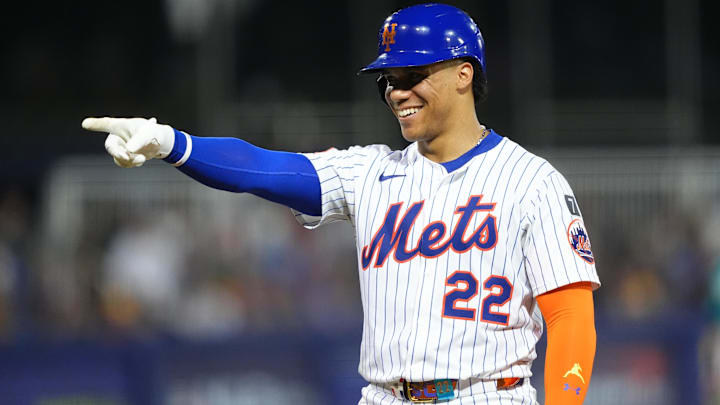
New York Mets: Juan Soto
Contract: 15 years, $765 million ($51 million AAV)
The New York Mets beat their crosstown rivals in one of the fiercest bidding wars in MLB history, stealing Juan Soto from the Bronx on a 15-year, $765 million deal. Soto's Mets career got off to a very slow start, and the team collapsed down the stretch of the 2025 season to miss the playoffs, but from an overall standpoint, Soto had one of his best seasons to date.
He hit a career-high 43 home runs, stole 38 bases after never swiping more than 12 bags in a single season and was an MVP finalist. At just 27 years old, there's a chance we haven't even seen the best of Soto. It's a lot of money, but Steve Cohen has as much cash to burn as anyone, and Soto is well worth the investment.
Contract grade: A
New York Yankees: Aaron Judge

Contract: Nine years, $360 million ($40 million AAV)
When the New York Yankees gave Aaron Judge a nine-year, $360 million deal in free agency, there were concerns about how he'd age and whether he'd stay healthy enough to justify such a deal. All Judge has done since signing is get even better: Year one saw him play only 106 games, but he's been healthy the two years since, and has won back-to-back AL MVP awards.
He isn't close to done, either. If Judge isn't the greatest right-handed hitter in MLB history yet, he's on his way towards claiming that title. This contract will prove to be one of the biggest free agent wins ever.
Contract grade: A+
Philadelphia Phillies: Zack Wheeler
Contract: Three years, $126 million ($42 million AAV)
Zack Wheeler committed to finishing his career with the Philadelphia Phillies when he signed his bloated three-year extension with the club. The right-hander was having another Cy Young-caliber year before a blood clot and thoracic outlet syndrome ended his season prematurely. Now, the 35-year-old is expected to begin the 2026 season on the IL.
Who knows what he'll look like when he returns? I want to say he'll look like the Wheeler of old, but the injury he had is historically a tough one to come back from. There's a lot to figure out, but even if Wheeler isn't the same guy, he should still be productive, and it's not as if the Phillies are tied down for too long.
Contract grade: B
Pittsburgh Pirates: Mitch Keller
Contract: Five years, $77 million ($15.4 million AAV)
It should come as no surprise that the Pittsburgh Pirates' AAV record is the lowest of any MLB team. What is surprising, though, is that Mitch Keller is the beneficiary. That makes grading the deal rather difficult: On one hand, Keller is absolutely worth a $15.4 million price tag annually; he's a rare pitcher you can count on to give you 5+ innings every fifth day and keep you in ballgames more often than not without much of an injury risk.
On the other hand, Keller is far from an ace, and considering the franchise we're talking about, this is basically ace-level money. On a general scale, this contract is a good one. There's a reason Keller has generated a ton of trade interest. On a Pirates scale, it's definitely a bit of an overpay, but nothing detrimental by any means.
Contract grade: B-
San Diego Padres: Manny Machado

Contract: 11 years, $350 million ($31.8 million)
The initial deal Manny Machado signed with the San Diego Padres was playing out so well that the Padres were eager to ensure he wouldn't opt out and test free agency. With that, they added another five years and a whole lot of money onto it, convincing Machado to void his opt-out and stick around likely for the remainder of his career. The extension has not even kicked in yet.
Machado remains one of the premier third basemen in the game, but he's also declined on both sides of the ball. Chances are, that'll only continue as he ages. Making matters worse, it's been difficult for the Padres to surround him with much talent given his very high AAV. It'll be interesting to see how Machado performs in his late 30s.
Contract grade: B-
San Francisco Giants: Blake Snell
Contract: Two years, $62 million ($31 million AAV)
Blake Snell is yet another Scott Boras client who signed a short-term, high-AAV prove-it deal, and the San Francisco Giants were the temporary beneficiary. Unfortunately, though, this deal worked out much better for Snell than it did for San Francisco.
The southpaw pitched well, particularly down the stretch, posting a 3.12 ERA in 20 starts overall, but the bad outweighed the good. He missed most of the first half due to injury, and then, after finishing strongly, chose to opt out of his contract, testing free agency for a second straight offseason. Predictably, he wound up signing with the Los Angeles Dodgers, San Francisco's biggest rival.
To sum up, the Giants paid the qualifying offer penalty for one good half of Snell, opted not to trade him at the deadline to recoup prospect capital, missed the playoffs and then let him sign with their biggest rivals. Snell pitched well when healthy for the most part, but the Giants didn't exactly get their money's worth.
Contract grade: C-
Seattle Mariners: Felix Hernandez
Contract: Seven years, $175 million ($25 million AAV)
The Seattle Mariners made Felix Hernandez the highest-paid pitcher in MLB history when they signed him to a seven-year, $175 million extension ahead of the 2013 season. The extension was well-deserved at the time for a pitcher who could be a future Hall of Famer, and in the first three years of the deal, Hernandez continued to pitch like a bona fide ace.
Unfortunately, injuries started catching up to him in 2016, and Hernandez was never really the same after that. He posted a 5.42 ERA in the last 60 appearances of his big-league career. Half the deal was very much worth Seattle's while, but the other half was regrettable.
Contract grade: B-
St. Louis Cardinals: Paul Goldschmidt

Contract: Five years, $130 million ($26 million AAV)
Shortly after acquiring Paul Goldschmidt via trade, the St. Louis Cardinals extended the first baseman, ensuring he'd be around for the long haul. The trade was a steal for St. Louis, and the extension worked out quite nicely too, as Goldschmidt won a Gold Glove, a Silver Slugger and was an MVP to boot.
The final year of the deal didn't go so smoothly, and the Cardinals lacked postseason success with him at first base. But for the most part, Goldschmidt was as advertised in a Cardinals uniform and was worth the hefty price tag.
Contract grade: A
Tampa Bay Rays: Evan Longoria
Contract: Six years, $100 million ($16.7 million AAV)
The Tampa Bay Rays added six years and $100 million on top of an already existing four-year deal that Evan Longoria had with the club ahead of the 2013 season. Longoria was one of the best players in the American League at the time, and while he remained elite through his original contract, he did not stick around for long after his extension kicked in.
The third baseman played just one season under the six-year pact and had a 99 OPS+, making him a tick below average as a hitter. He was then traded to the San Francisco Giants in the 2017 offseason for a package that included Denard Span, Christian Arroyo and a couple of other prospects. The Rays didn't get much out of the one year of Longoria on the extension, and didn't get much for him in the trade either. The one silver lining, though, is that Longoria didn't exactly thrive in San Francisco either.
Contract grade: D+
Texas Rangers: Jacob deGrom
Contract: Five years, $185 million ($38 million AAV)
Hoping to improve, the Texas Rangers signed arguably the best pitcher on the planet, Jacob deGrom, to a five-year, $185 million deal ahead of the 2023 season. This deal came with obvious risk, as deGrom had dealt with injuries with the Mets. But when healthy, he was sure to be worth the price tag.
Unfortunately, deGrom needed Tommy John surgery just six starts into his Rangers career, and was limited to nine starts in the first two seasons of the deal as a result. He was fully healthy in 2025, though, posting a sub-3.00 ERA in 30 starts and finishing eighth in the AL Cy Young balloting.
This one is a bit tough to grade, because the Rangers won a World Series despite deGrom not contributing at all and then he was nothing short of brilliant in 2025. With that being said, they're going to need more than one healthy season to justify this kind of expenditure.
Contract grade: C
Toronto Blue Jays: Vladimir Guerrero Jr.

Contract: 14 years, $500 million ($35.7 million)
Just when everyone doubted their ability to do so, the Toronto Blue Jays extended Vladimir Guerrero Jr. to a 14-year, $500 million deal in the 2025 season, ensuring that he'd be unable to test free agency the next winter and would almost certainly finish his career with the Jays.
The extension officially kicks in beginning in 2026, and there's every reason to believe it'll work out wonderfully. Guerrero has already proven that he's one of the best players in the sport, and he just put together one of the most memorable postseason runs in recent memory. There's clear risk in giving such a long deal to a first baseman, but Guerrero is a generational talent, and he isn't even 27 years old yet. Locking him up was imperative, and the Jays will reap the benefits.
Contract grade: A-
Washington Nationals: Stephen Strasburg
Contract: Seven years, $245 million ($35 million AAV)
I'm not going to blame the Washington Nationals for choosing to re-sign Stephen Strasburg after he won World Series MVP just months prior, but this seven-year, $245 million contract is one of the worst in MLB history.
Strasburg wound up making a total of eight starts under the new deal and posted a 6.89 ERA. Injuries robbed him of any chance of succeeding and caused him to retire in 2024. If your favorite team is afraid of giving a pitcher a long-term deal, the Strasburg contract likely has something to do with it.
Contract grade: F
More MLB news and analysis:
 Add us as a preferred source on Google