
Key Points
Bullet point summary by AI
- The 2026 NFL Draft presents more opportunity for teams than just staying put and picking a player.
- Several bottom feeders as well as contenders should prefer a draft trade rather than making a selection.
- The Giants and Cowboys are among the teams better off moving back in the first round of the draft.
The 2026 NFL Draft is quickly approaching, and as the new league year began so did free agency. Teams scooped up top available players as soon as the "legal tampering" period began and even conducted trades to clear salary cap space to afford those signings. Those moves gave fans and pundits insight into the priorities of front offices across the league, clueing us in on how they might approach the college prospect pool.
We already know the No. 1 overall pick will be used on Indiana quarterback Fernando Mendoza. The Heisman Trophy winner and national champion is going to the Las Vegas Raiders barring a wild trade (even wilder than the aborted swap with the Baltimore Ravens for Maxx Crosby). There are a number of teams who also hold valuable first-round picks that could net them additional draft capital to address more of their needs. Rather than select the best player available — one that may cause unnecessary redundancies — these teams should explore trading back with a team that has a need for that specific position and landing in a better spot to fill their own roster gaps.
Arizona Cardinals – Pick No. 3

Quarterback Kyler Murray is a Minnesota Viking now and the Cardinals have decided to entrust their 2026 season to — checks notes — Jacoby Brissett and Gardner Minshew. What could go wrong?
Well, everything and that may be what Arizona wants. Mendoza is the only Top 10-caliber pick in this draft class and the Cardinals would be nuts to think Alabama's Ty Simpson is their QB of the future. No. 3 overall would give them their choice of practically anyone but Mendoza or linebacker Arvell Reese, but they could still land a defensive playmaker like EDGE David Bailey or a pass protector like Monroe Feeling by sliding down a half-dozen picks or so.
With the Scouting Combine hype surrounding Notre Dame running back Jeremiyah Love and Ohio State linebacker Sonny Styles, there is sure to be at least one team itching to climb up the board to snag either before its too late. Arizona should take advantage of that while it prepares for the "soft tank" its 2026 season is about to be.
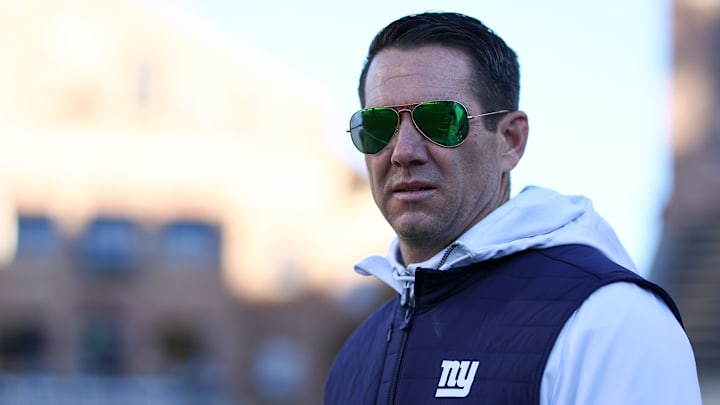
New York Giants – Pick No. 5

Speaking of Love, there's been speculation based on recent reporting that New York's failed pursuits of rushers like Kenneth Walker and Travis Etienne indicate its plan was to not spend the No. 5 overall pick on its backfield, but now it may do so. Why would general manager Joe Schoen ever indicate such an interest, especially after re-signing RB3 Devin Singletary and former Ravens FB Patrick Ricard to block for the tandem of Cam Skattebo and Tyrone Tracy?
Well, smart fans should hope Schoen's goal is to feign interest in taking Love at No. 5 in order to spook RB-needy teams into trading up. The Giants have a solid core of rushers and would need to move at least one in a separate trade to make room for a guy like Love who appears elite but would just turn into Saquon Barkley 2.0 without a brick wall for an offensive line.
Instead, like the Cardinals, move back a half-dozen spots so that offense-hungry teams begin a run on RBs and WRs so that defensive playmakers like Styles or safety Caleb Downs slide a bit and become slightly cheaper to sign once selected. Schoen would be able to recoup an additional second-round selection or even a third-rounder, of which New York has none this year.
Dallas Cowboys – Pick No. 12 or No. 20

Jerry Jones has a lot of flexibility in the first round, and if he's wise, he can multiply his selections even more while still getting an elite playmaker. My advice would be to trade pick No. 20 to a team trying to get back into the first round or with a team near the bottom of the round and then with a team trying to get back in.
Dallas' primary needs are in the defensive secondary and Jones can focus the No. 12 pick on grabbing a stud like cornerback Mansoor Delane or safety Dillon Thieneman. Harvesting a bundle of latter day picks (Dallas has none in round six at the moment) or perhaps even a veteran asset like it did in acquiring Green Bay's Rashan Gary on Wednesday would be mighty beneficial.
Houston Texans – Pick No. 28

Houston's primary needs are on either side of the line of scrimmage. Most top lineman will be gone by the time the first round is ending, so unless the Texans are prepared to trade into the Top 15 they should consider a strategy that will net them additional picks to cast a wider net in the prospect pool or land an elite veteran asset.
The latter option would help in the short term, especially with concerns over quarterback C.J. Stroud's longevity in Houston cropping up. Casting that wider net in the draft, however, allows the Texans to build depth at those positions needing attention. It also gives them a little more financial flexibility when signing prospects if none of them are first rounders.
Denver Broncos – Pick No. 30

Denver already has a strong roster, but certain positions that need better depth, like tight end and running back, could only be addressed two ways in the first round: trade up for a playmaker or move back to avoid reaching for a clear day two talent. With the third-to-last selection in the first round, the former option looks more appealing for the Broncos.
Evan Engram is still TE1 in the Denver locker room, but what happens if he goes down with injury or regresses (he is 31 years old) in 2026? It wouldn't be worth spending capital to move up into the Top 15 for Oregon's Kenyon Sadiq and the next best at the position (Vanderbilt's Eli Stowers) is ranked No. 46 overall by ESPN. Take the 30th pick and move back into the top half of round two in order to take Stowers or address other needs like defensive line depth.
 Add us as a preferred source on Google