
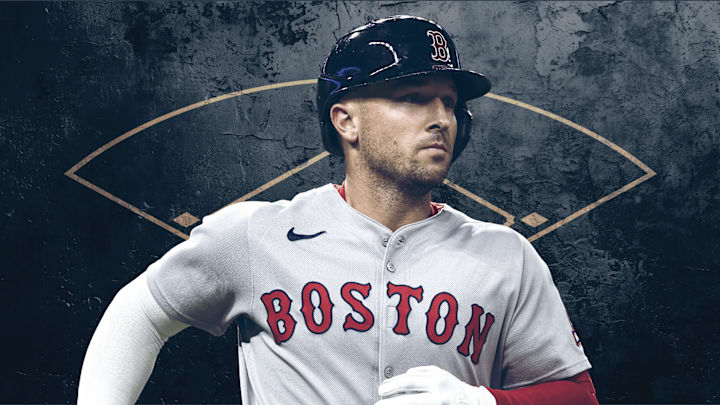
The Chicago Cubs signed Alex Bregman to a contract the Boston Red Sox couldn't match. The Ricketts' family finally listened to what Cubs fans have been begging for. While Kyle Tucker remains likely to leave, Bregman provides another big bat for the middle of the lineup. So, what's the catch?
Bregman's contract is expected to put the Cubs over or near the luxury tax, which would mean paying extra tax for every dollar spent over $244 million. The notoriously-frugal Ricketts family would prefer not to open their wallets considering they went above market value (five years, $175 million) for Bregman. Thus, some Cubs stars could be shown the door shortly.
What Alex Bregman's contract means for the Cubs
- Cubs trade candidates: Young talent shown the door?
- Cubs could lose leverage with free-agents-to-be
- Why is the luxury tax system so important in MLB?
Cubs trade candidates: Young talent shown the door?

Nico Hoerner
Nico Hoerner is set to become a free agent after the 2026 season and his value may never be higher. Hoerner won a gold glove in 2025, and had an OPS+ of 114. With Bregman signing a long-term contract, Hoerner's future in the organization is up for debate. Yes, he's one of the best defensive second basemen in MLB, but he's also blocking the potential move of Bregman or Matt Shaw (who we'll get to) to second in the short term. Hoerner has won two gold gloves in three years. He could also help the Cubs land even more pitching depth via trade, which they'll need despite landing Edward Cabrera just last week.
Matt Shaw
Shaw's season was...a lot. He showed flashes of the superstar he could one day become, but only after struggling mightily out of the gate. Following another stint in the minor leagues, Shaw became one of the better everyday hitters in Chicago's lineup. While Shaw was the Cubs third baseman to end the season, he'd likely move over to second with the addition of Bregman. On the surface, one of Shaw or Hoerner will have to go, and Chicago saw far too much good from their former top prospect Shaw to send him packing after just one season. His 3.1 bWAR and 11 home runs after the All-Star Break should give the Cubs hope that he's figured it out in the major leagues.
Cubs could lose leverage with free-agents-to-be

Ian Happ
Happ won his fourth consecutive Gold Glove in 2025, and had a 120 OPS+ to boot. He's one of the best all-around players in baseball and the Cubs are thrilled to have him in their outfield. However, there's a problem on the horizon. Happ is a free agent following this season, and a lockout could be looming in MLB, which further complicates his situation. If Happ makes it to the open market (which he almost certainly will), he will be one of the top outfielders available. As a star who has come up through the Cubs system, losing Happ would hurt more than, say, Cody Bellinger or Kyle Tucker. And to re-sign him, the Ricketts family will almost certainly have to reach deep into their pockets and pay a significant luxury tax penalty as well.
Seiya Suzuki
Suzuki finished second on the Cubs in home runs behind Michael Busch (32) and first in RBIs (103). It was his best and most complete offensive season since coming over to MLB in 2022. However, Suzuki is most often used as a designated hitter, which does limit his market value if he were to reach free agency after next season. Suzuki would be best off staying with the Cubs, but for now he's on a large contract Chicago would prefer not to pay in full. If this were the NFL, a pay cut would be on the horizon. But with the aforementioned uncertainty of an MLB lockout, players aren't about to voluntarily make less anytime soon. Suzuki is a classic walk candidate, and despite his offensive production, could be easily replaced by Bregman (or someone else) down the line in the DH spot.
Starting rotation help like Matthew Boyd and Jameson Taillon
If there's anything we learned this offseason, it's how expensive reliable starting pitching can be. This is especially true in the trade market, as the Cubs just learned by dealing a package around top prospect Owen Caissie for Edwards Cabrera. However, the Cubs pitching problems don't end there. The rotation remains faily thin at the top, Justin Steele's recovery timeline is up in the air, and they could lose two more starting pitchers to free agency next offseason. Yes, Matthew Boyd and Jameson Taillon are set to hit the open market next winter. While neither is a Game 1 postseason starter by any means, they are reliable innings-eaters who could price themselves out of the Windy City with another productive season in 2026. Bregman's contract won't make re-signing them any easier.
Why is the luxury tax system so important in MLB?

MLB doesn't have a salary cap. That'll be debated once again during CBA talks next December. But for now, the luxury tax system and Competitive Balance Tax are the only things standing in the way of the Los Angeles Dodgers buying every single free agent this offseason. Am I exaggerating slightly? Sure.
Essentially, the luxury tax goes up every season, giving contenders more room to spend and improve their rosters. However, should they go over that number – which this offseason is set at $244 million – then every dollar thereafter is taxed at an alarming rate. So the Cubs, which are projected to spend just shy of $242 million this offseason via Spotrac (and that number will only increase as the Ricketts add more players), will have to pay a 20 percent tax on all overages since it is their first time over the CBT.
The goal of the luxury tax is to dissuade teams from spending for the sake of it, which should lead to more competitive balance (hence the name). In reality, the richest owners in sports can afford to pay a bit extra to contend for a World Series every year because the ends justify the means. The Dodgers make their owner Mark Walter more than enough money by winning back-to-back titles to afford the luxury tax penalties that come with having the highest payroll in baseball.
Thankfully for the Cubs, they aren't even in the same ballpark as the Dodgers just yet when it comes to tax penalties, but the Ricketts family would prefer not to find out what that's like.
More MLB news and analysis:
 Add us as a preferred source on Google