
Key Points
Bullet point summary by AI
- Our combined 2025 and 2026 NBA Draft rankings reveal how this historic talent wave stacks up across two classes.
- The top four 2026 prospects face stiff competition from a 2025 class that already features multiple All-Star-caliber talents like Cooper Flagg and Kon Knueppel.
- The debate at the top hinges on proven production versus projected upside between two generational wings.
The 2026 NBA Draft class has been hailed as generational, especially when it comes to the top four. We know AJ Dybantsa, Darryn Peterson, Cameron Boozer and Caleb Wilson — in no determined order — will come off the board first in June. All four feel like future All-Stars.
But let's not forget about the 2025 draft, with its own wealth of talent at the top. The four-man gauntlet of Cooper Flagg, Dylan Harper, VJ Edgecombe and Kon Knueppel became more or less of a consensus over time. With all due respect to the Ace Bailey truthers, it seems like NBA decision-makers had the right read on the situation.
But how would the top 2026 prospects stack up against Flagg and the already-successful 2025 class? With the benefit of hindsight (and an endeavor at foresight), let's rank them all together now.
8. Kon Knueppel

This is a testament to the collective talent of this group, not an indictment of Kon Knueppel, who should have won Rookie of the Year. Knueppel played second fiddle to Flagg at Duke, but he shined in the ACC Tournament when Flagg got hurt and he showcased plenty of star qualities in Charlotte this past season.
Knueppel will probably never qualify as a "two-way star," but he's so strong and so sound in his approach. He's a legitimately good defender, in addition to becoming the all-time rookie leader in 3-pointers made. Knueppel's shooting alone props up his value, but he's also a slick driver and connective passer, attacking closeouts with a purpose and using his broad shoulders to clear space en route to the hoop. Charlotte went from the bottom of the standings to 44 wins with Knueppel on the roster. He's the real deal.
7. VJ Edgecombe

VJ Edgecombe was always better than Ace Bailey, but I'll confess to being pleasantly surprised by how quickly he adjusted to the NBA game. Edgecombe dropped 34 points on Boston in his debut and wound up contributing meaningfully to Philadelphia's first-round comeback against those very same Celtics. In between were flashes aplenty of future stardom.
Edgecombe is easy to root for. He's an incredibly hard worker and a selfless player, willing to take a back seat and focus on defense, but also consistently able to rise to the occasion and deliver clutch, self-created buckets when the Sixers need them. He's a top-one percent athlete, a smothering point of attack defender, and a vicious downhill attacker, with an elite first step and steadily improving body control and touch as a finisher. The Sixers would gladly take him third overall again.
6. Caleb Wilson

Caleb Wilson has made it a real conversation for the Grizzlies at No. 3, which is a testament to his freakish tools and ceaseless motor. Nobody plays harder, and Wilson translates that effort — as well as infinite bounce — into prolific weak side shot-blocking and a steadfast presence on the glass. He still needs to add some muscle and clean up his awareness at times, but Wilson projects as a longtime All-Defense candidate.
He's even less polished on the offensive end, but Wilson threw down 67 dunks in 24 games at UNC. He plays above the rim more often than not, with a ferocious first step and the explosiveness to elevate through contact on drives. His layup package is unrefined and he didn't take (or make) many 3s as a freshman, but Wilson has a decent mid-range package that suggests potential for long-term growth as a shooter. For now, just get Wilson out on the fast break and it's curtains for the opponent.
5. AJ Dybantsa

AJ Dybantsa is the favorite to land No. 1 in June, which honestly feels like a mistake. Not a huge mistake — he's a special, potential All-NBA talent — but a mild overreaction to Darryn Peterson's injury struggles and Cameron Boozer's unsexy approach. Dybantsa ranks No. 3 on FanSided's big board, but again, he's awesome. That is not a statement against Dybantsa, but rather in favor of his other highly talented peers.
Dybantsa has tools out the wazoo and an incredible athletic foundation to build upon. Yes, he's bouncy, but even more valuable are Dybantsa's flexibility and dexterity. He's able to bend at such awkward and extreme angles as a ball-handler, getting low and shifting gears before exploding down the lane, often with his defender still grasping at air in the rearview mirror. Dybantsa needs to speed up his decision-making and become a more committed defender, but every NBA team wants a star wing in his mold.
4. Dylan Harper

There were no shortage of midseason overreactions as Kon Knueppel and VJ Edgecombe got off to blistering starts, all while Dylan Harper came off the bench and slowly figured out his role in San Antonio's backcourt hierarchy (guilty!). It would appear now, however, that Harper has figured it out. He is still San Antonio's de facto sixth man, but he's closing games and driving winning for the No. 2 seed in a loaded Western Conference.
Harper's most impressive development this season has come on the defensive end. He wasn't a bad defender at Rutgers, but that was never his primary selling point either. He's a big and physical guard, however, so it's no surprise that he's switching all over the floor and handling tough assignments for the Spurs. Harper is also a singularly gifted finisher, with bullish strength, incredible balance, and the sort of deep, finesse layup package that the basketball gods save for only a handful of special players in every generation. Manu Ginobili should be very, very proud.
3. Darryn Peterson

Darryn Peterson provided more questions than answers this season as he dealt with severe and chronic cramps, which limited his durability and availability up until the final few weeks of the season. He also never looked 100 percent like himself. The burst and creation skills we saw in high school never really popped; instead, Peterson thrived off-ball as a knockdown shooter.
We can blame Peterson, we can blame Bill Self and that deeply flawed Kansas roster, or we can chalk it up to a weird year and bet on Peterson regaining his prior form under the guidance of an NBA training staff. My gut tells me to roll with the latter strategy. Peterson was a special, special shot-maker this season, even when he so clearly was not himself. The low playmaking numbers are a concern, but if he can start applying more rim pressure and getting to his spots less onerously, that will all come around. Plus he's a phenomenal defender, which does not get talked about enough.
2. Cameron Boozer

The Cameron Boozer discourse is confounding, especially after he measured extremely well for a power forward at the Combine and straight-up outperformed Caleb Wilson in the lane agility drill. The Combine only carries so much weight, but Boozer only reaffirmed his unique size, strength and quiet athleticism after putting together the most dominant season in recent college basketball history as an 18-year-old.
Boozer is 6-foot-8 barefoot and over 250 pounds, he's a sound positional defender, and he's the most efficient and versatile offensive weapon to enter the league in years. There's a real debate here with Flagg, personally. Boozer is a lightspeed processor and an incredible, reactive passer, with the strength to pummel mismatches on the block and the skill to torch slow-footed bigs out on the perimeter. He's the most foolproof prospect in the 2026 class and we will look back on the "upside" debate in a few years and wonder how Boozer was ever perceived as a potential fourth-best option by anybody.
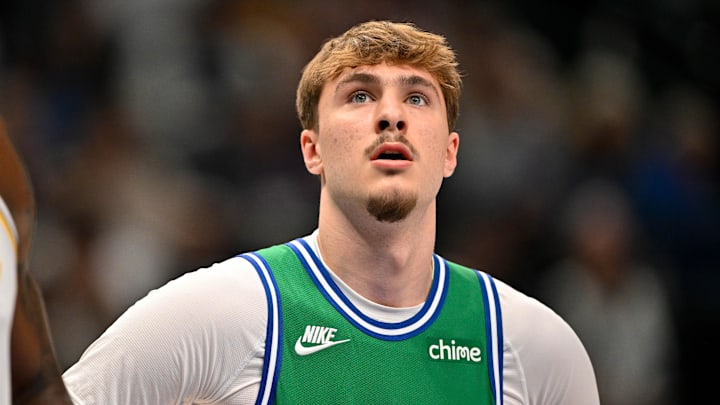
1. Cooper Flagg

Again, Boozer has a strong case. Legitimately. At the end of the day, however, Cooper Flagg is the easiest bet at No. 1, mostly because we've already seen it. He struggled with efficiency as a rookie, but he was still historically productive, and a lot of those struggles were because Dallas handed him the keys with an extremely limited supporting cast.
Flagg is a fiery help-side rim protector and a switchy defensive anchor. He's a legitimate on-ball engine at 6-foot-9, with a smooth pull-up jumper and the downhill explosiveness to score through contact at the rim. He can stand to clean up his handle and create a few more easy looks for himself, but he's still 19 with plenty of room for growth. Flagg will achieve two-way superstardom before long.
More NBA Draft news and analysis:
 Add us as a preferred source on Google