
The College Football Playoff's expansion to 24 teams in 2027 may have finally halted the out-of-control conference realignment. Now league title games are being eliminated, and some programs are starting to ask whether, outside of scheduling reasons, being a member of a league is even worth it.
If the sport were to fracture and some of the biggest brands decided to go independent rather than subject themselves to overly criticized conference schedules, which ones would have the biggest advantage? Some names are obvious. Others may take a little convincing.
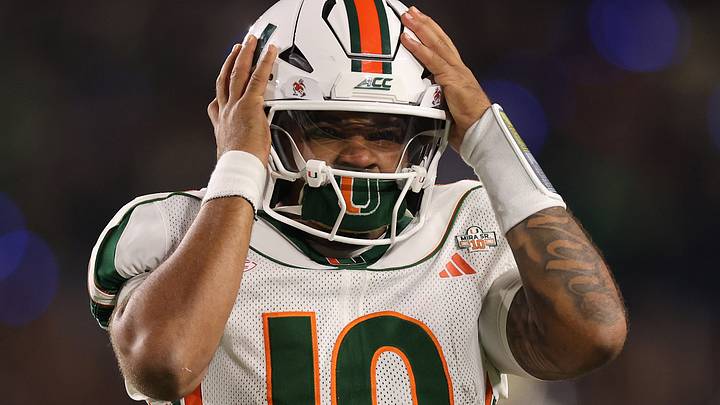
Miami Hurricanes
If Miami somehow manages to not win the 2026 ACC title game, which has been announced to be the last, the Hurricanes will have gone 23 years as a member without winning a single conference championship. They qualified for the CFP in 2025 and went all the way to the national title game without even appearing in the ACC title game. What more proof does it need that staying a member would benefit it going forward with the 24-team model?
The university's president has openly talked about going independent. Should that come to fruition, Miami would get an opportunity to schedule Notre Dame yearly to cement the "Catholics vs. Convicts" game on our calendars. There's no reason for in-state rivalries with Florida State and Florida to disappear, either. That would be three high-quality games already settled. The Hurricanes would have their pick of SEC and former ACC neighbors to fill out the rest of the schedule.
Florida State Seminoles

There's a similar argument for the program in Tallahassee, too. There have been rumors of Florida State exploring a way to escape the ACC along with Clemson (presumably to the SEC) but both programs would probably wind up stuck in competitive purgatory with the likes of Mississippi State, Missouri and Vanderbilt. Going independent again, like they were until 1991, would give the Seminoles the same autonomy away from the ACC that Notre Dame currently enjoys.
Along with the Gators and Hurricanes, Florida State could add the Fighting Irish to a strong schedule while lobbying the same SEC teams it likely desires as neighbors to play along. While success in the short term may not be entirely plausible, it could gain scheduling viability with juggernauts like Alabama (which it's beaten before), Georgia and Tennessee viewing the Seminoles as a mutually beneficial opponent. They get improved schedule strength while (probably) earning a safe-ish win.



Michigan Wolverines
Why not Ohio State? Because winning the Big Ten has unintentionally become the Buckeyes' meal ticket to the playoff. Without Ohio State, the Big Ten completely collapses. Michigan, while still one of the biggest brands in the conference, could afford to jump ship without sending the structure into a free fall (and that's not meant as an insult). "The Game" doesn't go away, but the Wolverines can branch out to play more instant classics like their last two games against Oklahoma.
Even a two- or three-loss season for Michigan would get the Wolverines into the CFP, as long as those losses came to probable ranked foes in the SEC. They would get near-immunity unless they somehow gets their doors blown off for half the year. Imagine a yearly renewal of the Michigan-Notre Dame matchup (which would make Fielding Yost roll over in his grave). The schedule combinations are limitless and they would insulate Michigan from resume scrutiny, because postseason qualification would be clear cut — are the Wolverines beating good teams or not?
Texas Longhorns

The team never should have abandoned the benefits of the Longhorn Network and subjected itself to the pressure of the SEC. While Texas benefits from having that patch on its jerseys over the Big 12, the expectations seem to cause it to crumble more often than not. Getting out from underneath that pressure while still getting the opportunity to play the conference's best is a win-win scenario.
Independence would allow the Texas brand to flourish without the restrictions of a conference narrative. There wouldn't be the constant "SEC bias" arguments being made towards the Longhorns every time they appear in the Top 25 rankings with multiple losses. As much as the SEC brand is a buoy now, it could very well be an anchor later on if Texas can't top the standings at some point.
USC Trojans
The Trojans blew up the Pac-12 to get a tougher schedule, but after joining the Big Ten and not receiving an automatic boost (translated: losing just as much as it did before leaving) USC now complains about the constant travel to the Midwest and the difficult weather. Cry us a river, or get out and make your own schedule. The solution here would be stupidly simple for USC.
An independent program could keep Oregon, UCLA and Washington on its schedule while looking to negotiate neutral venue matchups with Big Ten and SEC foes. That way the team isn't traveling further than, say, Dallas, and its strength of schedule/resume would go sky high. If the Trojans can't find a way into the 12-team bracket this season, it may have to decide whether the Big Ten jump is actually dragging down its chances going forward.
 Add us as a preferred source on Google